
Introduction
India’s finished steel import figures for the April‑September window provide a critical snapshot of how the country’s steel market is responding to domestic demand, price dynamics, and policy shifts. In this article we examine the latest provisional data released by Eninrac Consulting, translate the numbers into actionable insights, and explain why these trends matter to manufacturers, investors, and policymakers. The latest India finished steel imports data for April‑Sept 2026 highlights the evolving market dynamics. Understanding these numbers helps stakeholders anticipate pricing pressure, investment opportunities, and potential policy responses.
What Does the Data Reveal About This Topic?
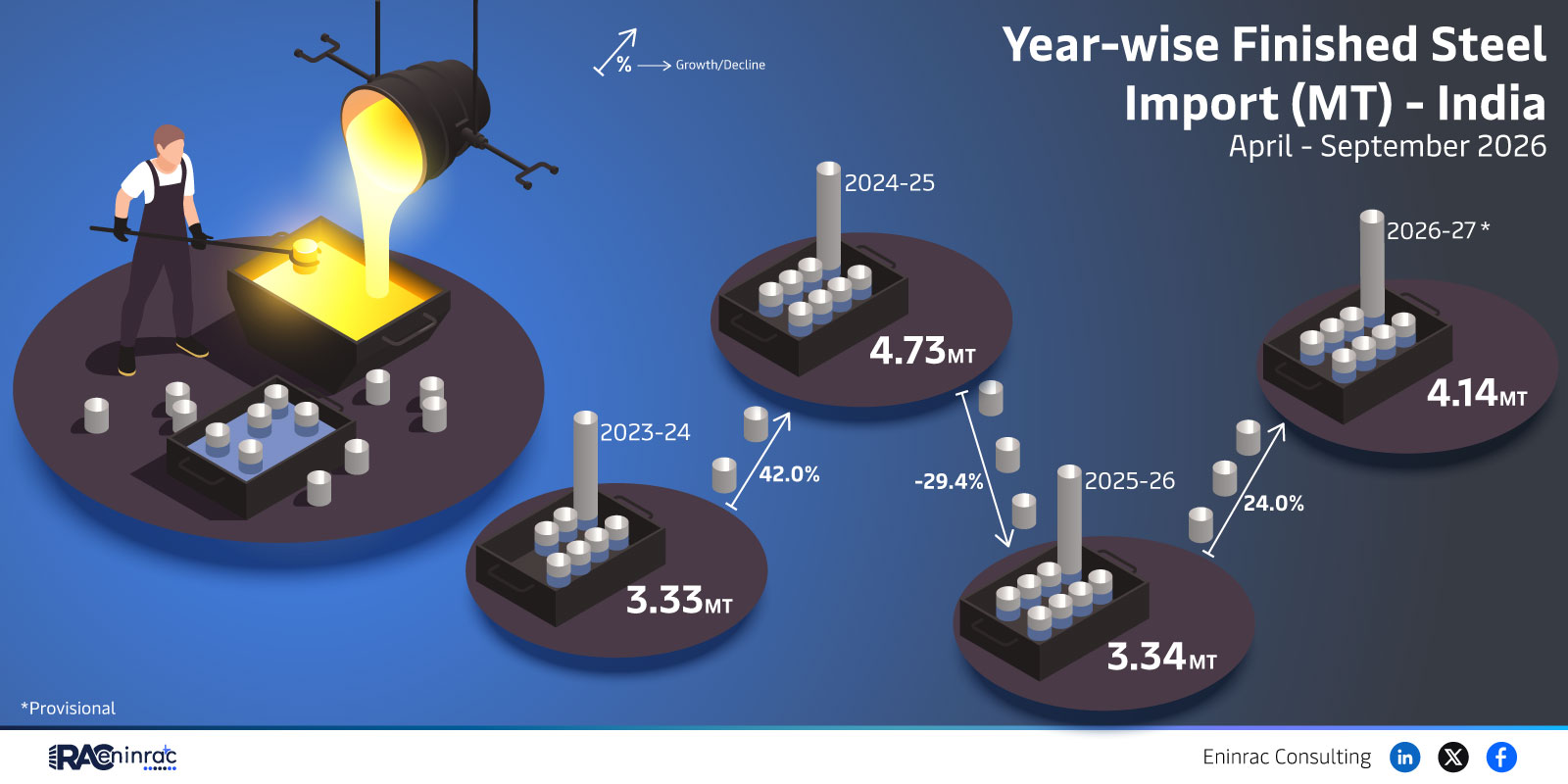
The raw data shows a gradual decline in finished steel imports over three consecutive fiscal periods. Imports fell from roughly 4.73 million tonnes in the 2024‑25 fiscal year to about 4.14 million tonnes in 2025‑26, with a provisional estimate of 3.33 million tonnes for the same April‑September stretch in 2026‑27. This downward trajectory suggests that domestic production is increasingly meeting demand, and that price pressures or trade policies may be discouraging further imports.
Year‑to‑Year Comparison of Steel Import Volumes
When the three periods are placed side by side, the contrast is clear. The 2024‑25 figure of 4.73 MT represents the highest import level in the series, while the provisional 3.33 MT in 2026‑27 marks a drop of more than 30 percent. The intermediate 2025‑26 value of 4.14 MT indicates a steady easing after the 2024‑25 peak. Regional analysis points to stronger imports from traditional suppliers such as China and South Korea, but the overall decline is consistent across all source countries.
Impact on Sectors and Industries
Finished steel is a backbone material for construction, automotive, infrastructure, and consumer‑goods manufacturing. A reduction in import volumes can signal a healthier domestic steel industry, potentially lowering costs for downstream users. However, it may also reflect tighter supply, which could raise prices for sectors that rely on imported specialty grades. Investors watch these trends to gauge the profitability of Indian steel producers, while policymakers consider tariff adjustments and strategic stockpiling decisions. Additionally, the shift influences export competitiveness of Indian steel producers in global markets.
Key Takeaways
- Finished steel imports fell from 4.73 MT in 2024‑25 to a provisional 3.33 MT in 2026‑27.
- The decline represents a cumulative reduction of over 30 percent within three fiscal periods.
- Domestic steel production is likely absorbing a larger share of market demand.
- Import dependence varies by grade, with high‑value alloy steels still sourced abroad.
- Policy factors such as anti‑dumping duties and import licensing affect total volumes.
- Investors should monitor Indian steel makers for improved margins as import pressure eases.
FAQs
Why have India’s finished steel imports decreased since 2024‑25?
Higher domestic output, price competitiveness of local mills, and stricter import duties have collectively reduced the need for foreign steel.
Which countries remain the main suppliers of steel to India?
China, South Korea, and Japan continue to dominate the supply chain, though their market share is shrinking.
How does the import trend affect construction costs?
Less reliance on imports can lower transportation and tariff costs, but if domestic capacity cannot meet demand, prices may rise.
Will the government introduce new policies to support steel imports?
Current signals suggest a focus on protecting domestic producers, but trade‑friendly measures could be introduced if supply gaps emerge.
What should investors watch for in the Indian steel sector?
Key indicators include domestic production capacity expansion, raw‑material cost trends, and any regulatory changes affecting import tariffs.