
Introduction
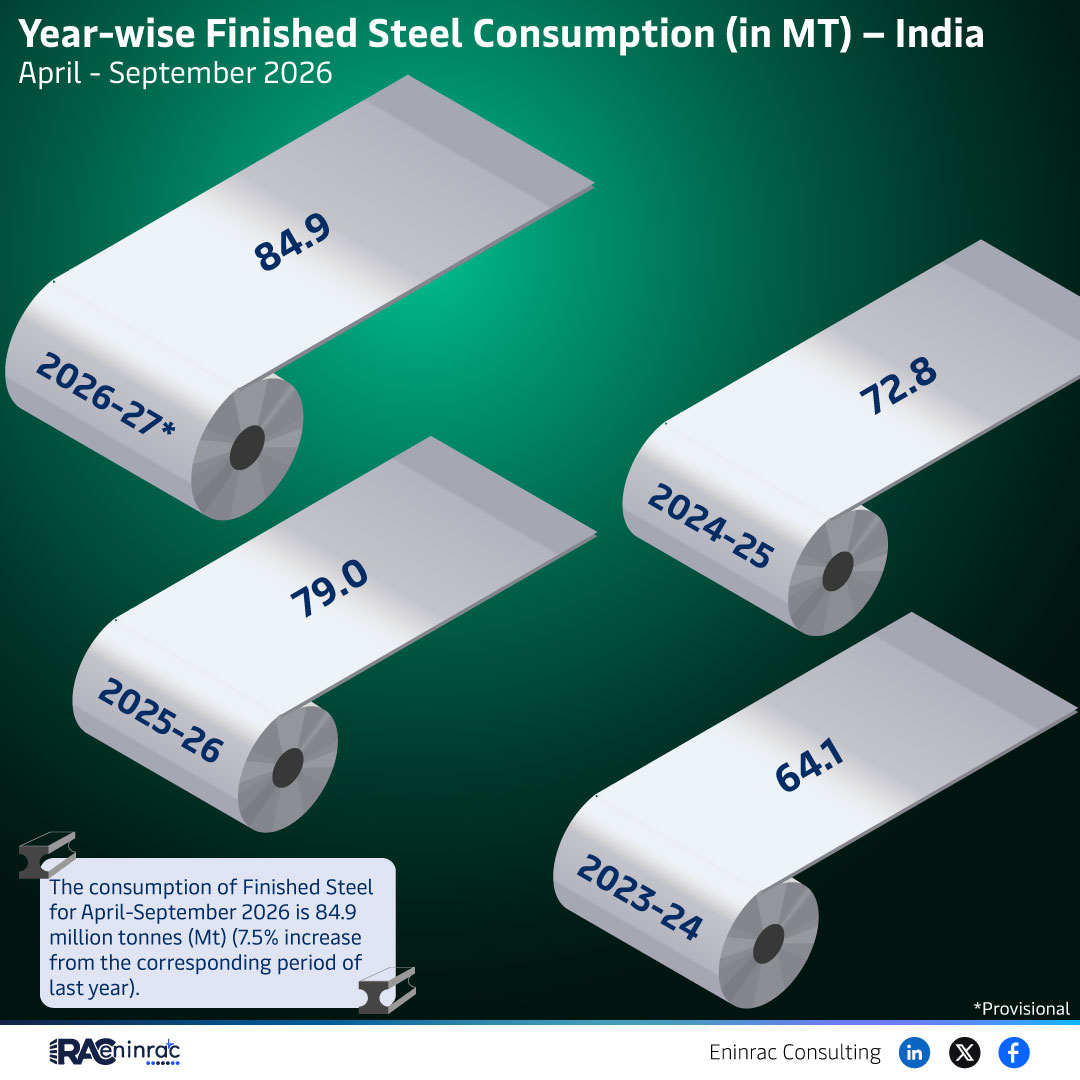
India's finished steel consumption for the April‑September 2026 period reached 84.9 million tonnes, marking a notable 7.5% rise compared with the same half‑year last year. This increase signals robust demand across construction, automotive, and infrastructure sectors, highlighting the metal's pivotal role in the country's economic growth. Readers will learn about the significance of this data, its implications for industry stakeholders, and what it suggests for future market trends.
What Does the Data Reveal About This Topic?
The key insight from the provisional figures is that finished steel consumption in India grew by 7.5% year‑on‑year during the April‑September 2026 window. This uptick reflects stronger domestic demand, recovery from earlier supply constraints, and a favorable policy environment encouraging infrastructure development. Understanding this growth helps analysts gauge market momentum and anticipate potential supply‑side adjustments.
Year‑to‑Year Growth in Steel Consumption
When comparing the 84.9 Mt consumption in 2026 with the 79.2 Mt recorded in the previous year, the increase is evident across multiple segments. Construction projects, especially affordable housing and smart city initiatives, contributed a sizable share of the boost. The automotive sector, driven by higher vehicle production and a shift toward electric models, also added to the demand. Meanwhile, manufacturing industries such as machinery and capital equipment reported modest gains, reinforcing steel's status as a backbone material for India's expanding industrial base.
Impact on Sectors and Industries
The rise in finished steel consumption influences several key areas. Investors see the trend as a positive signal for steel producers, potentially leading to higher revenue forecasts and increased capital inflows. Policymakers may consider the data when shaping tariffs, import duties, and domestic production incentives to balance trade and ensure supply security. Businesses in construction, automotive, and heavy engineering can plan procurement strategies with greater confidence, while downstream consumers benefit from economies of scale that may improve pricing stability.
Key Takeaways
- Finished steel consumption in India reached 84.9 Mt for April‑September 2026.
- This represents a 7.5% year‑on‑year increase.
- Construction and affordable housing projects are primary demand drivers.
- The automotive sector’s shift toward electric vehicles adds to steel usage.
- Higher consumption may attract increased investment in domestic steel capacity.
- Policymakers could adjust trade policies to support sustainable growth.
FAQs
What was the exact finished steel consumption in India for April‑September 2026?
The provisional figure shows consumption of 84.9 million tonnes during that six‑month period.
How does the 2026 consumption compare with the same period in 2025?
It is 7.5% higher than the April‑September 2025 consumption, indicating accelerated demand.
Which sectors contributed most to the increase?
Construction, particularly housing and infrastructure projects, and the automotive sector, especially electric vehicle manufacturing, were the main contributors.
Will this growth affect steel prices in the near term?
Higher demand can put upward pressure on prices, but increased production capacity may offset some of that effect.
What implications does this have for investors?
Investors may view the data as a bullish signal for steel producers, leading to potential portfolio allocations toward the sector.