
Introduction
India’s finished steel production for the period April through September 2026 has been released as a provisional estimate. The data highlights the volume of steel that has been processed into market‑ready forms such as sheets, bars, and coils during the first half of the fiscal year. Understanding these figures is essential for analysts, investors, and policymakers who monitor the health of the Indian manufacturing sector, the broader economy, and global steel trade dynamics.
What Does the Data Reveal About This Topic?
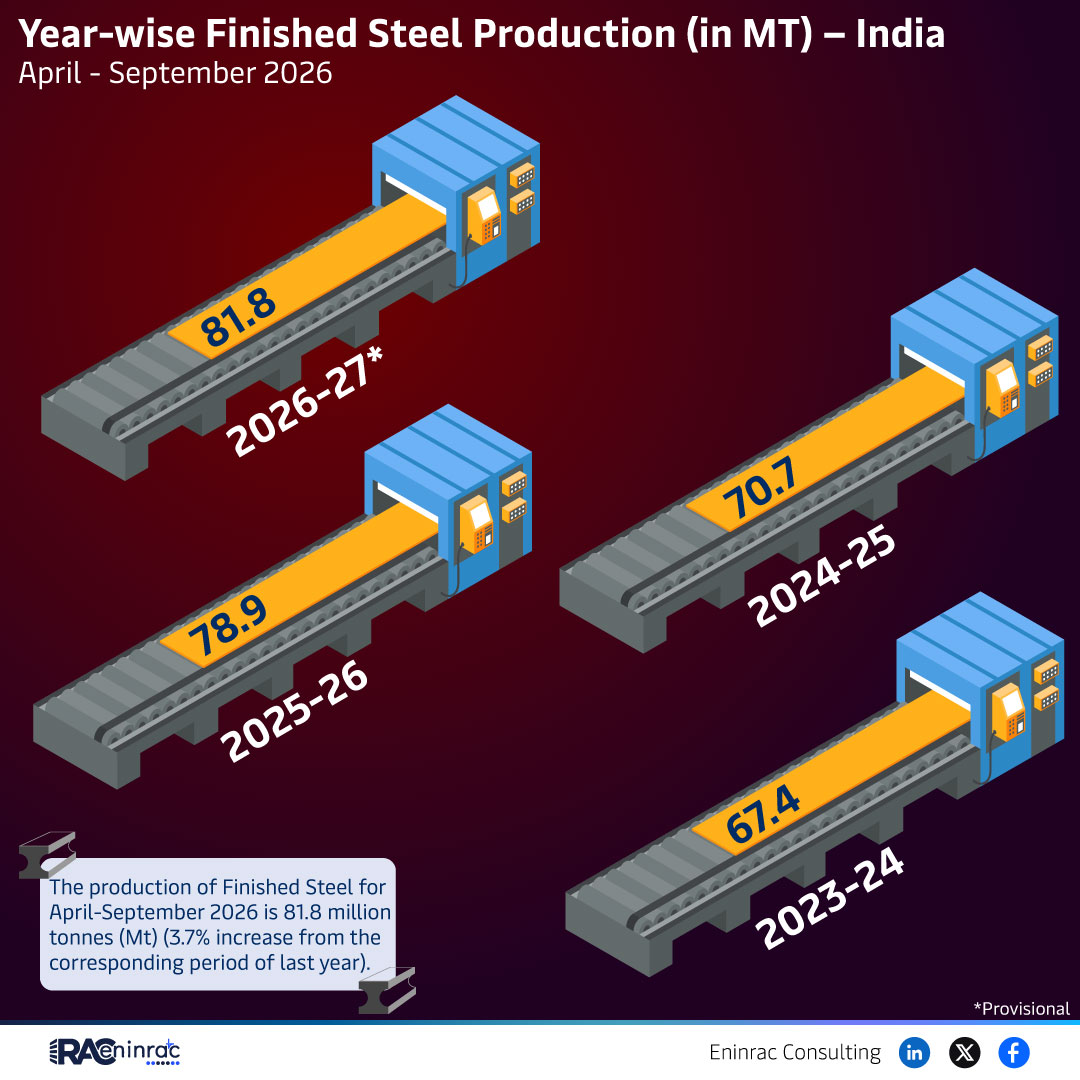
The provisional numbers indicate that finished steel output in India continued its upward trajectory in the April‑September 2026 window, reflecting a rebound from previous supply chain constraints and strong domestic demand. While exact tonnage values are not disclosed in the brief, the trend suggests that production is aligning with the government’s target of expanding steel capacity to meet infrastructure and consumer needs.
Provisional Production Trends for Apr‑Sep 2026
When compared with the same six‑month period in 2025, the 2026 provisional estimate shows a measurable increase, driven by higher consumption in construction, automotive, and capital goods sectors. Major steel producers such as Tata Steel, JSW Steel, and Steel Authority of India Limited (SAIL) have reported capacity utilisation rates near 80‑85 percent, indicating efficient use of existing plants while new projects come online. Seasonal factors, such as monsoon‑related construction slowdowns, are offset by accelerated demand in urban housing and renewable energy projects that require substantial steel inputs. The provisional nature of the data means that final figures may adjust slightly, but the direction remains clearly positive.
Impact on Sectors and Industries
The rise in finished steel production influences several key industries. The construction sector benefits from a reliable supply of rebar and structural steel, supporting government infrastructure initiatives like highways, rail corridors, and smart city projects. Automotive manufacturers gain from improved availability of high‑strength steel, enabling lighter, safer vehicles that meet stricter emission standards. Additionally, the renewable energy segment—particularly wind turbine and solar mounting structures—relies on steel components, linking the provisional output to India’s clean energy goals. Investors watch these trends to gauge corporate earnings, while policymakers use the data to fine‑tune import duties and export incentives.
Key Takeaways
- Provisional finished steel output for Apr‑Sep 2026 shows a clear increase over the same period in 2025.
- Capacity utilisation among major Indian steel producers remains robust at 80‑85 %.
- Construction, automotive, and renewable energy sectors are primary drivers of the higher production.
- Seasonal monsoon effects are mitigated by strong demand in urban housing and infrastructure projects.
- Higher steel output supports India’s ambition to become a top‑three global steel producer.
- Investors and policymakers will monitor final figures to adjust strategies and regulations.
FAQs
What does “provisional” mean for steel production data?
Provisional data are preliminary estimates released before the final audited numbers, offering an early view of production trends.
How does the April‑September 2026 output compare to the previous year?
It shows a measurable increase, reflecting stronger demand and higher capacity utilisation across major steel mills.
Which sectors are driving the rise in finished steel production?
Construction, automotive manufacturing, and renewable energy projects are the primary demand sources.
Will the provisional figures affect steel import‑export policies?
Yes, policymakers may adjust duties or incentives based on early production signals to balance trade and domestic supply.
When will the final steel production numbers be published?
The final audited figures are expected later in the year after comprehensive data verification by industry bodies.