
Introduction
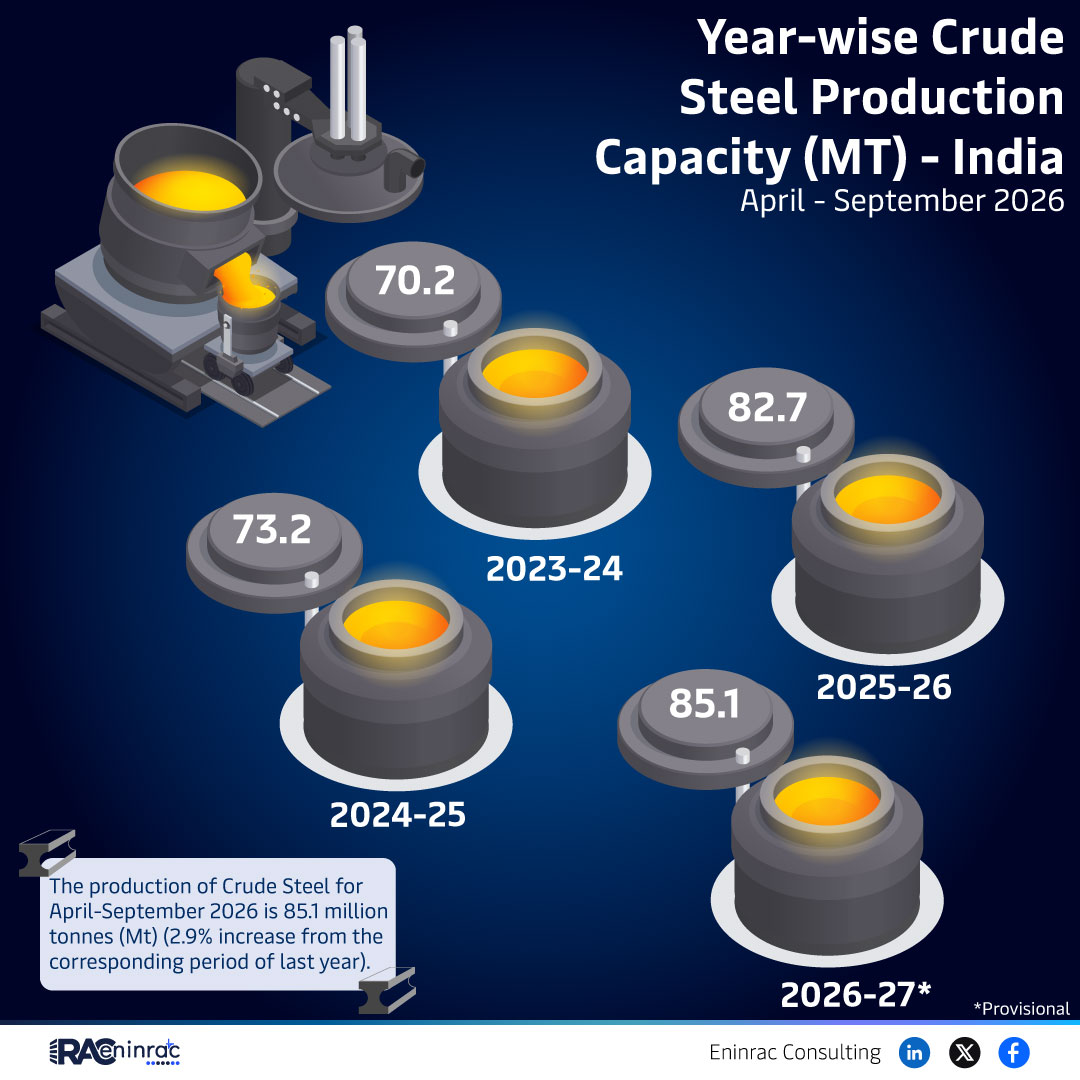
India’s crude steel production for the April‑September 2026 period recorded 85.1 million tonnes, marking a 2.9 percent increase compared with the same half‑year last year. This rise reflects recovering demand, higher capacity utilisation and supportive policy measures. Readers will learn the significance of this growth, how it compares with previous cycles, and what it means for related industries and investors.
What Does the Data Reveal About This Topic?
The data shows that India produced 85.1 Mt of crude steel between April and September 2026, up 2.9 percent from the previous year’s figure. This answers the question of whether the sector continued its post‑pandemic expansion: the modest increase indicates steady demand, yet the pace is slower than the double‑digit gains seen in earlier years. Factors such as raw material costs, energy prices and global trade dynamics contributed to the measured growth.
Comparative Outlook: 2025 vs 2026
When the 2026 half‑year output is placed alongside the 2025 figures, the upward trend remains visible but less pronounced. In 2025 the sector recorded roughly 82.7 Mt, representing a 4.5 percent jump from 2024. The slowdown to a 2.9 percent rise in 2026 suggests that the market is stabilising after a period of rapid expansion. Regional steel hubs such as Jharkhand, Odisha and Karnataka continued to lead production, while newer capacity in Tamil Nadu contributed marginally. The comparative view highlights that while growth persists, external pressures are tempering the speed of increase.
Impact on Sectors and Industries
The increase in India crude steel production influences multiple downstream sectors. Construction firms benefit from a reliable supply of steel for infrastructure projects, reducing lead times and price volatility. The automotive industry, which consumes a significant portion of steel, can maintain production schedules and explore higher‑grade alloys. Energy utilities see modest demand for coal and electricity, aligning with broader conventional energy consumption patterns. Investors view the steady rise as a sign of sector resilience, potentially prompting fresh capital into steel mills, equipment manufacturers and logistics providers.
Key Takeaways
- India produced 85.1 Mt of crude steel in April‑September 2026.
- Year‑over‑year growth measured at 2.9 percent.
- Growth indicates stabilising demand after earlier rapid expansion.
- Key regional hubs continued to dominate output.
- Downstream sectors such as construction and automotive benefit from steady supply.
- Steady performance may attract new investment and policy support.
FAQs
What is crude steel and why is it important?
Crude steel is the primary metal produced from iron ore before further refinement. It forms the basis for most manufacturing, construction and infrastructure projects, making its production a key economic indicator.
Why did India’s steel output grow only 2.9 percent in 2026?
The modest increase reflects a balance between recovering demand and higher input costs for raw materials and energy, which limited the speed of expansion compared with previous years.
How does this steel production growth affect the automotive sector?
Automakers rely on a steady steel supply for body panels and chassis components. The stable output helps maintain production schedules and can support the launch of new vehicle models.
What are the implications for investors in the steel industry?
Consistent growth signals sector resilience, encouraging investors to consider funding new capacity, modernization projects and related supply‑chain businesses.
Can government policy influence future steel production?
Yes, policies on import duties, infrastructure spending and energy pricing can either boost production capacity or create constraints, shaping the trajectory of future output.