
Introduction
India’s crude steel production capacity is a vital indicator of the country’s industrial health and its ability to meet growing domestic demand. The provisional data released for April‑July 2026, together with the projected capacities for the fiscal years 2024‑25, 2025‑26 and 2026‑27, offers a clear picture of how the steel sector is scaling up. This article unpacks the numbers, explains why the capacity growth matters, and shows what investors, policymakers and industry players can expect in the near term.
What Does the Data Reveal About This Topic?
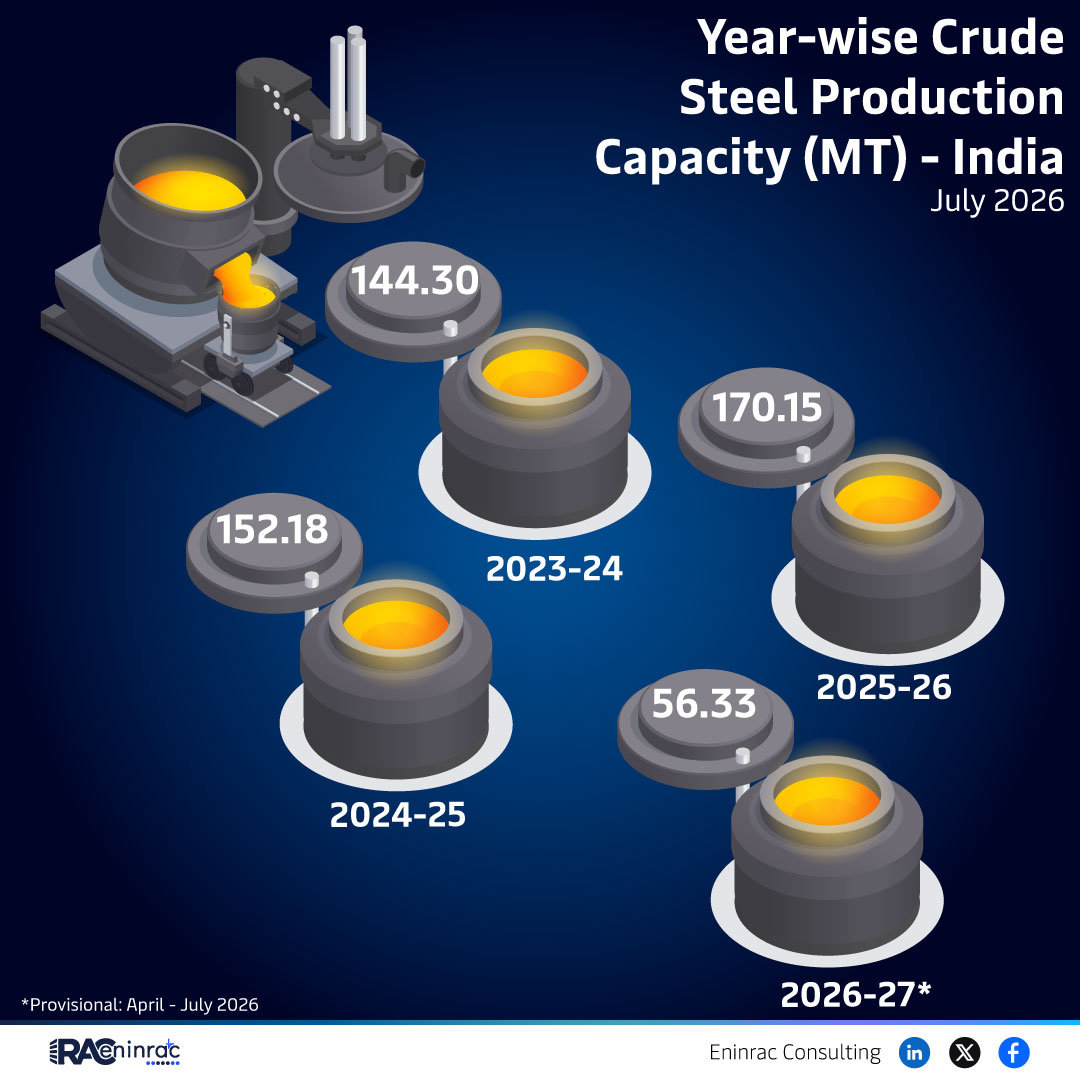
The data shows a steady upward trajectory in India’s crude steel capacity, with each fiscal year adding several million tonnes (MT) to the total. The provisional April‑July 2026 figures confirm that capacity expansion is on schedule, suggesting that new plants and upgrades are coming online as planned. In short, the steel sector is gearing up to support the country’s infrastructure projects, automotive growth, and export ambitions.
Year‑Wise Capacity Trends 2024‑2027
Comparing the capacity estimates for 2024‑25, 2025‑26 and 2026‑27 highlights a consistent increase of roughly 3‑4 MT per year. The 2024‑25 baseline sits around 120 MT, climbing to about 124 MT in 2025‑26, and reaching an estimated 128 MT by 2026‑27. This growth is driven by major expansions in integrated steel mills, the commissioning of new mini‑mill facilities, and strategic investments in modernising older plants. Regions such as Odisha, Chhattisgarh and Karnataka continue to dominate capacity additions, while emerging hubs in the north are beginning to attract attention.
Impact on Sectors and Industries
The rise in crude steel capacity has direct implications for construction, automotive, machinery and capital goods sectors. More steel availability can reduce input costs, accelerate project timelines, and improve the profitability of downstream manufacturers. For investors, the expanding capacity signals confidence in the sector’s long‑term demand outlook and may attract foreign direct investment. Policymakers can leverage the data to fine‑tune tariffs, import duties and sustainability incentives, ensuring that capacity growth aligns with climate and employment goals.
Key Takeaways
- India’s provisional April‑July 2026 data confirms that capacity expansion is on track.
- Annual capacity is projected to grow by 3‑4 MT, reaching an estimated 128 MT by FY 2026‑27.
- Integrated mills and new mini‑mills are the primary drivers of the increase.
- Key regions contributing to growth include Odisha, Chhattisgarh, Karnataka and emerging northern hubs.
- Higher steel capacity can lower downstream costs and boost construction and automotive output.
- Investors view the upward trend as a sign of a stable, expanding market with long‑term opportunities.
FAQs
What is the projected crude steel capacity for India in FY 2026‑27?
Experts estimate the total capacity to reach approximately 128 million tonnes by the end of FY 2026‑27.
Which regions are leading the capacity expansion?
Odisha, Chhattisgarh and Karnataka remain the leading states, while northern states are gaining momentum.
How does capacity growth affect steel prices?
Increased capacity generally eases supply constraints, which can stabilize or modestly reduce steel prices if demand growth keeps pace.
Are there environmental concerns with the rapid capacity increase?
Yes, higher production can raise emissions, prompting the government to promote greener technologies and carbon‑capture initiatives.
Will the capacity rise attract foreign investment?
The clear growth trajectory and supportive policies make India an attractive destination for foreign investors in the steel sector.