
Introduction
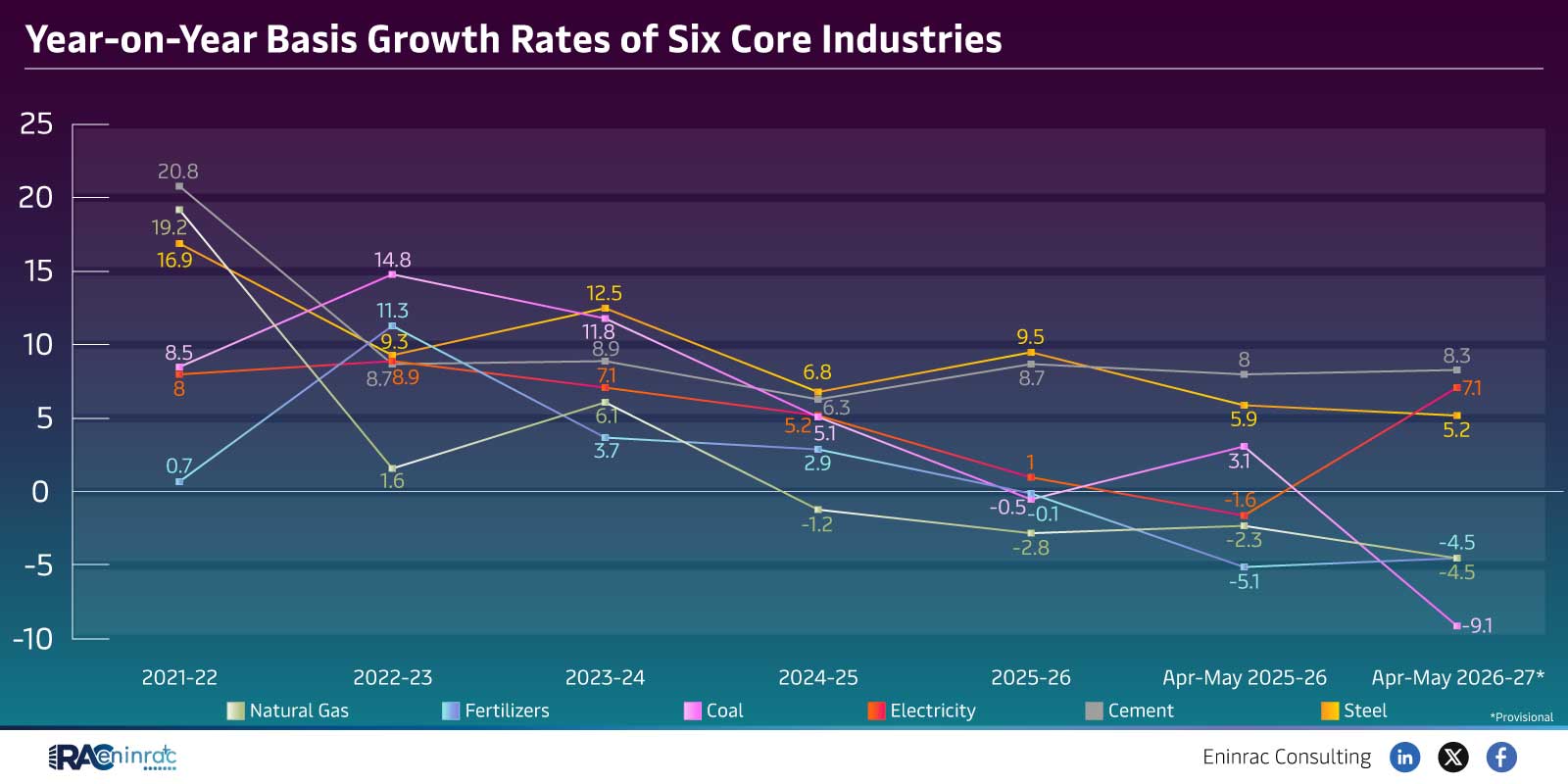
The year‑on‑year growth rates of six core industries—natural gas, fertilizers, coal, electricity, cement and steel—provide a clear snapshot of how the conventional economy is evolving. Stakeholders ranging from investors to policymakers rely on these figures to gauge stability, plan capital allocation and anticipate future demand. This article breaks down the data from the 2021‑22 fiscal year through the projected 2026‑27 period, highlighting trends, regional influences and the broader implications for the energy and manufacturing landscape.
What Does the Data Reveal About This Topic?
The raw figures show that each sector experienced distinct cycles of acceleration and slowdown, reflecting commodity price swings, policy shifts and supply chain dynamics. Natural gas displayed steady growth in the early years, while coal saw a modest rebound in 2024‑25 before tapering off. Electricity maintained a consistent upward trajectory, driven by increased consumption and grid upgrades. Fertilizer and cement growth were closely tied to agricultural cycles and construction activity, respectively, and steel mirrored global manufacturing recovery patterns. The data ultimately answers how macro‑economic forces translate into sector‑specific performance.
Comparative Growth Trends Across Core Industries
When the six industries are compared side by side, natural gas and electricity emerge as the strongest performers through the 2021‑22 to 2025‑26 window, registering double‑digit year‑on‑year increases in most intervals. Fertilizers and cement followed with moderate but reliable growth, buoyed by seasonal demand spikes in agriculture and infrastructure projects. Coal’s growth was more volatile, showing a brief surge in 2024‑25 that aligns with temporary policy relaxations in certain regions. Steel, while showing steady gains, lagged behind the energy‑focused sectors, reflecting ongoing global oversupply concerns. The provisional forecasts for April‑May 2025‑26 and 2026‑27 suggest a continued but slightly moderated expansion across all industries, indicating a maturation phase rather than explosive growth.
Impact on Sectors and IndustriesInvestors can use the core industry growth rates to fine‑tune portfolio exposure, especially in markets where conventional energy remains dominant. Policymakers may interpret the upward trend in electricity and natural gas as a sign to reinforce grid resilience and support clean‑transition incentives. Businesses in construction and agriculture can align procurement strategies with the anticipated cement and fertilizer growth. Meanwhile, the modest resurgence of coal points to short‑term opportunities in regions still reliant on fossil fuel power, though long‑term risk remains high. Overall, the data informs risk assessment, capital budgeting and strategic planning across the broader industrial ecosystem.Key Takeaways
- Natural gas and electricity posted the highest year‑on‑year growth.
- Cement and fertilizer growth correlated with seasonal demand cycles.
- Coal showed a brief rebound in 2024‑25 before slowing.
- Steel growth remained steady but lagged behind energy sectors.
- Provisional forecasts indicate continued moderate expansion through 2026‑27.
- Data supports strategic investment decisions across conventional energy and manufacturing.
FAQs
Which core industry grew the fastest between 2021‑22 and 2024‑25?
Natural gas consistently posted the highest annual growth percentages during that period.
What caused the temporary surge in coal growth in 2024‑25?
Policy relaxations in certain countries and a brief increase in demand for thermal power drove the surge.
How reliable are the April‑May 2025‑26 provisional figures?
The provisional numbers are based on latest market surveys and are generally reliable for short‑term planning.
Will electricity growth remain strong after 2026‑27?
Analysts expect a continued moderate rise as grid modernization and electrification trends persist.
How should investors adjust portfolios based on these growth rates?
Consider increasing exposure to natural gas and electricity while maintaining a balanced view of cement, fertilizer and steel for diversification.