
Introduction
India’s wind power generation is rapidly reshaping the country’s clean energy landscape. The May 2026 report provides the most recent snapshot of installed capacity, growth rates, and state‑wise performance. Understanding which regions are adding the most capacity helps investors, policymakers, and industry stakeholders make informed decisions. This article breaks down the raw figures, compares leading states, and highlights the broader implications for renewable energy development across India.
What Does the Data Reveal About This Topic?
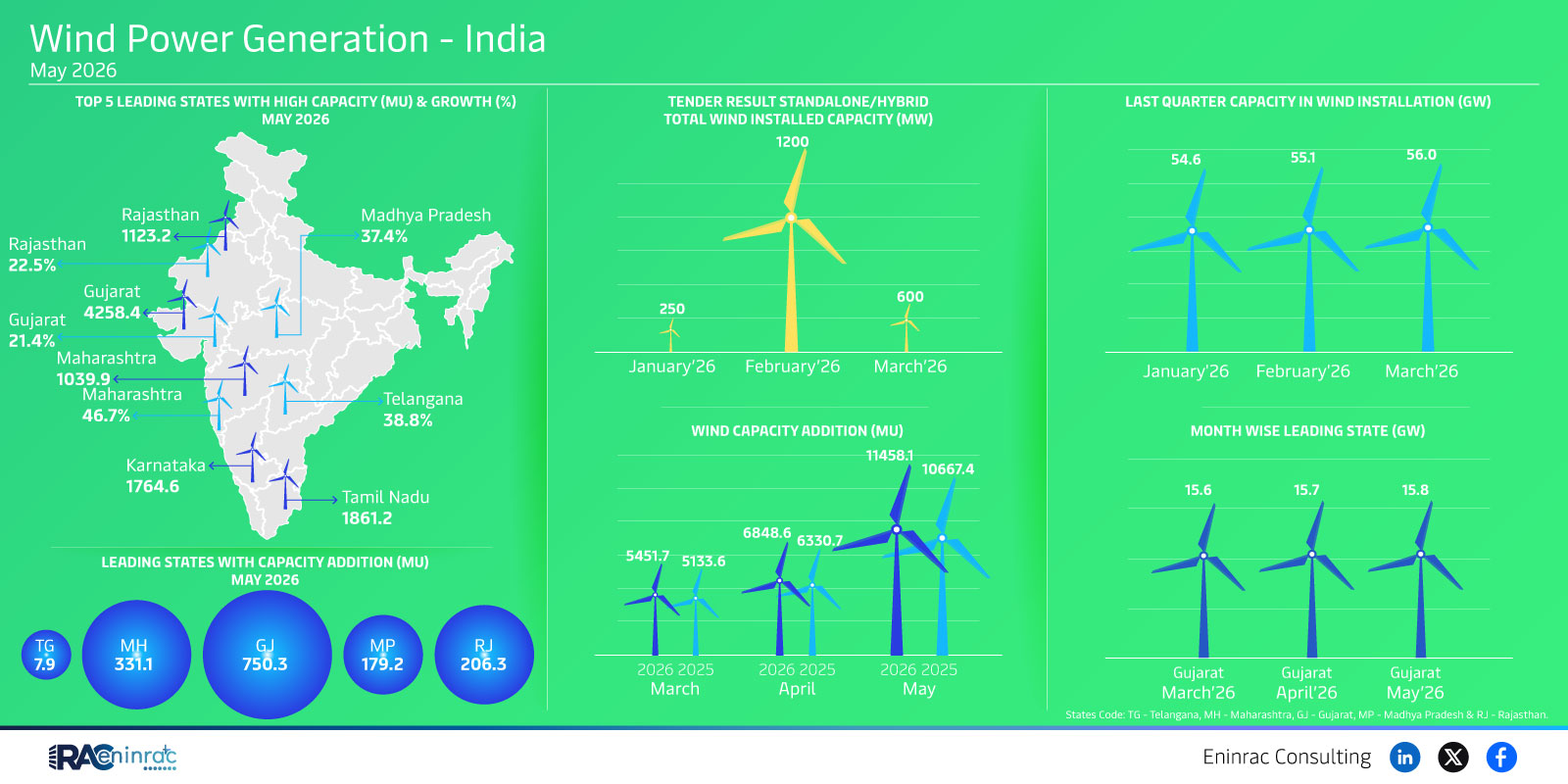
The data answers a critical question: which Indian states hold the highest wind power generation capacity and which are expanding fastest? Rajasthan leads with 1,123.2 MW and a 22.5% growth rate, while Gujarat follows at 4,258.4 MW and a 21.4% increase. Madhya Pradesh, Maharashtra, Karnataka, and Tamil Nadu also demonstrate substantial capacities and growth. The quarterly figures show a steady addition of roughly 5.5 GW during the last quarter, underscoring a robust upward trend in wind installations nationwide.
State‑by‑State Capacity Comparison
When comparing state‑level data, Gujarat stands out with the largest absolute capacity at 4,258.4 MW, yet its growth percentage is slightly lower than Rajasthan’s 22.5% surge. Rajasthan’s rapid expansion reflects aggressive tender wins and favorable wind corridors. Maharashtra adds 1,039.9 MW, while Karnataka contributes 1,764.6 MW, positioning both as key contributors in the southern region. Tamil Nadu’s 1,861.2 MW reflects its strategic coastal projects. The month‑wise leading state in March 2026 was Gujarat, maintaining dominance throughout the quarter. These differences illustrate varied regional strategies, resource availability, and policy environments shaping the wind sector.
Impact on Sectors and Industries
The accelerating wind power generation India creates ripple effects across several sectors. Renewable energy investors see increased confidence due to clear capacity addition trends, encouraging further capital inflows. Equipment manufacturers benefit from higher demand for turbines, towers, and grid‑integration solutions. Policymakers gain leverage to meet national emissions targets and reduce reliance on coal, while utilities must adapt grid infrastructure to accommodate variable wind output. Moreover, the growth stimulates local job creation, drives technology transfer, and supports ancillary services such as maintenance, logistics, and financing, reinforcing the overall economic benefits of a greener energy mix.
Key Takeaways
- Gujarat holds the highest wind capacity at over 4,200 MW.
- Rajasthan exhibits the fastest growth rate at 22.5%.
- Quarterly installations added roughly 5.5 GW of wind capacity.
- Southern states like Karnataka and Tamil Nadu are emerging as strong contributors.
- Capacity growth supports India’s renewable energy targets and reduces coal dependence.
- Investors, manufacturers, and policymakers all benefit from the upward trend.
FAQs
Which state has the largest installed wind capacity in 2026?
Gujarat leads with 4,258.4 MW of installed wind capacity.
What is the fastest growing state for wind power?
Rajasthan shows the highest growth rate at 22.5% year‑over‑year.
How much wind capacity was added in the last quarter?
Approximately 5.5 GW of wind capacity was added during the last quarter.
Why does wind power generation matter for India’s energy mix?
It helps meet renewable targets, lowers emissions, and reduces dependence on fossil fuels.
What sectors benefit most from wind capacity growth?
Investors, turbine manufacturers, grid operators, and local economies all see positive impacts.