
Introduction
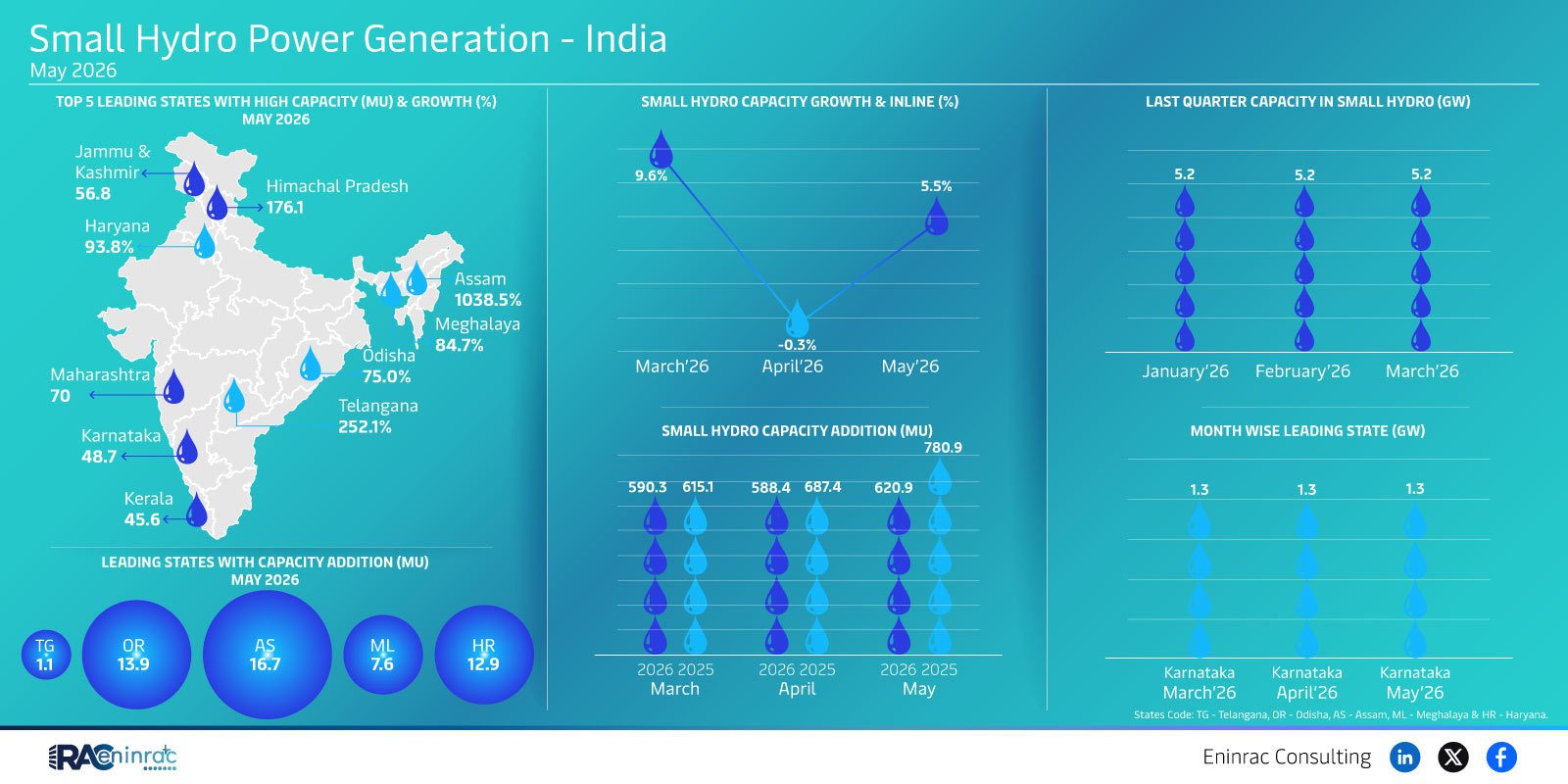
India’s small hydro power sector is gaining momentum as states expand installed capacity to meet renewable energy targets. The latest data from May 2026 highlights which states lead in capacity, where growth is strongest, and how monthly additions are shaping the market. Understanding these trends helps investors, policymakers, and industry professionals gauge the sector’s health and future opportunities.
What Does the Data Reveal About This Topic?
The raw data shows that Assam tops the list with an impressive 1,038.5 MW of small hydro capacity, followed by Telangana at 252.1 MW, Himachal Pradesh at 176.1 MW, and Haryana at 93.8 MW. Karnataka emerges as the month‑wise leader for March, April and May 2026, indicating sustained commissioning activity. Overall, the sector is experiencing modest but steady growth, with capacity additions recorded each quarter.
State‑wise Capacity Highlights for Small Hydro in 2026
When comparing states, Assam’s capacity dwarfs others, reflecting its abundant river infrastructure and supportive state policies. Himachal Pradesh, traditionally known for larger hydro projects, contributes a solid 176 MW, while Telangana’s 252 MW showcases its focus on diversified renewable sources. Haryana, though smaller, still adds nearly 94 MW, indicating broader geographic participation. The absence of figures for Meghalaya and Maharashtra suggests either data gaps or lower reporting, underscoring the need for comprehensive monitoring across all regions.
Impact on Sectors and Industries
Small hydro power generation influences multiple sectors. Renewable energy developers gain access to low‑impact sites, reducing land acquisition challenges. Grid operators benefit from distributed generation that stabilizes local supply and lessens transmission losses. Investors see a lower‑risk portfolio addition compared with large‑scale projects, while policymakers can meet regional clean‑energy targets without extensive infrastructure upgrades. Additionally, communities near project sites enjoy improved energy access and potential employment opportunities.
Key Takeaways
- Assam leads Indian small hydro capacity with over 1 GW, setting a benchmark for other states.
- Karnataka dominates month‑wise additions for March‑May 2026, indicating consistent project commissioning.
- Telangana’s 252 MW reflects targeted state incentives for small hydro development.
- Himachal Pradesh and Haryana continue to expand, showing that both northern and central regions are active.
- Data gaps for Meghalaya and Maharashtra highlight the need for better reporting mechanisms.
- Steady quarterly growth supports India’s broader renewable energy objectives and offers attractive opportunities for investors.
FAQs
Which Indian state has the highest small hydro capacity in 2026?
Assam leads with approximately 1,038.5 MW of installed small hydro capacity.
Why is Karnataka a month‑wise leader for small hydro additions?
Karnataka’s consistent project approvals and strong state‑level incentives have enabled it to add capacity each month from March to May 2026.
How does small hydro contribute to India’s renewable energy goals?
Small hydro provides clean, reliable electricity with minimal environmental impact, complementing solar and wind to meet national renewable targets.
What are the main challenges for small hydro growth in India?
Key challenges include financing constraints, fragmented data reporting, and site‑specific regulatory clearances.
Can investors expect stable returns from small hydro projects?
Yes, small hydro projects typically offer predictable cash flows and lower risk due to regulated tariffs and quick commissioning timelines.