
Introduction
June 2026 marks a pivotal moment for wind power generation India as the country records significant capacity expansions across key states. Understanding which regions are leading, how capacity addition trends are evolving, and what this means for the broader energy landscape helps investors, policymakers and industry watchers gauge future opportunities. This article breaks down the latest data, highlights state‑wise performance, and explains the impact on the renewable sector.
What Does the Data Reveal About This Topic?
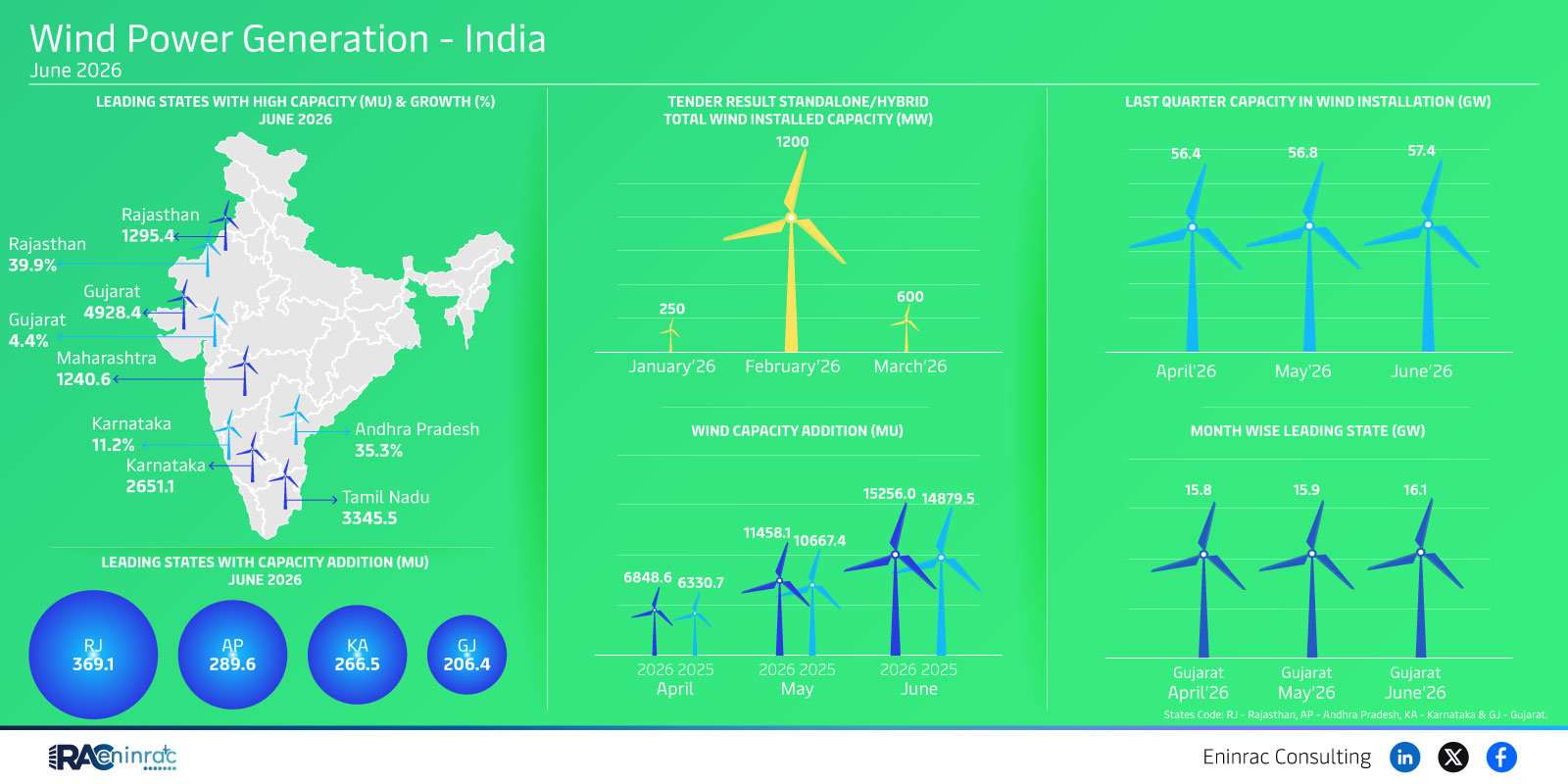
The raw figures show Rajasthan, Gujarat and Maharashtra dominate total installed wind capacity, while Gujarat consistently tops monthly capacity additions. The data answers the core question: which states are driving India’s wind power growth in 2026 and how fast are new installations occurring? By comparing total capacity, quarterly additions and month‑wise leaders, the picture of rapid expansion in western and southern states emerges clearly.
State‑wise Wind Capacity and Growth Trends in 2026
Rajasthan reports a total installed capacity of roughly 1,295 MW, positioning it as a key contributor in the north. Gujarat leads with a capacity of about 1,240.6 MW and also records the highest monthly additions for April, May and June 2026, indicating strong project pipelines and favorable policy support. Maharashtra follows closely, adding notable megawatts during the same period. Karnataka and Andhra Pradesh show modest growth, while Tamil Nadu’s figures remain lower. The quarter‑wise snapshot – January through March – reflects a baseline, but the surge in April‑June underscores a seasonal acceleration driven by tender results for both standalone and hybrid wind projects.
Impact on Sectors and Industries
The expanding wind power generation India landscape influences several sectors. Renewable energy developers gain confidence to secure financing as state‑level capacity targets become more attainable. Equipment manufacturers, especially turbine and blade producers, see heightened demand, encouraging local supply chains. Investors in green bonds and ESG funds can align portfolios with emerging growth corridors. Policymakers must balance grid integration, land acquisition and environmental clearances to sustain momentum. Finally, the broader power market benefits from diversified generation, reducing reliance on conventional fossil fuels and supporting India’s carbon‑reduction commitments.
Key Takeaways
- Rajasthan and Gujarat dominate total wind capacity in 2026.
- Gujarat leads monthly capacity additions for April, May and June.
- Western and southern states show the strongest growth momentum.
- Quarterly data reveals a clear acceleration in the second quarter.
- Renewable equipment demand is rising alongside new installations.
- Policy support and tender outcomes are critical for sustained growth.
FAQs
Which state has the highest wind capacity in June 2026?
Gujarat holds the top spot for wind capacity additions in June 2026.
How much total wind capacity does Rajasthan have?
Rajasthan reports approximately 1,295 MW of installed wind capacity.
What drives the rapid growth in April‑June 2026?
Successful tender results for standalone and hybrid projects fuel the surge.
Are there notable trends in southern Indian states?
Karnataka and Tamil Nadu show modest growth, lagging behind western leaders.
How does wind growth affect renewable energy investment?
Increasing capacity adds confidence for investors seeking ESG‑aligned opportunities.