
Introduction
India's small hydro power generation sector continues to expand as the nation pursues renewable energy targets and regional electrification. The latest June 2026 snapshot provides a clear view of capacity additions, leading states and month‑by‑month growth trends. Understanding these figures helps analysts gauge the speed of progress, investors identify promising opportunities, and policymakers tailor incentives. This article dissects the raw data, highlights the most dynamic regions, and explains the broader significance for the energy landscape.
What Does the Data Reveal About This Topic?
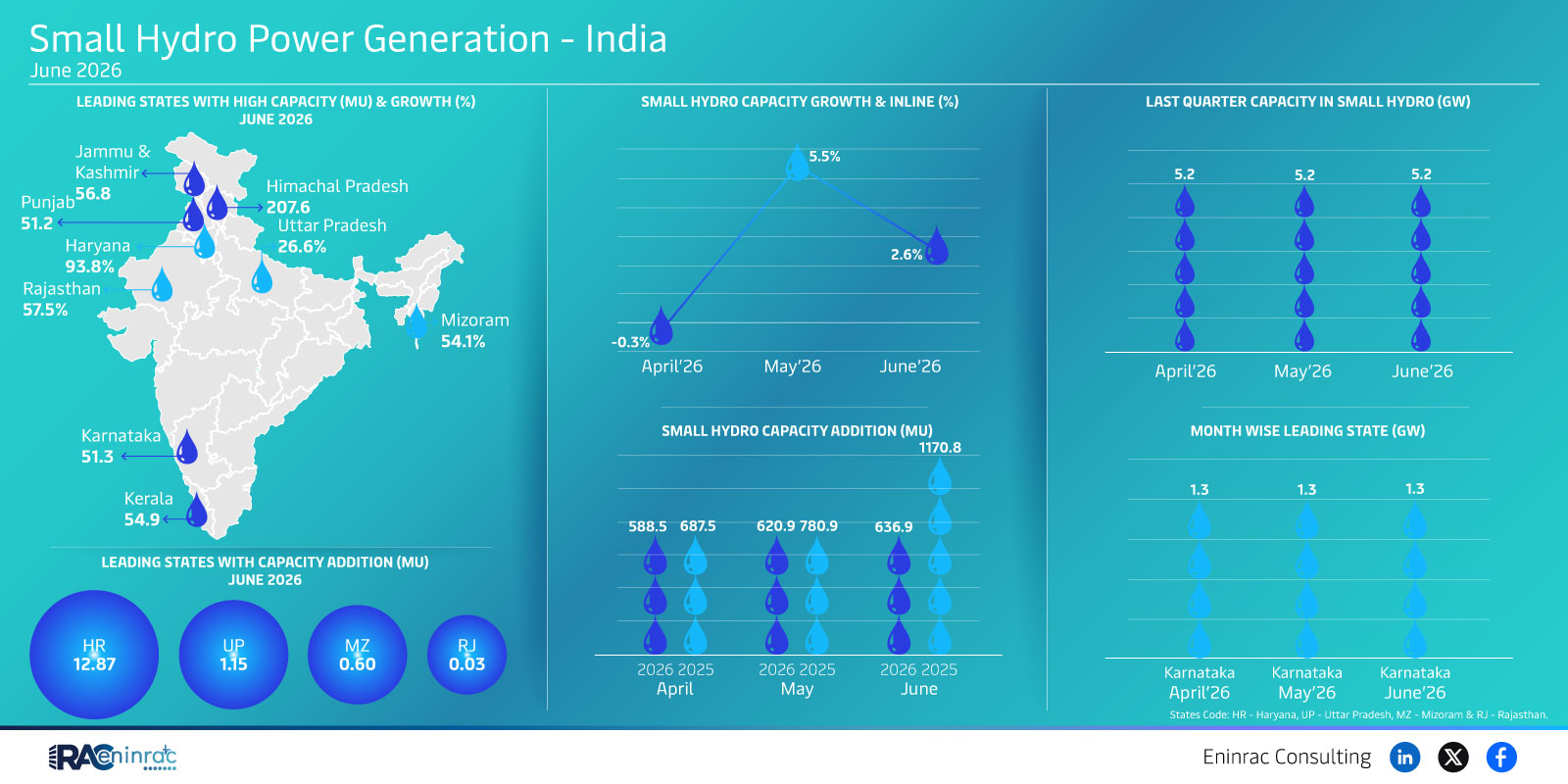
The data shows that small hydro capacity in India added more than 1,100 megawatts in the first half of 2026, driven primarily by Himachal Pradesh’s substantial installations and Karnataka’s consistent output. Month‑wise, April, May and June each recorded roughly 13 gigawatts of operational capacity, indicating a stable pipeline of projects. The leading states with the highest existing capacity and the largest additions are clearly distinguishable, suggesting that geographic factors and state‑level policies heavily influence growth.
State‑wise Small Hydro Capacity Trends in 2026
Himachal Pradesh tops the list with 207.6 MW of installed capacity, reflecting its mountainous terrain and long‑standing focus on hydro resources. Uttar Pradesh also appears among the leaders, though the exact figure is not legible in the source. Karnataka emerges as the month‑wise leader, contributing around 13 GW each in April, May and June. The aggregated capacity addition numbers—588.5 MW, 687.5 MW, 620.9 MW, 780.9 MW and 636.9 MW—demonstrate a steady influx of projects across diverse regions, underscoring the decentralized nature of small hydro development in India.
Impact on Sectors and Industries
Increasing small hydro capacity directly supports the renewable energy portfolio, reducing reliance on coal and enhancing grid stability. For investors, the clear upward trajectory signals reduced risk and attractive returns, especially in states with supportive policies. Equipment manufacturers, civil contractors, and local supply chains benefit from the heightened demand for turbines, civil works, and transmission upgrades. Meanwhile, policymakers can use the data to refine subsidy structures, prioritize water resource management, and align small hydro growth with broader climate goals, ensuring that the sector contributes meaningfully to India’s net‑zero commitments.
Key Takeaways
- India added over 1,100 MW of small hydro capacity in early 2026.
- Himachal Pradesh leads in existing capacity with 207.6 MW.
- Karnataka was the top month‑wise contributor, delivering about 13 GW each month.
- Capacity additions remained steady across April, May and June, showing pipeline robustness.
- State‑level policies and geography heavily influence small hydro growth.
- Growth supports renewable targets, creates investment opportunities, and boosts local industries.
FAQs
What is the total small hydro capacity added in India during the first half of 2026?
More than 1,100 MW of small hydro capacity was added across the country.
Which state has the highest installed small hydro capacity?
Himachal Pradesh, with approximately 207.6 MW, leads in installed capacity.
Why does Karnataka appear as a monthly leader?
Karnataka consistently contributed around 13 GW each month due to active project pipelines and supportive state policies.
How does small hydro growth affect India’s renewable energy goals?
The added capacity helps diversify the energy mix, reduces carbon emissions, and aids in meeting national renewable targets.
What opportunities does this growth present for investors?
Steady capacity additions create low‑risk investment avenues in project financing, equipment supply, and infrastructure development.