
Introduction
India’s wind power sector continues to expand rapidly, and the July 2026 data snapshot provides a clear view of how each state is contributing to the national renewable energy mix. Understanding wind capacity trends is essential for investors, policymakers, and industry analysts who track progress toward climate goals and energy security. This article examines the latest figures, identifies the states with the highest installed capacity and the fastest growth, and explains why these numbers matter for the broader energy landscape in India. The data also highlights regional policy effectiveness and the role of private sector partnerships in accelerating project delivery.
What Does the Data Reveal About This Topic?
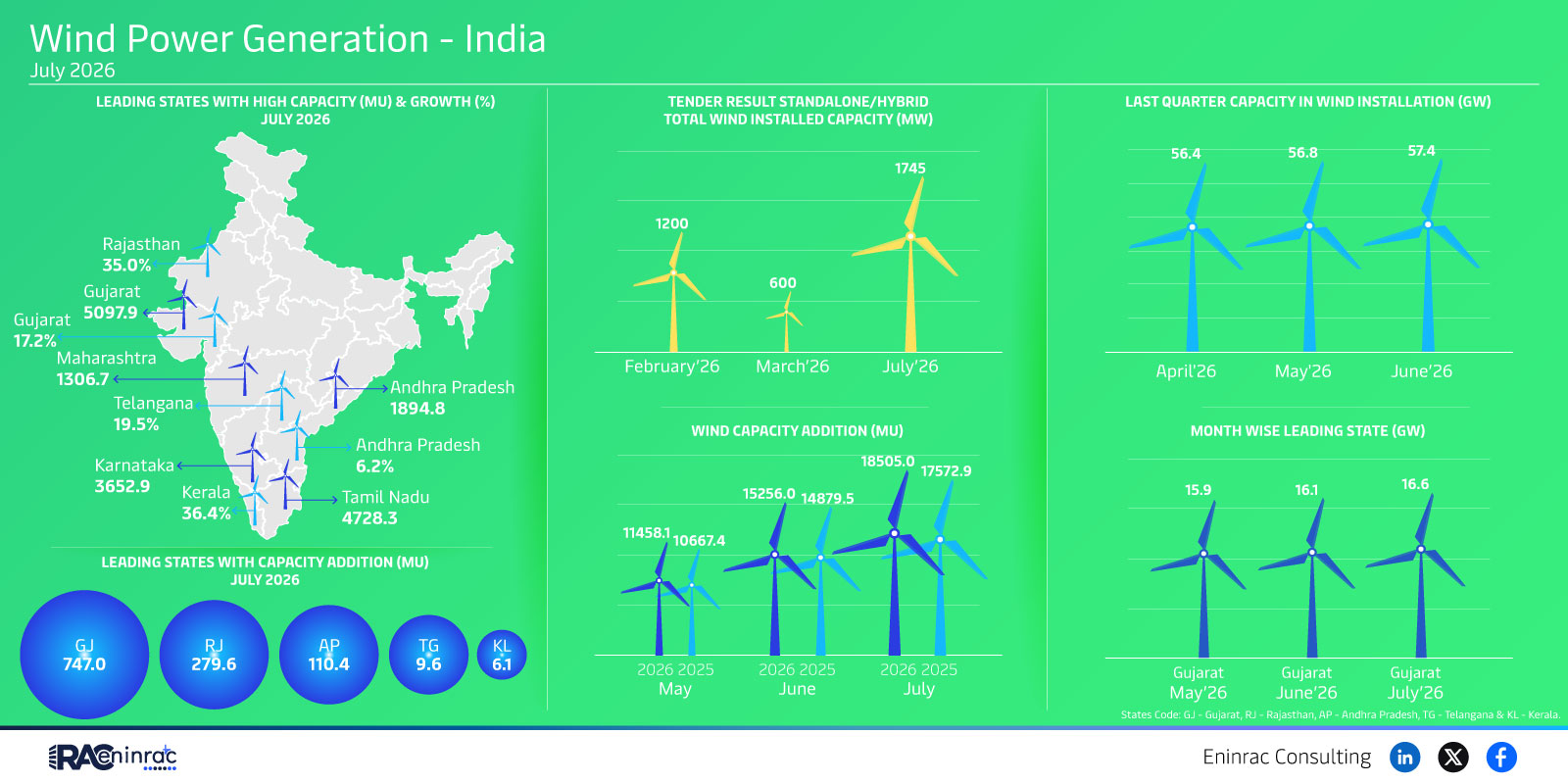
The data reveals that Gujarat remains the clear leader in wind capacity addition for July 2026, posting the largest increase among all states. Rajasthan follows with a notable rise, while Andhra Pradesh shows solid growth that keeps it in the top tier. Overall national wind capacity reached approximately 5,185 MW by the end of the month, with monthly additions hovering around 1.5 GW. The quarter‑end figures indicate a steady upward trajectory, as the total installed wind capacity edged close to 5.7 GW, reflecting continuous investment and project completions across the country.
State‑wise Wind Capacity Growth in July 2026
State‑wise analysis shows a pronounced disparity between the leading wind corridors and the rest of the country. Gujarat’s addition of nearly 1.9 GW this month dwarfs the contributions from Karnataka, Kerala, and Tamil Nadu, which together added less than 0.1 GW. Rajasthan’s growth of 35 MW, though modest in absolute terms, represents a strong percentage increase given its earlier lower base. Andhra Pradesh’s 6.2 MW addition pushes its cumulative capacity toward the 3.6 GW mark, positioning it as the third‑largest wind power producer. Meanwhile, traditionally high‑capacity states such as Tamil Nadu and Kerala recorded minimal new installations, signaling a possible shift in developer focus toward regions with higher wind resource potential and more supportive policy frameworks. Moreover, the gap between high‑performing states and lagging regions underscores the importance of targeted incentives and infrastructure upgrades to unlock untapped wind corridors.
Impact on Sectors and Industries
The ongoing expansion of wind capacity influences several key sectors. For power generators, the surge in installed megawatts creates new revenue streams and justifies further capital allocation to renewable projects. Equipment manufacturers, particularly those producing turbines and balance‑of‑system components, benefit from higher order volumes linked to Gujarat’s and Andhra Pradesh’s projects. Financial institutions see reduced risk profiles as diversified renewable assets improve grid stability, encouraging green bond issuance and equity investment. Policymakers can leverage the data to fine‑tune state‑level incentives, streamline land‑acquisition processes, and address transmission bottlenecks that may arise from rapid capacity growth. Finally, consumers stand to gain from cleaner electricity, lower carbon footprints, and potentially reduced tariffs as renewable supply increases. In addition, the rise in wind‑generated electricity helps lower dependence on imported fossil fuels, contributing to trade balance improvement and energy price stability.
Key Takeaways
- Gujarat leads July 2026 wind capacity addition with nearly 1.9 GW.
- Rajasthan shows strong percentage growth despite modest absolute addition.
- Andhra Pradesh climbs toward third‑largest position with 6.2 MW added.
- Tamil Nadu and Kerala report minimal new installations this month.
- Total national wind capacity approaches 5.7 GW, indicating steady expansion.
- Growth supports equipment manufacturers, financiers, and policy incentives nationwide.
FAQs
Which Indian state added the most wind capacity in July 2026?
Gujarat recorded the highest wind capacity addition, contributing nearly 1.9 GW.
How much total wind capacity was installed in India by the end of July 2026?
The country’s cumulative wind capacity reached about 5.7 GW.
Why is Gujarat dominant in wind power additions?
Gujarat benefits from strong wind resources, supportive state policies, and substantial private investment.
What impact does increased wind capacity have on investors?
Higher capacity reduces risk, improves asset diversification, and attracts green financing and equity inflows.
How can policymakers support continued wind growth?
By offering incentives, streamlining land acquisition, and improving grid infrastructure for better integration.