
Introduction
Solar power generation in India reached a pivotal point in July 2026, with the country continuing its aggressive push toward renewable energy targets. The latest quarterly figures highlight which states are driving the surge, the scale of new capacity additions, and how these numbers compare with previous periods. Readers will gain a clear picture of the leading regions, understand growth patterns, and see why these trends matter for investors, policymakers, and the broader energy market.
What Does the Data Reveal About This Topic?
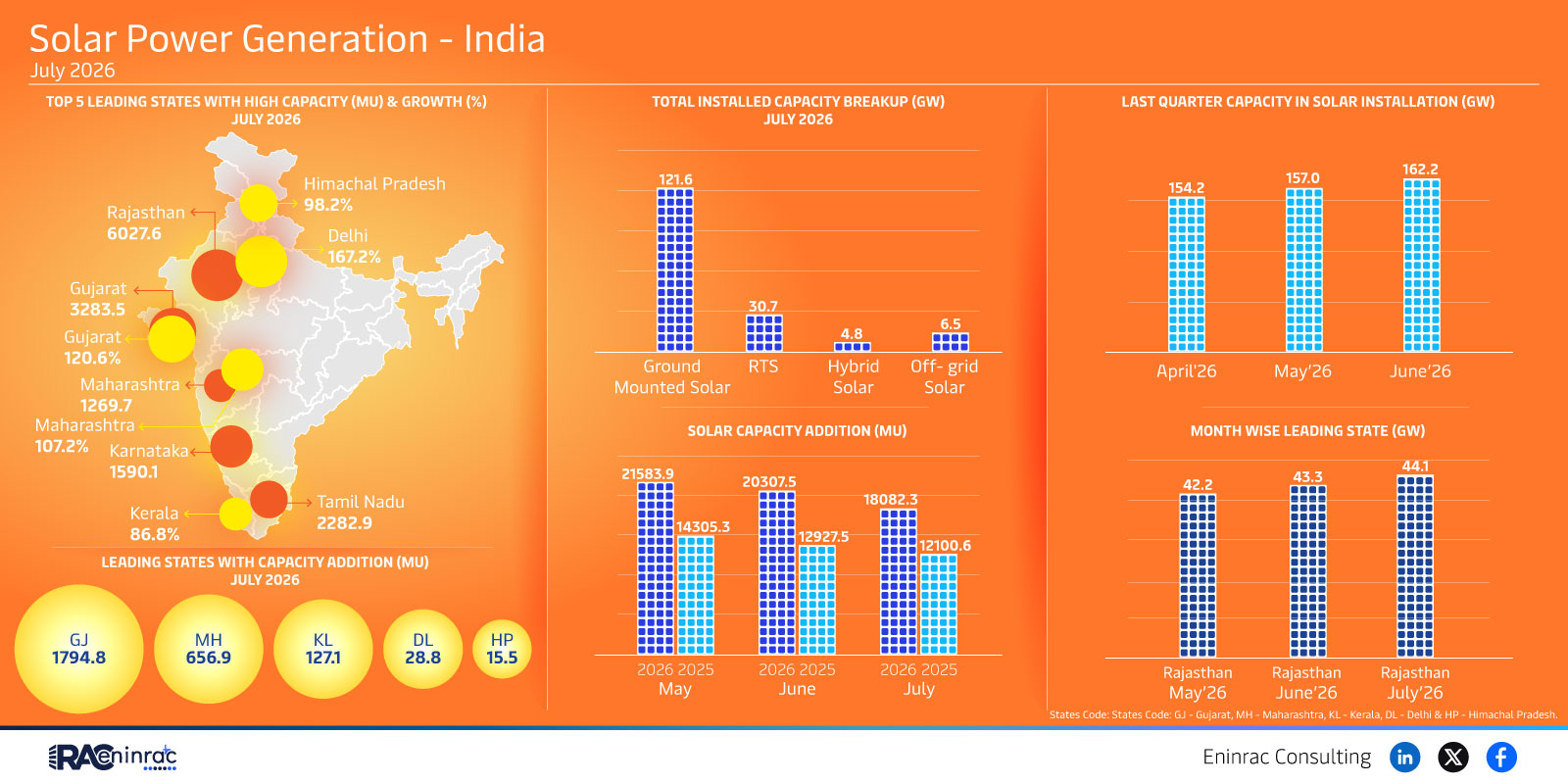
The data shows that Tamil Nadu remains the top state with a cumulative solar capacity of 2,282.9 MW, while Rajasthan consistently posted the highest monthly additions in May, June and July 2026. Overall, the nation added roughly 162 GW of solar capacity in the last quarter, indicating a robust expansion pace compared with earlier quarters. The figures also underscore a strong regional skew, with southern and western states contributing the bulk of new installations.
Statewise Capacity Highlights: Tamil Nadu Leads and Rajasthan Dominates Monthly Additions
Tamil Nadu's installed capacity of 2,282.9 MW makes it the clear leader, outpacing the next highest state by a wide margin. Gujarat, Maharashtra and Kerala also feature among the top five, reflecting the effectiveness of state‑level renewable policies and attractive solar‑friendly tariffs. In contrast, Rajasthan emerged as the month‑by‑month champion, registering the highest new capacity in May (approximately 444 MW), June and July, underscoring its growing role as a solar hub in the north‑west. The disparity between cumulative capacity and monthly addition highlights how some states focus on scaling up existing parks while others prioritize rapid new deployments.
Impact on Sectors and Industries
The surge in solar capacity reshapes several sectors. Utilities benefit from reduced reliance on coal, while equipment manufacturers see higher demand for photovoltaic modules, inverters and mounting structures. Financial institutions are creating green bonds and dedicated solar funds to capture the growth, and state governments are adjusting land‑use policies to accelerate project approvals. For investors, the clear state‑level performance signals where to allocate capital, especially in Tamil Nadu and Rajasthan where pipeline projects are plentiful. Policymakers can use the data to fine‑tune subsidy schemes, grid‑integration strategies, and storage incentives to sustain the momentum.
Key Takeaways
- Tamil Nadu holds the highest cumulative solar capacity at 2,282.9 MW.
- Rajasthan leads monthly additions, topping May, June and July 2026.
- Over 162 GW of solar capacity was added nationwide in Q2‑Q3 2026.
- Southern and western states dominate cumulative capacity, while northern regions drive new builds.
- Rapid growth supports renewable targets, reduces coal dependence, and encourages green financing.
- State‑level data helps investors target high‑growth markets and guide policy adjustments.
FAQs
Which Indian state has the largest installed solar capacity as of July 2026?
Tamil Nadu, with about 2,282.9 MW of cumulative solar capacity.
What was the total solar capacity added in India during the last quarter of 2026?
Approximately 162 GW of new solar capacity was installed nationwide.
Why is Rajasthan experiencing the highest monthly solar additions?
Favorable land policies, strong state incentives and abundant solar‑rich zones have accelerated project launches in Rajasthan.
How does the increase in solar capacity affect India's energy mix?
The growth reduces reliance on fossil fuels, lowers emissions, and moves the national grid toward a higher share of renewable electricity.
What opportunities does the July 2026 data present for investors?
Investors can focus on high‑growth states such as Tamil Nadu and Rajasthan, and target financing for new PV projects, storage and related services.