
Introduction
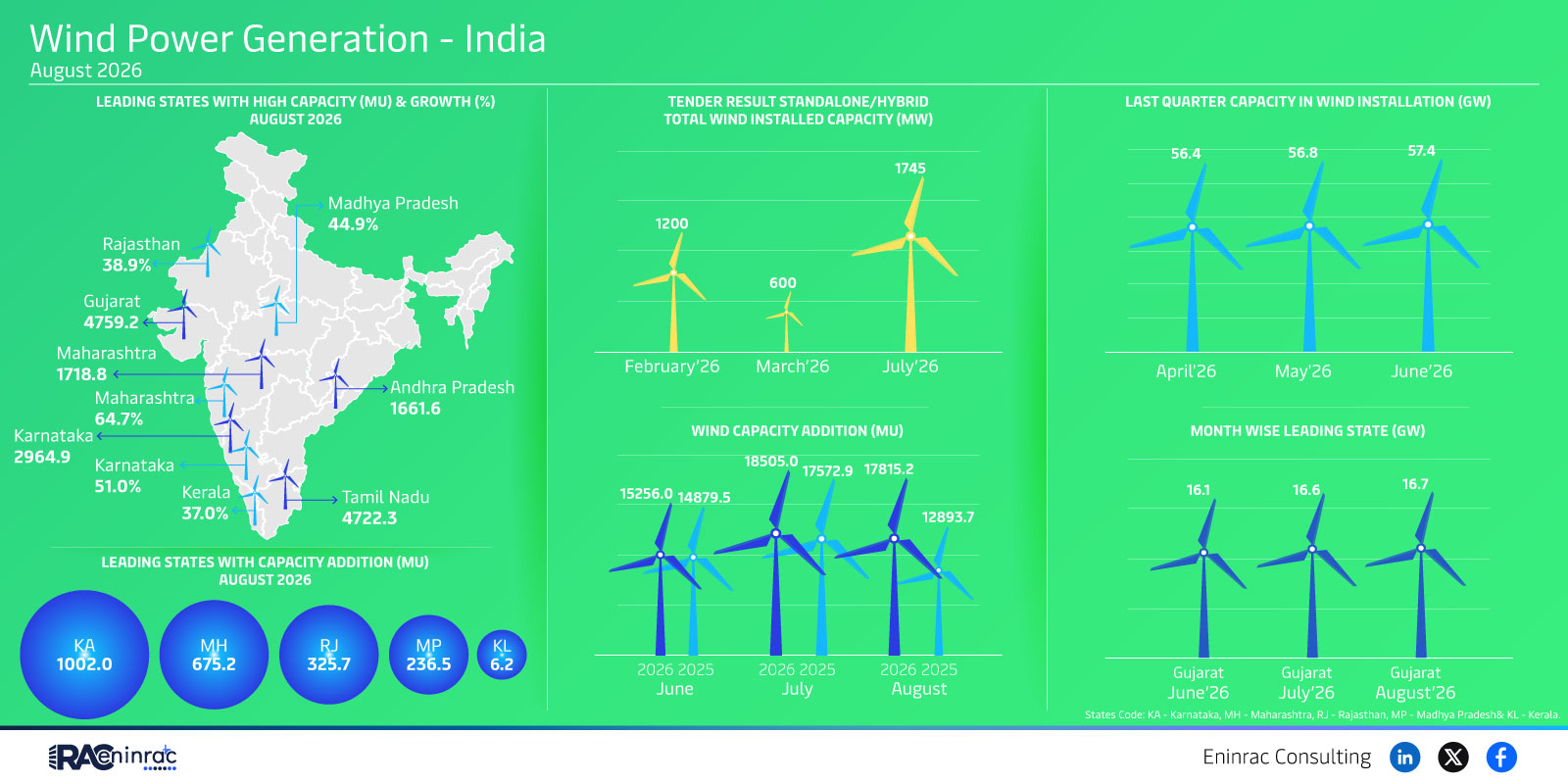
India's wind power generation data for August 2026 provides a clear snapshot of the sector's rapid expansion. The figures reveal which states are leading in installed capacity, where growth is accelerating, and how the overall wind market is shaping the country's renewable energy mix. Readers will learn about the top contributing states, the magnitude of capacity additions during the quarter, and the broader implications for investors, policymakers, and industry participants.
What Does the Data Reveal About This Topic?
What does the August 2026 wind power data tell us about regional performance? The data shows that Gujarat dominates the landscape with more than 4,759 MW of installed capacity, while Madhya Pradesh and Rajasthan exhibit strong growth trajectories. The quarter‑wise capacity additions indicate a steady upward trend, with the total wind installed capacity reaching approximately 1,745 MW across the country. These insights highlight both concentration in traditional hubs and emerging opportunities in fast‑growing states.
State‑wise Capacity and Growth Highlights
Comparing the leading states uncovers notable disparities and trends. Gujarat leads by a wide margin with 4,759.2 MW, followed by Karnataka at 2,964.9 MW and Tamil Nadu at 4,722.3 MW in hybrid projects. Maharashtra holds 1,718.8 MW, while Andhra Pradesh and Madhya Pradesh contribute 1,661.6 MW and 44.9 MW respectively. Rajasthan adds 38.9 MW, reflecting modest but steady expansion. The month‑wise breakdown for June, July and August 2026 shows Gujarat consistently at the top, underscoring its dominant role in the national wind portfolio.
Impact on Sectors and Industries
The expanding wind capacity influences multiple sectors across India. Energy utilities benefit from a diversified generation mix, reducing reliance on coal and improving grid stability. Manufacturing firms engaged in turbine production and component supply see increased demand, while financial institutions gain new avenues for green investment. Policymakers can leverage the data to refine renewable targets and incentivize development in under‑served regions. Consumers ultimately experience cleaner air and a gradual reduction in electricity costs as wind power contributes a larger share of the overall mix.
Key Takeaways
- Gujarat remains the clear leader with over 4,759 MW installed.
- Karnataka and Tamil Nadu show strong hybrid project capacity.
- Madhya Pradesh and Rajasthan are posting notable growth despite smaller bases.
- Total wind installed capacity reached approximately 1,745 MW in the quarter.
- Monthly data indicates consistent performance across June to August 2026.
- Growing capacity supports renewable targets and attracts green investment.
FAQs
Which state had the highest wind capacity in August 2026?
Gujarat recorded the highest wind capacity, exceeding 4,759 MW.
How much capacity did Madhya Pradesh add in the latest quarter?
Madhya Pradesh added roughly 44.9 MW during the quarter.
What is the total wind installed capacity for India in Q3 2026?
The total wind installed capacity reached about 1,745 MW across the country.
Are hybrid projects contributing significantly to capacity?
Yes, hybrid projects in Karnataka and Tamil Nadu add several thousand megawatts to the mix.
How does wind growth affect renewable energy goals?
Increasing wind capacity helps India meet its renewable energy targets and reduces carbon emissions.