
Introduction
Large hydro power generation in India continues to shape the country's renewable energy landscape as of August 2026. This sector delivers reliable baseload electricity, supports grid stability, and contributes significantly to climate‑change mitigation. In this article we examine the latest capacity figures, identify the states that are leading the charge, and discuss the implications for investors, policymakers and the broader energy market.
What Does the Data Reveal About This Topic?
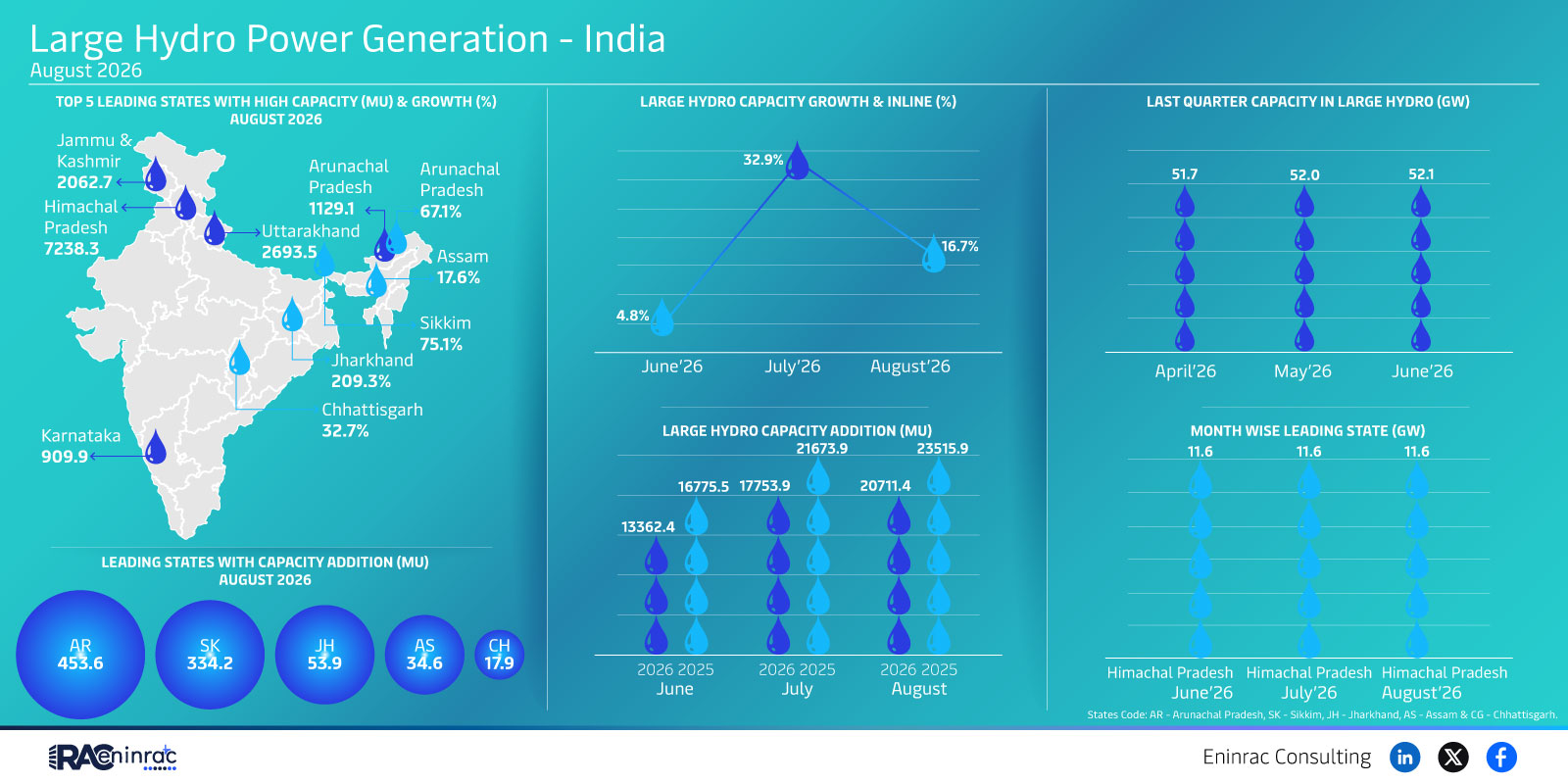
The data shows that Himachal Pradesh, Arunachal Pradesh, Uttarakhand and Karnataka together accounted for the highest installed large hydro capacity and the strongest capacity additions in the last quarter of 2026. Himachal Pradesh alone contributed more than 11 GW of operating large hydro capacity, while Arunachal Pradesh added over 2 GW of new capacity during the same period. The overall growth rate of large hydro generation was approximately 16.7 % year‑on‑year.
State‑wise Capacity and Growth Highlights
Arunachal Pradesh recorded the largest cumulative capacity of about 2,062 MW, followed by Himachal Pradesh with 1,129 MW, and Uttarakhand with 723 MW. Karnataka, though smaller at roughly 910 MW, demonstrated notable year‑over‑year growth. Monthly capacity additions peaked in June 2026, falling slightly in July and August, reflecting seasonal project commissioning schedules. The combined capacity addition across all leading states reached more than 23 GW during the quarter, reinforcing the role of large hydro in meeting India's renewable‑energy targets.
Impact on Sectors and Industries
Accelerated large hydro power generation influences multiple sectors. Power utilities gain access to flexible, low‑cost baseload that eases integration of intermittent solar and wind. Infrastructure developers see heightened demand for tunneling, civil works and turbine technology, creating jobs in remote regions. Investors benefit from stable cash flows supported by long‑term power purchase agreements, while policymakers can rely on hydro to achieve the 450 GW renewable‑energy ambition by 2030. The sector also drives ancillary industries such as steel, cement and transmission‑line construction. The reliability of large hydro also reduces the need for costly peaking gas plants, thereby lowering overall system emissions and supporting India's climate commitments.
Key Takeaways
- Himachal Pradesh, Arunachal Pradesh, Uttarakhand and Karnataka dominate large hydro capacity in India.
- The quarter‑end capacity addition of over 23 GW marks a 16.7 % growth compared with the previous year.
- June 2026 saw the highest monthly addition, indicating project commissioning cycles.
- Large hydro contributes essential baseload power, complementing solar and wind.
- Investment interest is rising due to predictable revenue streams and supportive policy.
- Continued growth is vital for meeting India’s 2030 renewable‑energy goals.
FAQs
Which Indian state has the highest large hydro capacity?
Himachal Pradesh leads with more than 11 GW of operating large hydro capacity as of August 2026.
What was the overall growth rate of large hydro generation in 2026?
The sector grew by roughly 16.7 % year‑on‑year, driven by new additions in several states.
How much new capacity was added in June 2026?
June 2026 recorded the largest monthly addition, contributing around 21.6 GW of new large hydro capacity.
Why is large hydro important for India’s renewable‑energy mix?
Large hydro provides reliable baseload power, enhances grid stability, and helps offset the intermittency of solar and wind resources.
What are the investment prospects for large hydro projects?
Investors are attracted by long‑term power purchase agreements, low operating costs and strong government support, making large hydro a stable investment.