
Introduction
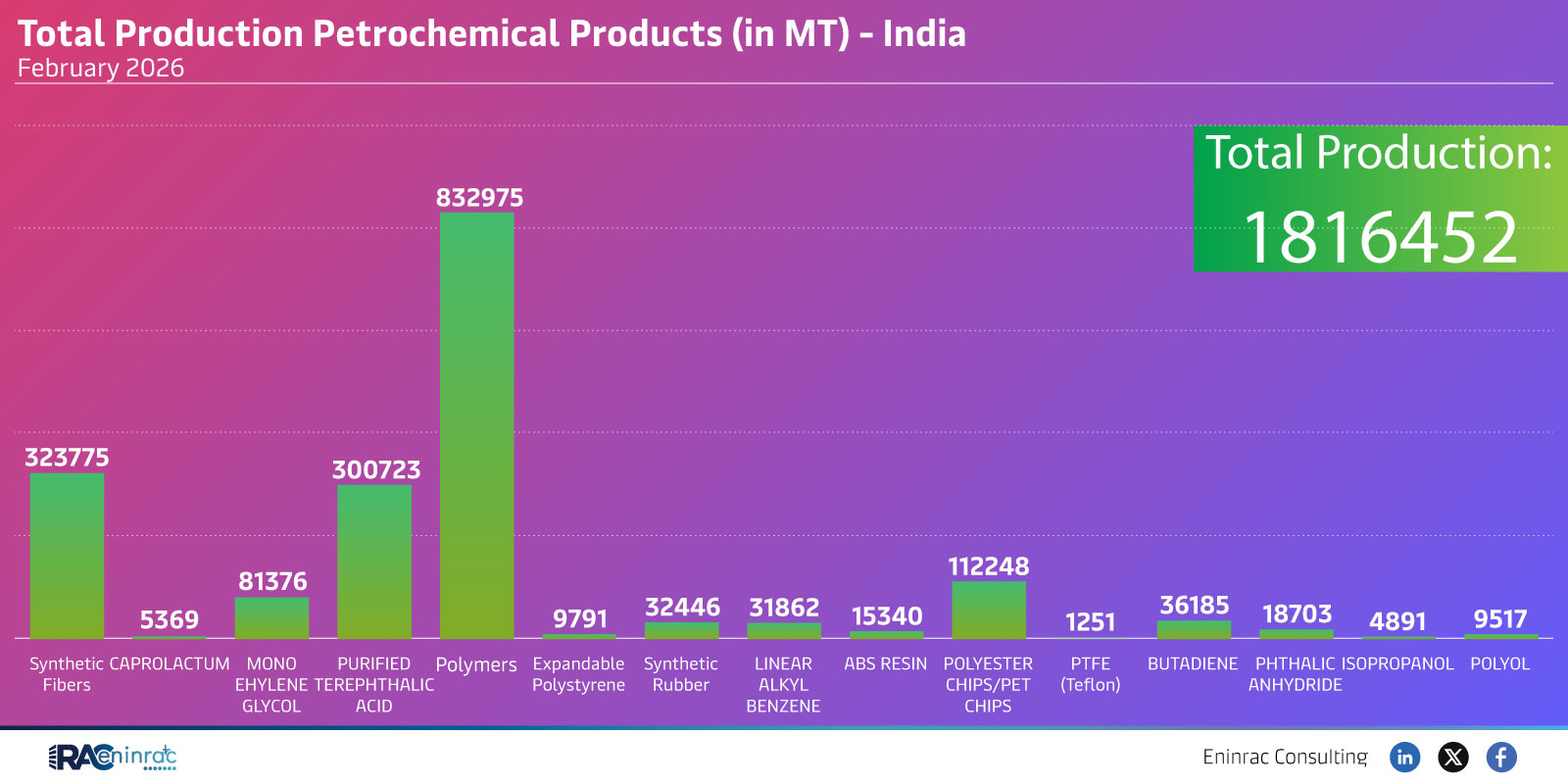
India reported a massive total petrochemical output of 832,975 metric tonnes in February 2026, highlighting the country’s expanding role in the global chemicals arena. This data set captures production volumes across a wide range of synthetic materials, from polymers and resins to specialty chemicals such as PTFE and butadiene. Understanding these figures helps investors, policymakers, and industry professionals gauge market momentum, assess supply chain dynamics, and anticipate future pricing trends.
What Does the Data Reveal About This Topic?
The February 2026 snapshot shows that India’s petrochemical sector delivered 832,975 MT, with significant contributions from high‑value polymers and basic chemicals. The numbers suggest a steady rise in manufacturing capacity, driven by strong domestic demand for plastics, automotive components, and construction materials. The data also raises questions about how this output aligns with global supply, raw material availability, and the country’s sustainability goals.
Production Breakdown by Chemical Category
A closer look at the breakdown reveals several leading segments. Synthetic caprolactam and purified polymers together account for roughly 300,000 MT, while linear ABS resin, polyester, and PTFE combine for over 120,000 MT. Specialty chemicals such as butadiene, phthalic acid, isopropanol, and polyol contribute another 150,000 MT. The remaining volume includes ethylene, terephthalic acid, polystyrene, rubber, alkyl chips/PET (Teflon), anhydride, glycol, acid, benzene, and assorted chips, each playing a vital role in downstream applications.
Impact on Sectors and Industries
The scale of India petrochemical production 2026 directly influences multiple downstream sectors. The plastics industry benefits from abundant polymer supplies, reducing reliance on imports and supporting the growth of packaging, consumer goods, and automotive parts. Chemical manufacturers gain a stable feedstock base for specialty products, while the construction sector sees cost advantages in coated materials and insulation. Investors view the rising output as a signal of robust demand, prompting capital allocation to new plants and technology upgrades. Policymakers must balance expansion with environmental regulations and circular‑economy initiatives.
Key Takeaways
- India’s total petrochemical output reached 832,975 MT in February 2026, marking a notable increase from previous months.
- Polymers such as caprolactam, ABS resin, and polyester dominate the production mix, together representing over half of total volume.
- Specialty chemicals including butadiene, PTFE, and phthalic acid show strong growth, reflecting rising demand in automotive and electronics.
- Domestic availability of key feedstocks supports cost‑competitive manufacturing across plastics, textiles, and construction.
- The data underscores the importance of sustainable practices to mitigate environmental impact of higher production.
- Investors and policymakers can use these figures to guide infrastructure investment and regulatory frameworks.
FAQs
What was the total petrochemical production in India for February 2026?
India produced 832,975 metric tonnes of petrochemical products in February 2026.
Which chemical categories contributed the most to the output?
Polymers such as synthetic caprolactam, ABS resin, and polyester were the largest contributors, together accounting for over half of the total volume.
How does this production level affect the Indian plastics industry?
The high polymer output lowers import dependence, reduces material costs, and supports growth in packaging, consumer goods, and automotive components.
Are there environmental concerns linked to this production surge?
Yes, increased petrochemical activity raises emissions and waste challenges, prompting the need for stricter environmental regulations and circular‑economy measures.
What opportunities does this data present for investors?
Investors can target expanding capacity, technology upgrades, and downstream processing facilities to capitalize on the growing domestic supply chain.