
Introduction
This report examines small hydro power generation across Indian states for the period April 2025 – March 2026 compared with the previous year. Small hydro projects, typically under 25 MW, are crucial for diversifying the renewable energy mix, providing reliable local power and supporting rural development. Readers will learn which states led generation, how output changed year‑on‑year, and what the trends mean for investors and policymakers.
What Does the Data Reveal About This Topic?
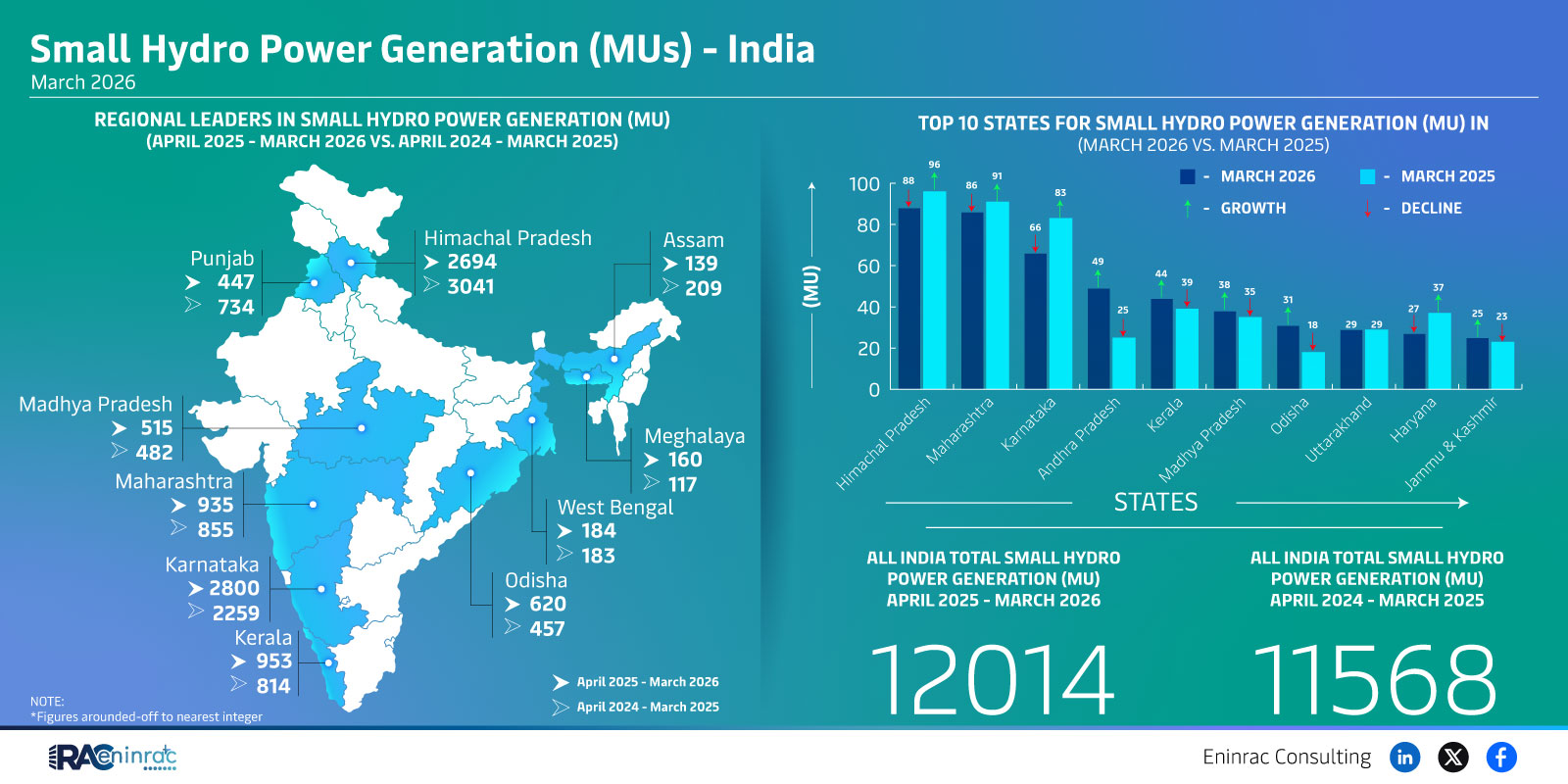
The data shows a clear concentration of small hydro output in a handful of states, with Odisha, Maharashtra and Karnataka accounting for the majority of megawatt‑hours generated. Year‑on‑year growth is strongest in Odisha (+22 %), while some traditionally strong states such as Punjab saw modest declines.
State‑by‑State Performance and Year‑on‑Year Shifts
Odisha tops the list with 2,259 MU, a significant rise from the previous year, reflecting new commissioning and upgrades. Maharashtra follows with 935 MU, maintaining its position as a major contributor. Karnataka posted 855 MU, showing steady performance. Meghalaya and Madhya Pradesh contributed 160 MU and 515 MU respectively, indicating smaller but growing portfolios. Punjab’s output fell to 209 MU, highlighting regional challenges. Overall, the top ten states generated 11,568 MU, representing the bulk of national small hydro capacity.
Impact on Sectors and Industries
Increased small hydro generation supports the renewable energy sector by adding firm capacity that complements intermittent sources like solar and wind. It creates investment opportunities for project developers, equipment manufacturers and financing institutions. Policymakers can leverage these trends to design incentives that encourage further development in under‑served regions, while utilities benefit from more stable, locally sourced power.
Key Takeaways
- Odisha leads small hydro generation with 2,259 MU, showing the strongest year‑on‑year growth.
- Maharashtra and Karnataka remain the second and third largest producers, together contributing over 1,700 MU.
- The top ten states account for 11,568 MU, underscoring a high concentration of output.
- Punjab experienced a decline, suggesting the need for targeted policy support.
- Growth in smaller states like Meghalaya indicates expanding geographic diversification.
- Overall small hydro capacity is rising, reinforcing India’s renewable energy targets.
FAQs
Which state generated the most small hydro power in 2025‑2026?
Odisha, with 2,259 MU, was the leading state.
How did Maharashtra’s small hydro output change compared to the previous year?
Maharashtra maintained a strong position with 935 MU, showing stable output.
Why did Punjab’s small hydro generation decline?
Factors include limited new projects, water flow constraints and slower policy implementation.
What opportunities does small hydro present for investors?
Stable, low‑carbon generation, supportive government incentives and growing demand for decentralized power make small hydro attractive.
How does small hydro complement other renewable sources?
It provides firm, dispatchable electricity that balances the variability of solar and wind, enhancing grid reliability.