
Introduction
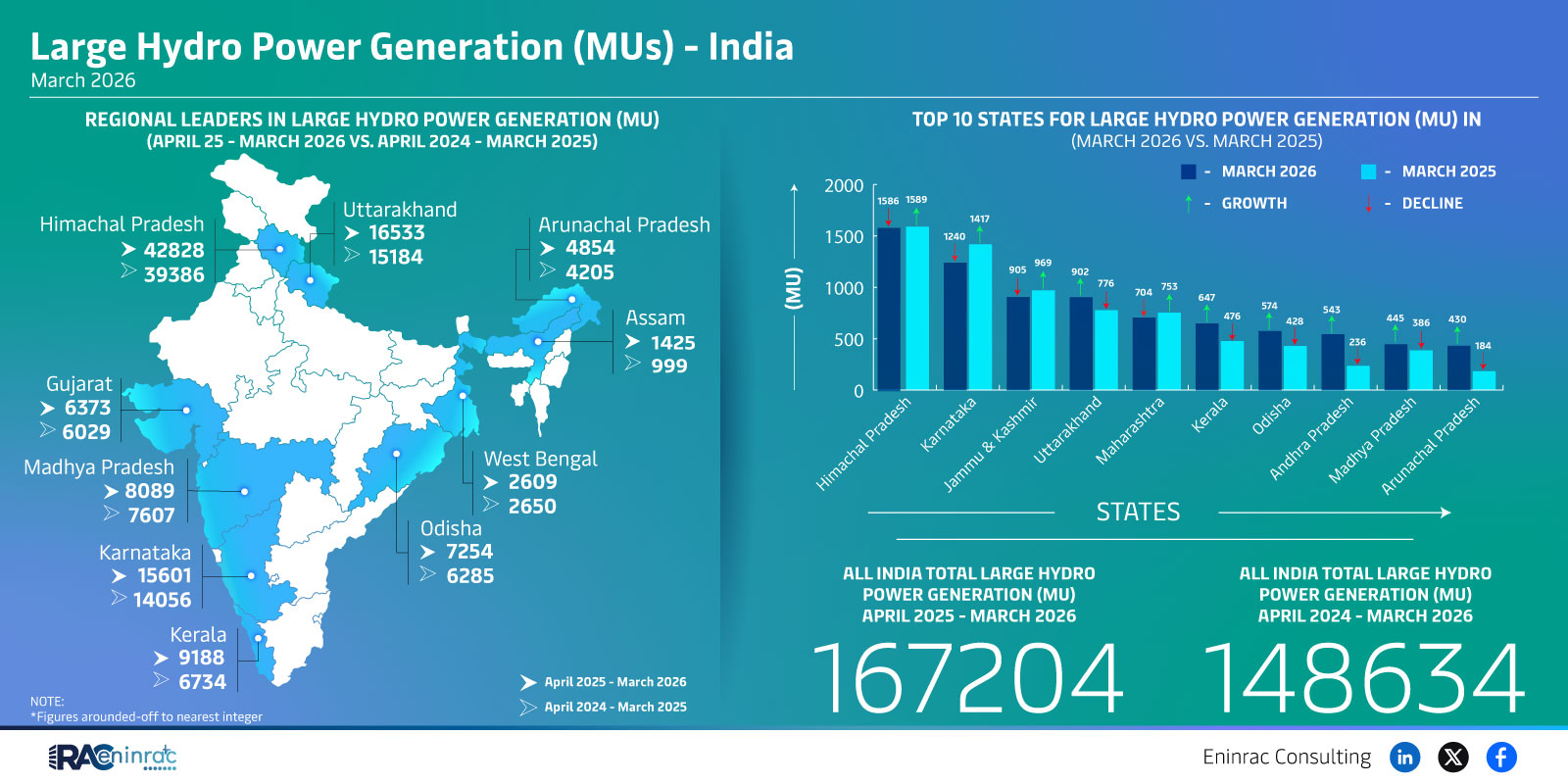
India’s large hydro power generation landscape for the period April 2025 to March 2026 is presented with state‑wise megawatt‑unit (MU) figures. Understanding which states lead in hydro output helps investors, policymakers and energy analysts gauge growth trends, regional capacity shifts and future development opportunities.
What Does the Data Reveal About This Topic?
The data shows that total large hydro generation across India rose to 167,204 MU in March 2026, up from 148,635 MU in the previous year. The increase reflects higher output in traditional hydro‑rich states and emerging contributions from new projects.
State‑Level Performance and Ranking
Among the top contributors, Himachal Pradesh recorded 16,533 MU, while Uttarakhand and West Bengal also posted significant volumes. Karnataka, Madhya Pradesh, Odisha and other states added modest but growing shares. The top‑ten states collectively account for the majority of the national total, highlighting the concentration of hydro resources in the Himalayan and sub‑Himalayan regions.
Impact on Sectors and Industries
Higher hydro generation supports renewable energy targets, reduces reliance on fossil fuels and stabilises grid supply during peak demand. For investors, the upward trend signals attractive project pipelines in states with strong water resources. Policymakers can use the state‑wise data to prioritize infrastructure upgrades, environmental clearances and financing mechanisms for hydro development.
Key Takeaways
- Total large hydro generation increased by roughly 12.5% year‑on‑year.
- Himachal Pradesh remains the leading hydro state with over 16,000 MU.
- Traditional hydro hubs such as Uttarakhand and West Bengal continued strong performance.
- Emerging states like Karnataka and Madhya Pradesh showed measurable growth.
- The top ten states dominate national hydro output, underscoring regional concentration.
- Growth supports India’s renewable energy commitments and grid reliability.
FAQs
Which state generated the most large hydro power in March 2026?
Himachal Pradesh led with 16,533 MU.
How much did India’s total large hydro generation increase from 2025 to 2026?
The total rose from 148,635 MU to 167,204 MU, an increase of about 12.5%.
Are there new states emerging as hydro power contributors?
Yes, states such as Karnataka and Madhya Pradesh showed noticeable growth compared with the previous year.
What does the rise in hydro generation mean for renewable energy goals?
It helps India meet its renewable capacity targets, reduces carbon emissions and improves grid stability.
How can investors use this state‑wise hydro data?
Investors can identify high‑performing regions for project financing, assess risk profiles and align with government incentives.