
Introduction
India’s wind power sector continues to expand rapidly, with state‑wise generation data for March 2025 and March 2026 highlighting shifting leadership and growth patterns. Understanding which states are driving the increase, how the totals compare year over year, and what this means for investors and policymakers is essential for anyone tracking renewable energy trends in the country.
What Does the Data Reveal About This Topic?
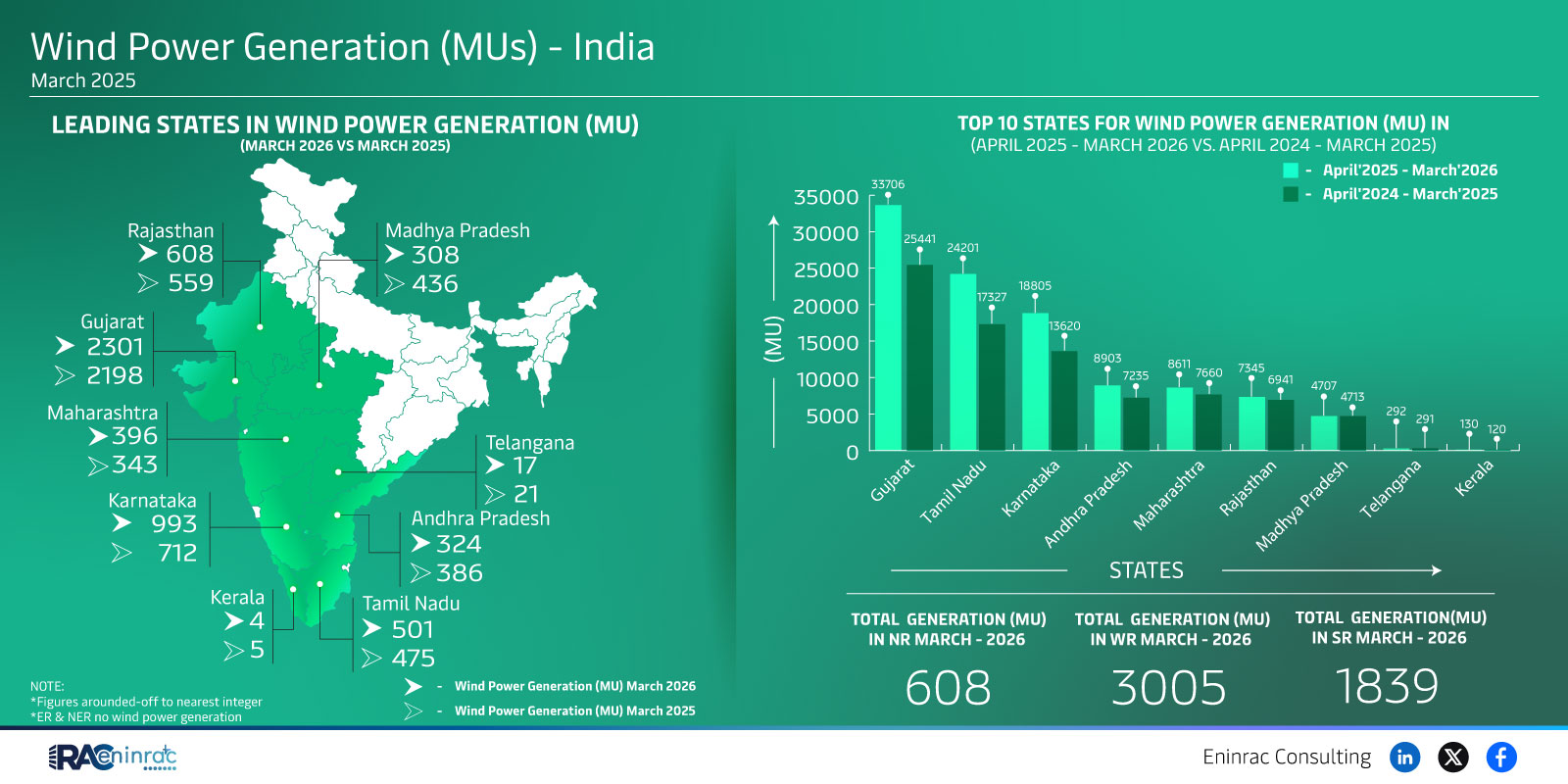
The data shows that Rajasthan, Madhya Pradesh, Maharashtra, Telangana, Andhra Pradesh and several other states have posted notable changes in megawatt‑hours (MU) generated between March 2025 and March 2026. The key insight is that while traditional leaders like Rajasthan remain dominant, emerging contributors such as Telangana and Andhra Pradesh are narrowing the gap, indicating a broader geographic diversification of wind capacity.
State‑Level Performance and Year‑on‑Year Shifts
Rajasthan leads with the highest generation, maintaining its top position despite modest growth. Madhya Pradesh recorded a rise from 308 MU to 436 MU, reflecting a strong upward trajectory. Maharashtra’s output increased to 396 MU, while Telangana entered the top tier with 17 MU, a modest but strategic entry. Andhra Pradesh posted 324 MU, up from 386 MU in the previous period, showing a reversal that suggests new projects coming online. Overall, the top ten states collectively contributed over 35,000 MU in the April 2025‑March 2026 window, up from roughly 25,000 MU in the prior year, underscoring a robust national expansion.
Impact on Sectors and Industries
The surge in wind generation influences multiple sectors. Power utilities benefit from a larger clean‑energy mix, reducing reliance on coal and lowering emissions. Equipment manufacturers, especially turbine producers, see heightened demand for installations and maintenance services. Financial investors are attracted to the growing pipeline of wind projects, prompting increased capital allocation to renewable funds. Policymakers gain leverage to meet India’s climate commitments, while local economies in high‑generation states experience job creation and infrastructure development.
Key Takeaways
- Rajasthan remains the top wind power generator in India.
- Madhya Pradesh shows the strongest growth rate among leading states.
- Emerging contributors like Telangana are entering the top‑ten list.
- Total generation from the top ten states rose by roughly 10,000 MU year over year.
- Increased wind output supports national decarbonisation targets.
- Growth creates opportunities for investors, manufacturers, and regional economies.
FAQs
Which state generated the most wind power in March 2026?
Rajasthan topped the list, maintaining its position as the leading wind power generator.
How much did Madhya Pradesh’s wind generation increase?
Madhya Pradesh grew from 308 MU in March 2025 to 436 MU in March 2026, a significant rise.
Are new states entering the top‑ten wind generation list?
Yes, Telangana and Andhra Pradesh have improved their rankings, indicating broader geographic participation.
What does the increase in total generation mean for India’s energy mix?
The rise helps diversify the energy mix, reducing dependence on fossil fuels and supporting climate goals.
What opportunities does this growth create for investors?
Higher generation forecasts attract capital to wind projects, encouraging investment in turbine manufacturing, project financing, and related services.