
Introduction
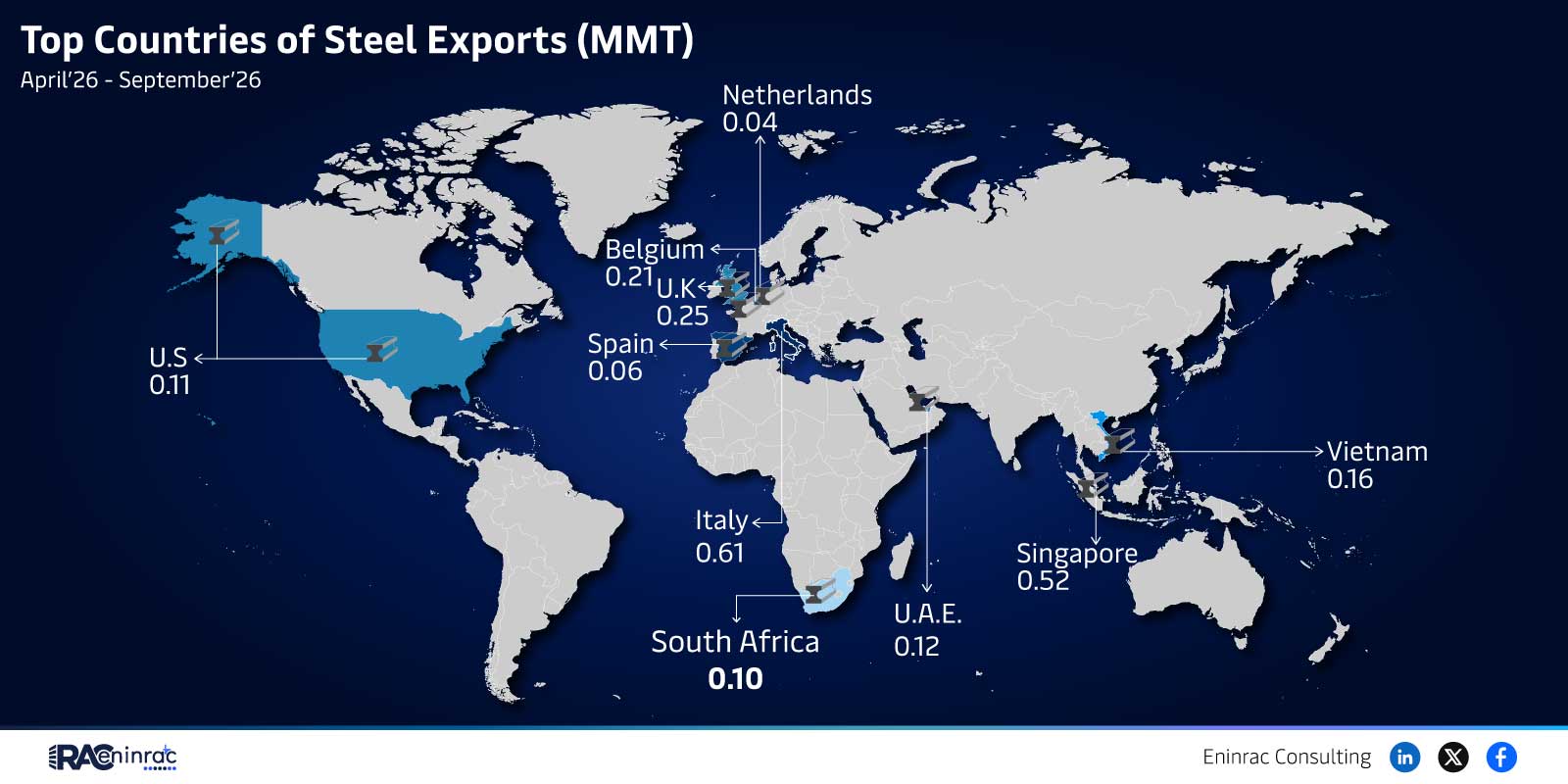
Steel exports shape the global industrial landscape, influencing everything from construction to automotive production. Between April 26 and September 26, 2023, a concise dataset highlights which nations led the market in million metric tons (MMT). This article unpacks the figures, explains why these exporters matter, and shows what the numbers reveal for investors, policymakers, and industry professionals. By the end of the read, you will understand the relative performance of the Netherlands, Singapore, the United Arab Emirates and South Africa, and grasp the broader implications for the steel trade.
What Does the Data Reveal About This Topic?
The snapshot indicates that the Netherlands and Singapore each recorded export volumes around half a million metric tons, while the United Arab Emirates contributed a modest share and South Africa’s output fell near one‑tenth of a million metric tons. The question becomes: why do these relatively small figures matter? Even limited MMT values can signal strategic positioning, niche market strengths, or emerging supply chain shifts that larger producers may overlook.
Regional Performance Overview
When comparing the four entries, the Netherlands leads with the highest reported steel export volume, closely followed by Singapore at 0.52 MMT. The United Arab Emirates, although listed without a precise figure, appears to sit between these two in regional influence, likely leveraging its logistical hubs and trade agreements. South Africa trails significantly with only 0.10 MMT, reflecting either a narrower export base or a focus on different commodity categories. These differences underscore how geographic location, port infrastructure, and trade policy can amplify or constrain a country's steel export capacity.
Impact on Sectors and Industries
Steel export performance directly influences downstream sectors such as construction, automotive manufacturing, and machinery production. Nations with stronger export figures often enjoy lower domestic steel prices, encouraging higher investment in infrastructure projects. Conversely, lower export volumes can lead to tighter supply, higher costs, and pressure on domestic manufacturers to seek alternative materials. For investors, the data signals potential opportunities in logistics firms, raw material suppliers, and trade finance services that support the movement of steel across borders.
Key Takeaways
- The Netherlands ranks highest among the listed exporters for the April‑September 2023 period.
- Singapore’s steel export volume reaches approximately 0.52 MMT, indicating strong port efficiency.
- The United Arab Emirates maintains a strategic position despite lacking a specific volume figure.
- South Africa’s export level of 0.10 MMT highlights a modest presence in the global market.
- Geographic advantages such as port access and trade agreements heavily influence export capacity.
- Investors should monitor logistics and raw material sectors linked to steel trade dynamics.
FAQs
Which country exported the most steel in the April‑September 2023 window?
The Netherlands led the list with the highest reported steel export volume.
How much steel did Singapore export during this period?
Singapore exported roughly 0.52 MMT of steel, reflecting efficient port operations.
Why does South Africa have a lower steel export figure?
South Africa’s lower output may stem from a smaller domestic steel industry and focus on other commodities.
What role do trade agreements play in steel export performance?
Favorable agreements reduce tariffs, streamline customs, and boost competitiveness of exporting nations.
How can investors use steel export data?
Investors can target logistics firms, raw material suppliers, and trade finance services linked to steel movement.