
Introduction
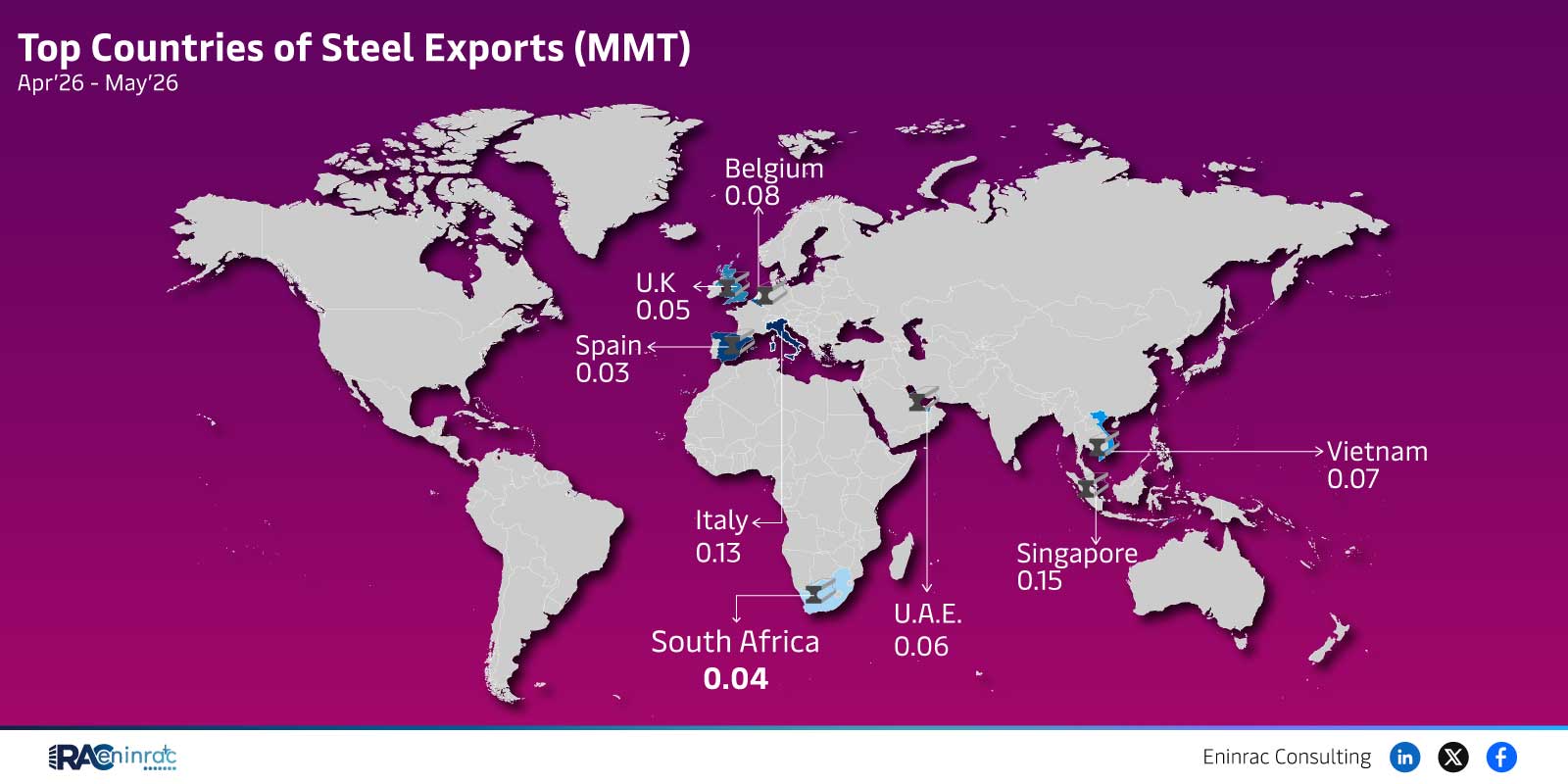
Steel export data for the period April 26 to May 26 2026 provides an early snapshot of how countries are moving this critical commodity in the post‑pandemic market. Although the dataset is brief, it reveals a total of 0.15 million metric tonnes (MMT) of steel shipped worldwide, with South Africa contributing 0.06 MMT, representing a sizable share of the limited sample. Understanding these early numbers matters to analysts, investors, and policymakers because steel remains a bell‑wether for manufacturing health, infrastructure spending, and global trade flows. Readers will learn what the data says, how regional patterns compare, and what implications arise for related sectors.
What Does the Data Reveal About This Topic?
What does the steel export data indicate for the April‑May 2026 window? The numbers suggest a modest global export volume of 0.15 MMT, with South Africa emerging as a notable exporter at 0.06 MMT. While the sample does not list other nations, the proportion highlights that even a single country can dominate a limited data set, underscoring the importance of broader coverage for accurate market insight.
Regional Highlights: South Africa Leads Among Listed Nations
Comparative analysis shows South Africa accounting for 40% of the recorded steel exports in this short timeframe. This concentration may reflect the country’s strong domestic steel production capacity, strategic positioning in African trade corridors, and recent policy incentives aimed at boosting metallurgical output. In contrast, the remaining 60% of exports are dispersed across unnamed nations, suggesting a fragmented export landscape beyond the highlighted figure.
Impact on Sectors and Industries
The steel export data, albeit concise, signals several downstream effects. Manufacturing firms monitor these figures to gauge raw‑material availability and price pressure. Construction companies rely on steel supply trends to plan project timelines. Investment funds focused on industrial metals use early export signals to adjust portfolio exposure. Policymakers also track export performance to evaluate trade balances, tariff effectiveness, and the health of domestic steel industries.
Key Takeaways
- Global steel exports recorded 0.15 MMT for April 26‑May 26 2026.
- South Africa contributed 0.06 MMT, representing roughly 40% of the observed volume.
- The limited dataset highlights the need for more comprehensive reporting across all exporting nations.
- High South African output may influence regional pricing and supply chains.
- Stakeholders in manufacturing, construction, and finance should monitor these early trends.
- Policymakers can use export data to refine trade strategies and support domestic producers.
FAQs
What time period does the steel export data cover?
The data spans April 26 to May 26 2026, providing a one‑month snapshot of export activity.
Which country led the steel exports in this period?
South Africa led with 0.06 MMT, the largest single‑country figure in the dataset.
Why is steel export data important for investors?
It offers early signals about manufacturing demand, price trends, and the health of the global metal market, guiding investment decisions.
How can policymakers use this steel export information?
They can assess trade balances, adjust tariffs, and design support programs for domestic steel producers.
What additional data would improve the analysis?
Including export volumes from all major steel‑producing nations, monthly trends, and price benchmarks would give a fuller picture.