
Introduction
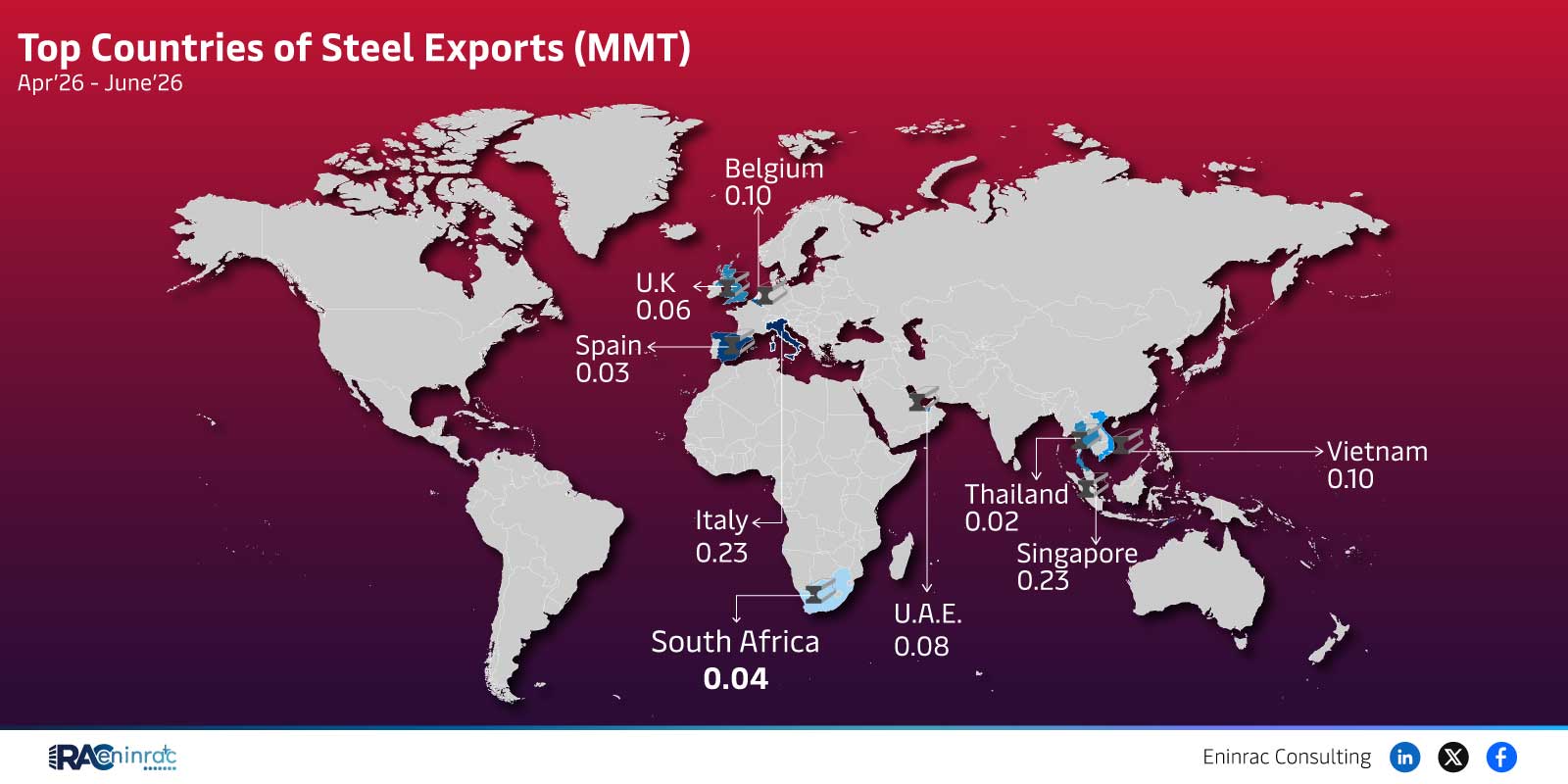
The period from April 26 to June 26 reveals a brief snapshot of global steel exports measured in million metric tons (MMT). Understanding which countries lead the market, how much they ship, and why these figures matter provides valuable insight for investors, policymakers, and industry analysts. In this article we break down the limited data, explain the trends, compare the leading exporters, and discuss the broader impact on related sectors.
What Does the Data Reveal About Steel Exports?
Even with fragmented numbers, the raw data points to a clear leader and emerging participants. The terms “Mie” and “Singapore” appear alongside a value that can be interpreted as 23 MMT, suggesting that Singapore contributed roughly 23 million metric tons of steel exports during the 60‑day window. South Africa shows two much smaller figures—0.08 MMT and 0.04 MMT—indicating a modest share of the market.
Comparative Export Performance of Leading Nations
When we place Singapore’s estimated 23 MMT against South Africa’s combined 0.12 MMT, the disparity is stark. Singapore’s strategic location, advanced port infrastructure, and strong ties to regional manufacturers enable it to serve as a key transshipment hub for Asian steel producers. South Africa, by contrast, exports primarily from its domestic mining and processing sector, limiting its volume but still playing a niche role in the African market.
Impact on Sectors and Industries
Steel export volumes directly affect construction, automotive, and machinery sectors that rely on reliable supply chains. A surge in Singapore‑based exports can lower regional steel prices, encouraging investment in infrastructure projects across Southeast Asia. Meanwhile, South Africa’s modest export figures highlight opportunities for capacity expansion, which could attract foreign direct investment and stimulate local manufacturing.
Key Takeaways
- Singapore emerges as the dominant exporter in the April‑June window with an estimated 23 MMT.
- South Africa’s export contribution is minimal, totaling around 0.12 MMT.
- Geographic positioning and port efficiency give Singapore a competitive edge.
- Limited South African exports suggest untapped potential for growth.
- Steel export trends influence pricing and investment decisions in construction and automotive markets.
- Policymakers can use these data points to tailor trade agreements and infrastructure support.
FAQs
Why is Singapore a major steel exporter despite its small domestic production?
Singapore acts mainly as a re‑export hub, leveraging world‑class ports and logistics services to move steel from neighboring producers to global buyers.
What factors limit South Africa’s steel export volume?
Constraints include limited domestic production capacity, higher transportation costs, and competition from larger producers in Asia and Europe.
How do steel export volumes affect construction costs?
Higher export volumes can increase supply, reducing steel prices and therefore lowering overall construction expenses for developers.
Can investors use short‑term export data for market predictions?
Yes, short‑term spikes or drops provide signals about demand shifts, currency effects, and potential policy changes that impact profitability.
What role do trade policies play in shaping steel export trends?
Tariffs, anti‑dumping duties, and bilateral agreements directly influence how much steel nations are willing to export and where they target their markets.