
Introduction
In April 2026 India recorded a substantial surge in pipe‑network‑gas (PNG) connections, reflecting accelerating demand for cleaner household and commercial fuel. The raw data shows a total of roughly 16.5 million PNG connections across the country, a figure that underscores the rapid expansion of the natural‑gas distribution infrastructure. Understanding where these connections are concentrated helps investors, policymakers and industry leaders gauge market dynamics, allocate resources and anticipate future growth patterns. This article breaks down the domestic, commercial and industrial segments, highlights leading states and discusses the broader impact on the energy sector.
What Does the Data Reveal About This Topic?
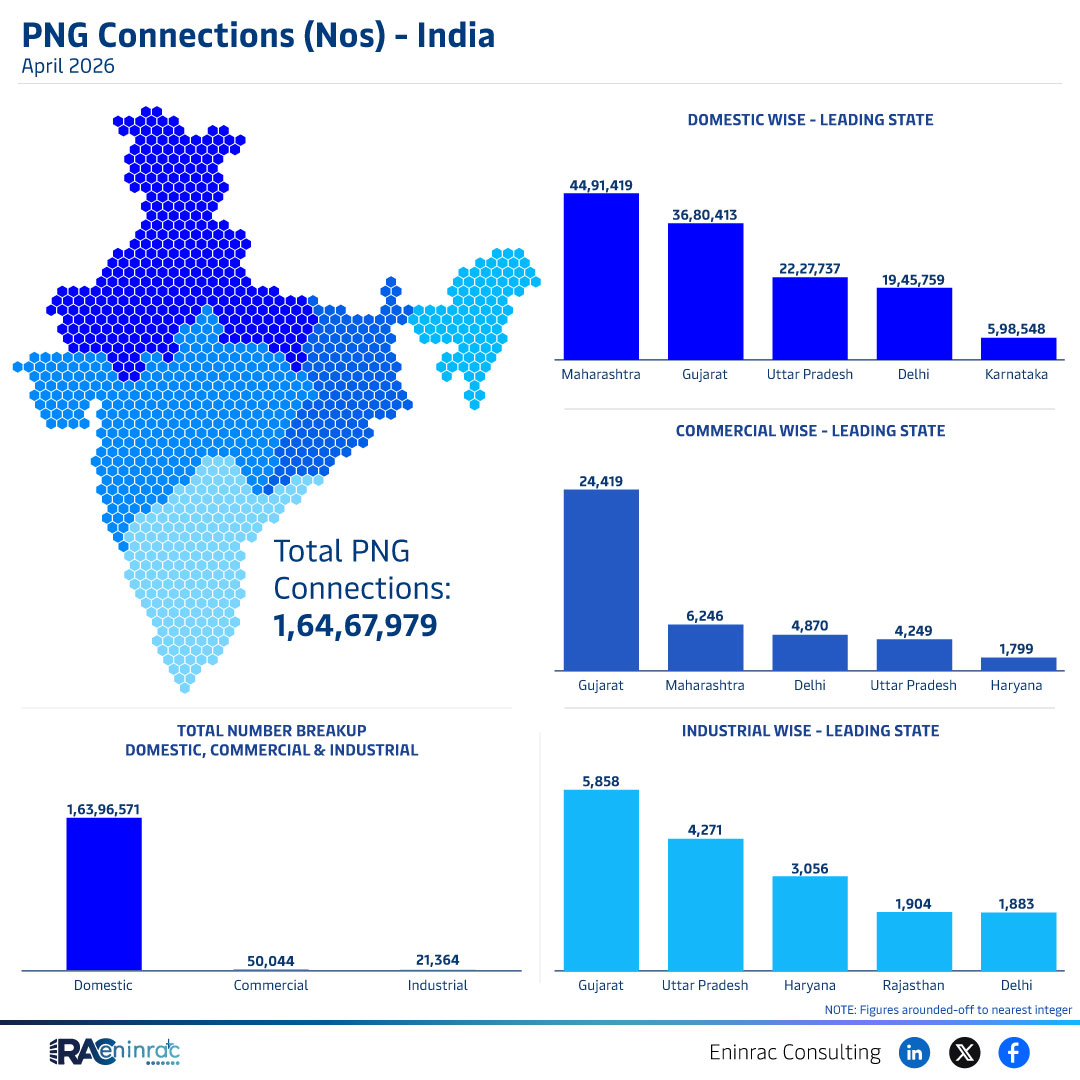
The data answers a key question: which Indian states dominate PNG adoption across different user categories? The domestic segment leads with 44,91,419 connections, followed closely by Gujarat, Maharashtra, Uttar Pradesh, Delhi and Karnataka. Commercial connections total 24,419, with Gujarat, Maharashtra, Delhi and Haryana at the forefront. Industrial connections, though smaller in absolute numbers, show 5,858 connections concentrated in Gujarat, Uttar Pradesh, Haryana, Rajasthan and Delhi. These figures illustrate a clear geographic concentration in western and northern states and indicate where future infrastructure investment is likely to flow.
Statewise PNG Connection Highlights
A comparative interpretation of the numbers reveals distinct regional patterns. Maharashtra emerges as the top domestic market with over 44 lakh connections, indicating strong residential uptake. Gujarat follows closely, driving both commercial (over 24 k) and industrial (nearly 6 k) connections, underscoring its role as an energy hub. Uttar Pradesh, while ranking third in domestic connections, also ranks high for industrial uptake, reflecting its growing manufacturing base. Delhi and Haryana appear repeatedly across commercial and industrial categories, highlighting dense urban demand and industrial corridors. The data suggests that states with proactive gas‑distribution policies and robust pipeline networks are capturing the majority of new connections.
Impact on Sectors and Industries
The expansion of PNG connections influences multiple sectors. For the energy industry, it reduces reliance on coal and LPG, contributing to cleaner combustion and lower emissions. Infrastructure firms benefit from increased pipeline construction and maintenance contracts. Investors see a clearer pathway for financing gas‑distribution projects, especially in leading states where demand is concentrated. Policymakers can leverage the data to design targeted subsidies, safety regulations and consumer awareness campaigns, while manufacturers of gas appliances experience heightened market demand. Overall, the PNG surge supports India’s broader clean‑energy objectives and stimulates ancillary economic activity.
Key Takeaways
- Maharashtra leads domestic PNG connections with over 44 lakh links.
- Gujarat dominates both commercial and industrial PNG segments.
- Uttar Pradesh shows strong domestic and notable industrial growth.
- Delhi and Haryana appear across commercial and industrial categories, indicating dense urban demand.
- Western and northern states capture the majority of new PNG connections.
- The rise in PNG supports clean‑energy goals and creates investment opportunities in infrastructure.
FAQs
Which state has the highest number of domestic PNG connections?
Maharashtra tops the list with approximately 44.9 lakh domestic connections in April 2026.
How many commercial PNG connections were recorded?
A total of 24,419 commercial PNG connections were reported, with Gujarat leading the segment.
What is the significance of industrial PNG connections?
Industrial connections, though smaller, signal growing manufacturing demand for clean fuel, especially in Gujarat and Uttar Pradesh.
Why are Gujarat and Maharashtra prominent in the data?
Both states have proactive gas‑distribution policies, extensive pipeline networks and strong consumer adoption, driving higher connection counts.
How does the PNG growth affect investors?
Higher connection numbers highlight lucrative opportunities for financing pipeline projects, gas‑related services and related equipment manufacturing.