
Introduction
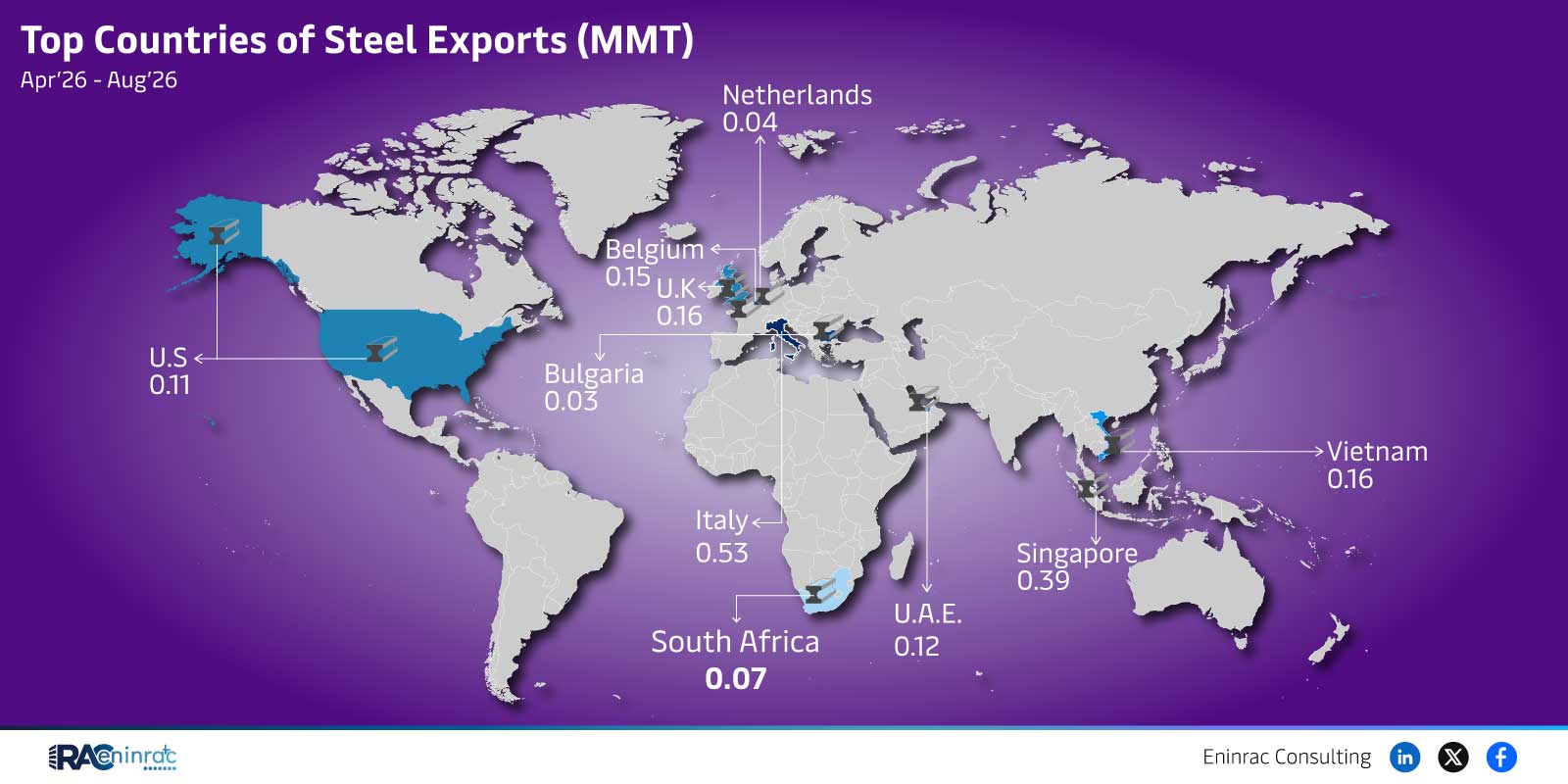
The period from April to August 2026 reveals a concise snapshot of global steel trade, highlighting two surprising contributors: the Netherlands and South Africa. Although both nations export modest volumes measured in million metric tons (MMT), their positions illustrate regional dynamics, market access strategies, and the broader significance of steel export data for industry stakeholders. This article explains the key figures, compares the two exporters, and discusses the implications for investors, policymakers, and businesses that rely on steel supply chains.
What Does the Data Reveal About This Topic?
The raw data shows that the Netherlands exported approximately 0.04 MMT of steel, while South Africa exported about 0.07 MMT during the April‑August 2026 window. In plain terms, South Africa’s export volume was roughly 75 percent higher than that of the Netherlands, despite both numbers being relatively small in the global context. The figures suggest that even minor players can influence regional trade patterns and that steel export data can uncover nuanced market shifts.
Detailed Comparison of Netherlands and South Africa Steel Exports
When we break down the numbers, the Netherlands’ 0.04 MMT reflects its role as a logistical hub and re‑export center rather than a primary steel producer. Its coastal ports and advanced supply‑chain infrastructure enable it to add value through processing and distribution. In contrast, South Africa’s 0.07 MMT signals a more production‑oriented export profile, driven by domestic mining of iron ore and a relatively larger steel manufacturing base. The difference in volume underscores contrasting business models: the Dutch approach leans on trade facilitation, while South Africa emphasizes raw material conversion and direct market penetration. Both strategies are shaped by regional demand, trade agreements, and the presence of consulting firms such as Eninrac Consulting that support export planning.
Impact on Sectors and Industries
These export numbers, though modest, ripple through several sectors. Construction firms in Europe and Africa monitor such data to anticipate supply availability and price fluctuations. Investors use steel export rankings to gauge the health of metallurgical sectors and to identify opportunities for capital allocation in emerging markets. Policymakers assess export performance to refine trade policies, tariffs, and infrastructure investments that can boost competitiveness. Finally, logistics providers benefit from understanding the flow of steel shipments, enabling optimized routing and capacity planning.
Key Takeaways
- South Africa exported 0.07 MMT of steel, surpassing the Netherlands by roughly 75 percent.
- The Netherlands’ low volume reflects its hub‑centric re‑export model rather than primary production.
- South Africa’s higher export figure highlights its reliance on domestic raw material sources.
- Even small export figures are valuable indicators for construction, investment, and policy decision‑making.
- Consulting firms like Eninrac Consulting play a supporting role in shaping export strategies.
- Tracking steel export data helps stakeholders anticipate market trends and adjust supply‑chain tactics.
FAQs
Why are the Netherlands’ steel exports so low?
The Netherlands focuses on processing and re‑exporting steel rather than large‑scale production, which keeps its direct export volume small.
What drives South Africa’s higher steel export volume?
Abundant iron ore reserves, established steel mills, and direct access to African markets boost South Africa’s export figures.
How can investors use steel export rankings?
Investors analyze rankings to spot growth regions, assess industry health, and allocate funds to companies benefiting from trade trends.
Do these export numbers affect global steel prices?
While the volumes are modest, aggregated data from many small exporters can influence regional supply balances and price movements.
What role do consulting firms play in steel export performance?
Consultants provide market analysis, regulatory guidance, and strategic planning that help exporters optimize routes and comply with trade rules.