
Introduction
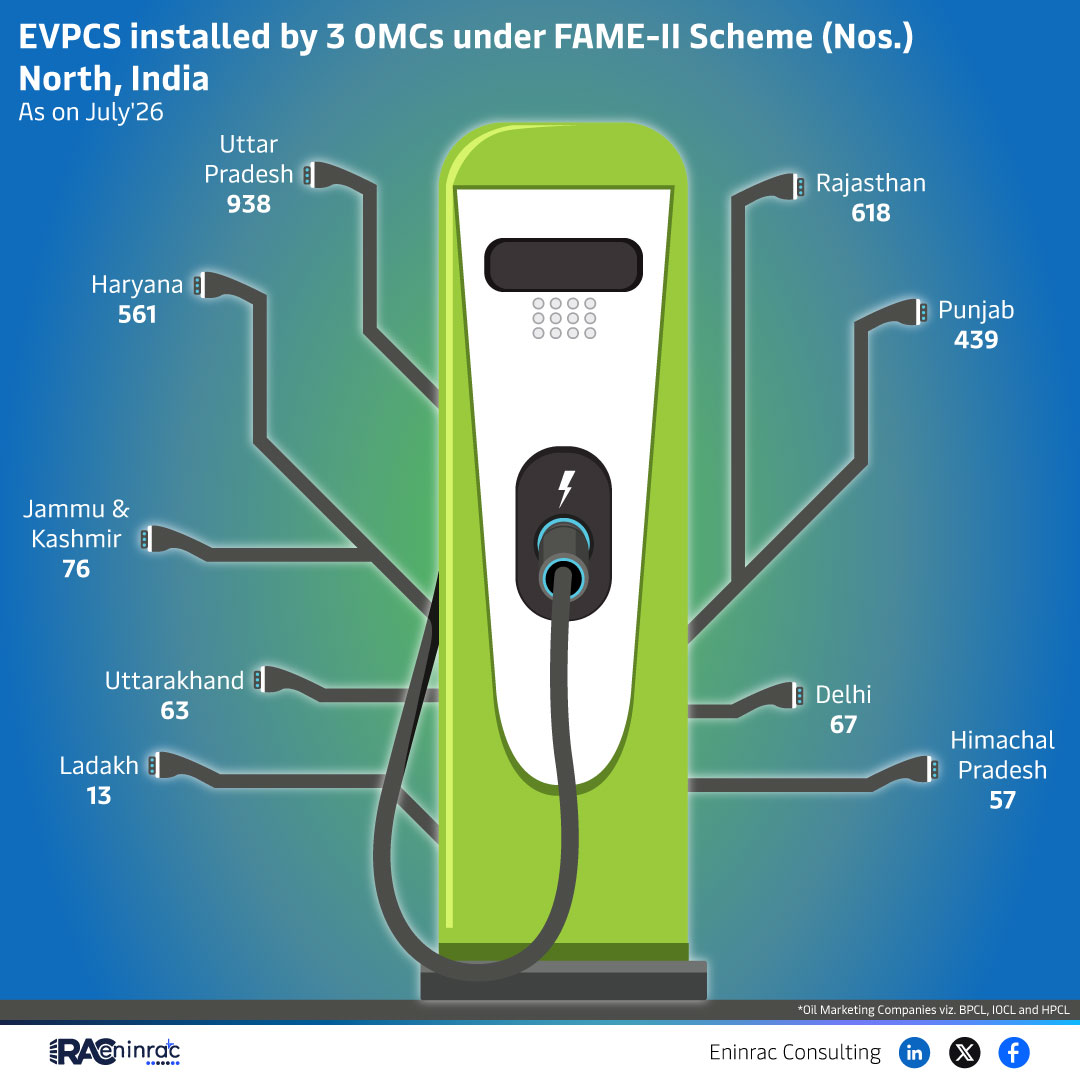
North India has seen a rapid expansion of electric vehicle (EV) charging stations under the Government's FAME‑II Scheme. As of July 26, 2024, three oil marketing companies (OMCs) have collectively installed thousands of EV charging points across the region. This growth reflects the broader push toward clean mobility, government incentives, and increasing consumer demand for reliable charging infrastructure. In this article we explore the statewise deployment numbers, compare regional performance, and discuss the implications for investors, policymakers, and the EV ecosystem.
What Does the Data Reveal About This Topic?
What does the latest data tell us about EV charging station deployment in North India? The figures indicate that Rajasthan leads with 938 installations, followed closely by Haryana with 561 and Punjab with 439. Smaller or still‑developing markets such as Uttar Pradesh, Jammu & Kashmir, Uttarakhand, Himachal Pradesh and Ladakh have either minimal or unreported installations, suggesting uneven rollout and significant growth opportunities in those areas.
Statewise Deployment Overview
The comparative picture shows Rajasthan achieving the highest number of EV charging stations, signalling strong policy alignment and market readiness. Haryana’s robust 561 installations highlight its strategic location along major highways and industrial corridors. Punjab’s 439 stations demonstrate a balanced mix of urban and rural coverage. The absence of clear numbers for Uttar Pradesh and the Himalayan states points to logistical challenges, lower population density, or pending approvals. This divergence underscores the need for targeted incentives to accelerate adoption in lagging states.
Impact on Sectors and Industries
The surge in EV charging stations influences multiple sectors. Renewable energy providers benefit from increased demand for clean electricity to power the chargers. Automotive manufacturers see enhanced consumer confidence, driving sales of electric cars and two‑wheelers. Real‑estate developers are integrating charging points into commercial and residential projects, while utility companies must upgrade grid capacity. Investors are attracted to OMCs expanding into the EV services market, and policymakers gain data to refine subsidy allocations and infrastructure planning.
Key Takeaways
- Rajasthan tops North India with 938 EV charging stations under FAME‑II.
- Haryana and Punjab capture the second and third positions with 561 and 439 installations respectively.
- Several northern states still lack substantial charging infrastructure, indicating growth potential.
- The rollout supports renewable energy integration and strengthens the EV supply chain.
- Policy‑driven incentives remain crucial for balanced regional development.
- Investors should monitor OMC performance as they diversify into EV services.
FAQs
Which states have the most EV charging stations in North India?
Rajasthan leads with 938 stations, followed by Haryana (561) and Punjab (439) as of July 2024.
What is the FAME‑II Scheme?
FAME‑II (Faster Adoption and Manufacturing of Hybrid & Electric Vehicles) is a central government program that provides subsidies and incentives to expand EV infrastructure and promote electric mobility.
Why are some northern states lagging behind?
Challenges include rugged terrain, lower population density, limited grid capacity, and slower policy implementation, which delay large‑scale charger deployment.
How do OMCs benefit from installing EV charging stations?
OMCs diversify revenue streams, tap into the growing EV market, and leverage existing fuel station networks to offer convenient charging services.
Will the number of chargers increase in the coming year?
Yes, continued government subsidies, private investment, and rising EV adoption are expected to drive further expansion of charging stations across the region.