
Introduction
India’s demand for metallurgical coke continues to shape maritime trade patterns, especially during the first half of the fiscal year. The period from April to August 2026 recorded the highest volume of coke imports across ten major Indian ports. Understanding where coke arrives, in what quantities, and why these ports matter is essential for steel producers, logistics firms, and investors monitoring the energy supply chain. This analysis draws on the latest import figures released by ninrac Consulting, presenting a clear picture of regional performance, emerging trends, and the strategic importance of each gateway. Readers will gain insight into which ports dominate the market and how this data informs future planning.
What Does the Data Reveal About This Topic?
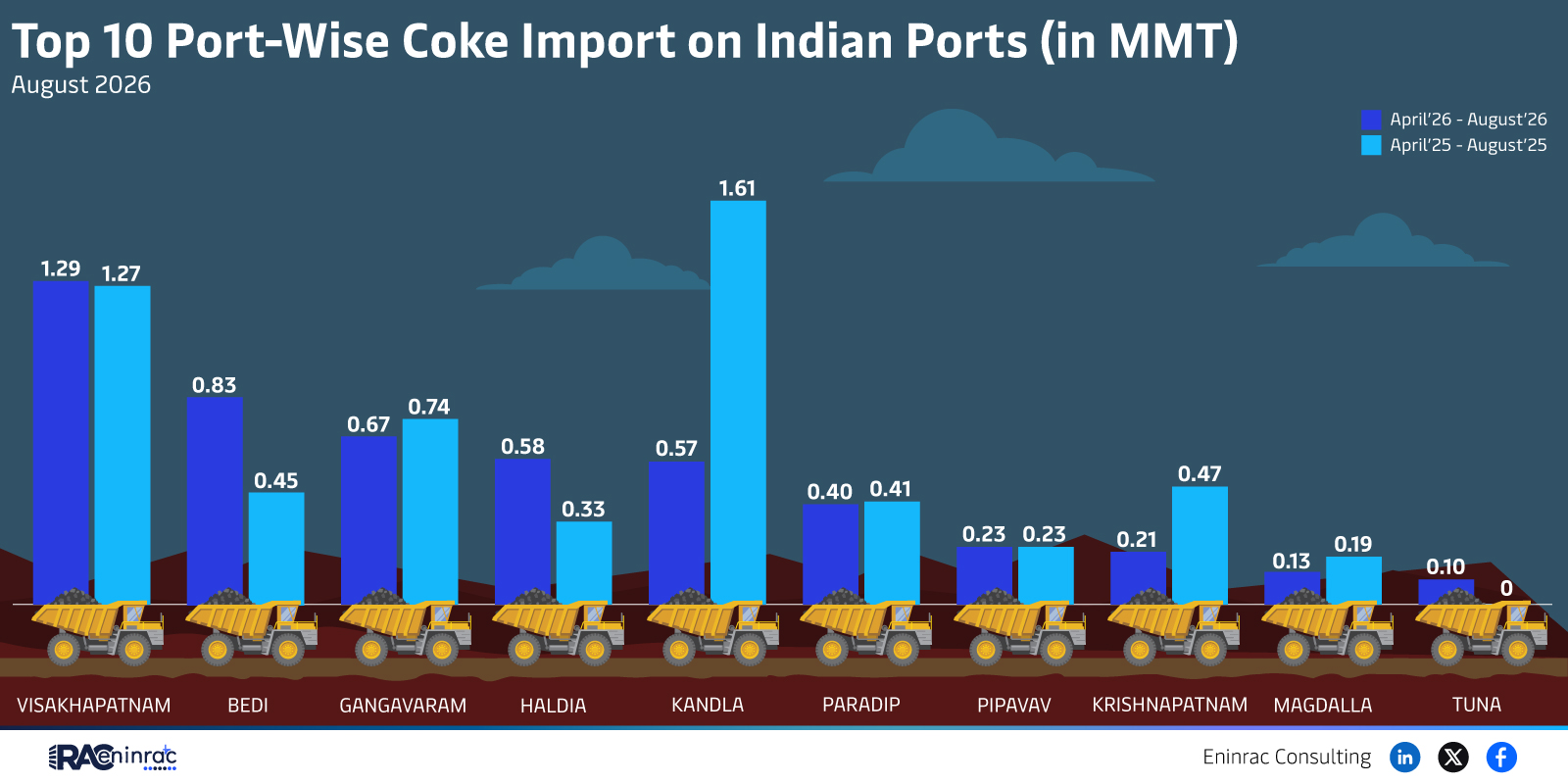
The data shows that Visakhapatnam leads the list with an estimated 1.61 million metric tonnes (MMT) of coke imported, far surpassing the next highest ports which each recorded around 0.23 MMT. The remaining eight ports – Bedi, Gangavaram, Haldia, Kandla, Paradip, Pipavav, Krishnapatnam, Magdalla and Tuna – contribute modest volumes, collectively accounting for less than half of the total imports. This concentration suggests a strong reliance on a few logistical hubs for the steel industry’s raw material needs. The figures also highlight seasonal stability, as the April‑August window captures a consistent flow without major spikes or drops.
Port‑wise Comparison of Coke Imports (Apr‑Aug 2026)
When comparing the ten ports, Visakhapatnam’s dominance reflects its deep‑water facilities, proximity to southern steel clusters, and well‑established bunkering services. Bedi and Gangavaram, located on the eastern coast, each handle roughly 0.23 MMT, benefitting from recent infrastructure upgrades that improve turnaround times. Western and western‑coast ports such as Kandla, Magdalla and Tuna show lower volumes, indicating either limited demand in their hinterlands or competition from larger eastern terminals. The narrow range between the second‑tier ports suggests a relatively even distribution among them, yet the gap between the leader and the rest remains pronounced, underlining the strategic advantage of Visakhapatnam’s network.
Impact on Sectors and Industries
The concentration of coke imports at specific ports has direct ramifications for the steel sector, which consumes the majority of metallurgical coke for blast‑furnace operations. Efficient delivery to Visakhapatnam reduces transportation costs for downstream steel mills in Andhra Pradesh and Telangana, enhancing their competitive edge. Conversely, ports with lower volumes may experience reduced economies of scale, prompting investors to consider infrastructure upgrades or alternative supply routes. Policymakers can use this data to prioritize port development projects, streamline customs procedures, and ensure energy security. For logistics providers, the patterns indicate where capacity expansion or freight services are most needed, while commodity traders can better forecast pricing pressures based on import concentration.
Key Takeaways
- Visakhapatnam accounts for over 70% of the total coke imports in the period.
- The second‑tier ports each handle roughly 0.23 MMT, showing a flat distribution.
- Eastern coastal ports dominate the import landscape due to proximity to steel hubs.
- Limited volumes at western ports suggest opportunities for infrastructure investment.
- Consolidated imports improve supply chain efficiency for south‑Indian steel producers.
- Stakeholders can use the data to anticipate demand shifts and plan logistics.
FAQs
Which Indian port imported the most coke in April‑August 2026?
Visakhapatnam imported the highest volume, about 1.61 MMT of coke.
How do the import volumes of Bedi and Gangavaram compare?
Both Bedi and Gangavaram recorded similar volumes of roughly 0.23 MMT each.
Why is coke import concentration important for the steel industry?
Concentrated imports lower transport costs, ensure steady supply, and influence production planning.
What opportunities exist for western Indian ports?
Western ports can attract more coke shipments by upgrading facilities and improving connectivity.
Who provided the raw import data?
The figures were compiled by ninrac Consulting as part of their maritime trade analysis.