
Introduction
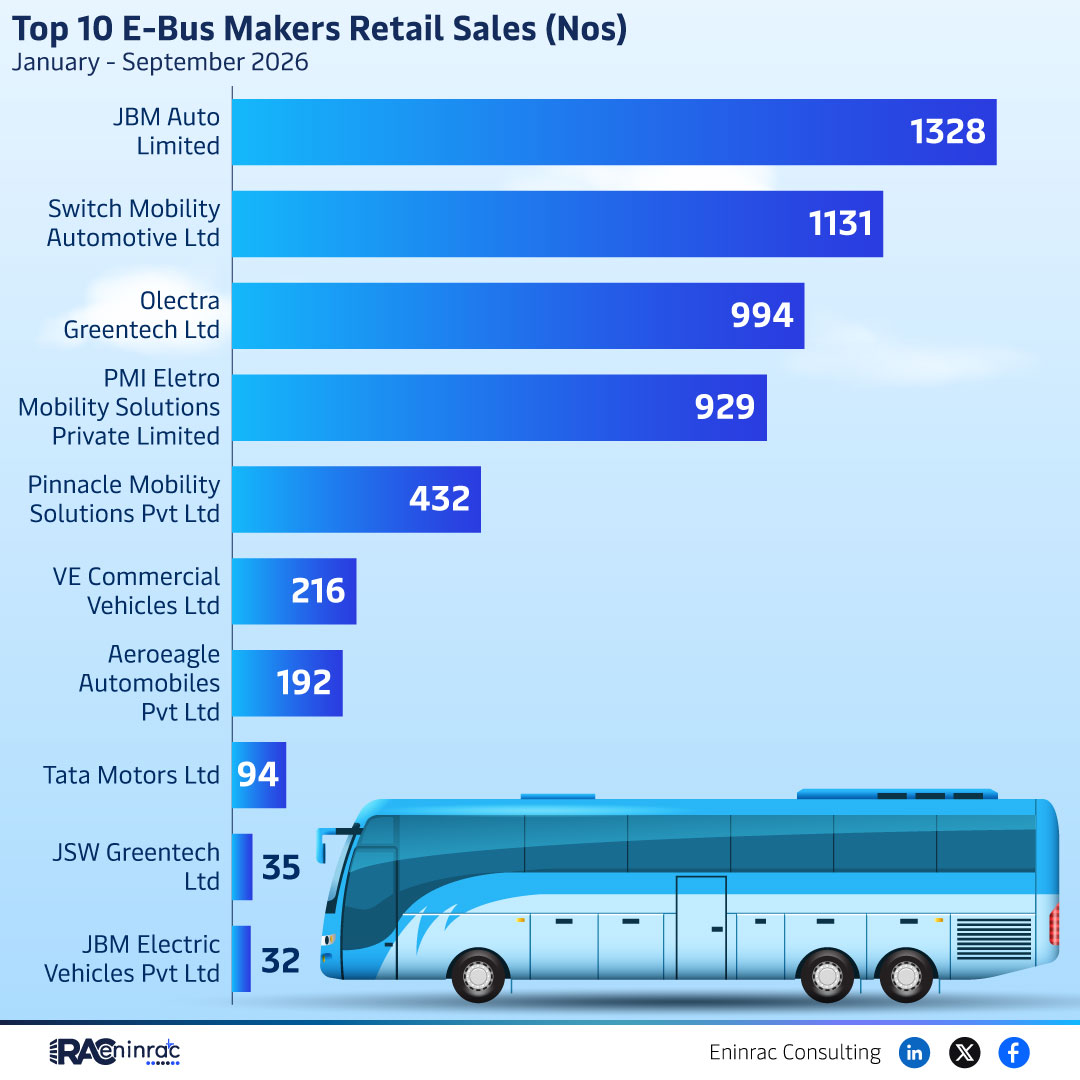
The Indian electric bus market entered 2026 with unprecedented momentum, and the retail sales data for January through September reveal the leading manufacturers shaping this shift. Understanding which firms captured the highest number of units sold provides insight into competitive dynamics, regional demand, and emerging trends in sustainable public transport. This article breaks down the top ten e‑bus makers, examines sales distribution, and explains why these figures matter to investors, policymakers, businesses, and everyday commuters looking for cleaner travel options.
What Does the Data Reveal About This Topic?
Which companies dominated electric bus retail sales in the first three quarters of 2026? The list shows JBM Auto, Switch Mobility, Olectra Greentech, PMI Eletro Mobility, Pinnacle Mobility, VE Commercial Vehicles, Aeroeagle Automobiles, Tata Motors, JSW Greentech, and JBM Electric Vehicles as the top performers. Their combined sales underscore a fragmented yet rapidly growing market where both legacy OEMs and pure‑play EV specialists compete for fleet contracts, urban mobility projects, and government subsidies. The data also highlights geographic hotspots such as Delhi, Maharashtra, and Karnataka where demand is strongest.
Ranking Highlights and Sales Distribution
JBM Auto leads the ranking, followed closely by Switch Mobility, indicating strong demand for both conventional and battery‑swap bus platforms. Olectra Greentech maintains a steady presence, reflecting its longstanding partnerships with state transport authorities and its focus on high‑capacity, long‑range models. Mid‑tier players such as PMI Eletro Mobility and Pinnacle Mobility showcase niche strengths in electric minibuses and last‑mile solutions, allowing them to capture specific market segments. Meanwhile, Tata Motors leverages its extensive dealer network and brand trust to secure a position among the top ten, highlighting the relevance of established automotive giants in the e‑bus arena. The spread of sales volumes suggests that no single company dominates the market, promoting healthy competition, encouraging technology innovation, and driving down costs across the sector.
Impact on Sectors and Industries
The surge in e‑bus sales influences multiple layers of the economy. Manufacturers experience a boost in component demand, especially for batteries, power electronics, lightweight chassis, and charging infrastructure, driving growth for EV battery suppliers, renewable energy integrators, and specialized tooling firms. Municipal transit agencies benefit from reduced emissions and lower operating costs, accelerating the transition to cleaner public transport and supporting national climate goals. Investors perceive the expanding market as fertile ground for funding new energy projects and technology start‑ups, while policymakers gain leverage to shape standards, subsidies, and procurement policies that further stimulate adoption across urban and intercity routes.
Key Takeaways
- JBM Auto secured the top spot in retail sales for Jan‑Sep 2026.
- Switch Mobility and Olectra Greentech are close followers, highlighting strong competition.
- Both traditional OEMs like Tata Motors and pure‑play EV firms are present among the top ten.
- Sales distribution remains fragmented, with no single player holding overwhelming market share.
- Increased bus sales boost demand for batteries, powertrain components, and charging infrastructure.
- Policymakers can use this data to refine incentives and support sustainable urban mobility.
FAQs
What defines an electric bus in the 2026 market?
An electric bus is a zero‑emission public transport vehicle powered by rechargeable batteries or fuel‑cell systems, compliant with Indian safety and emission standards.
Why are both legacy automakers and new EV startups appearing in the top ten?
Established manufacturers leverage existing production capacity and dealer networks, while startups focus on innovative battery‑swap and modular designs, creating a balanced competitive landscape.
How does the sales data affect battery manufacturers?
Higher bus sales directly increase orders for large‑format lithium‑ion cells, prompting battery producers to scale up capacity and invest in advanced chemistries.
Will government subsidies continue to support e‑bus purchases?
Current policies favor low‑emission fleets, and the upward sales trend suggests that incentives are likely to persist or expand to meet climate goals.
What regions in India are driving the most e‑bus sales?
Major metropolitan areas such as Delhi, Mumbai, Bengaluru, and Hyderabad show the highest adoption rates due to dense commuter traffic and supportive state policies.