
Introduction
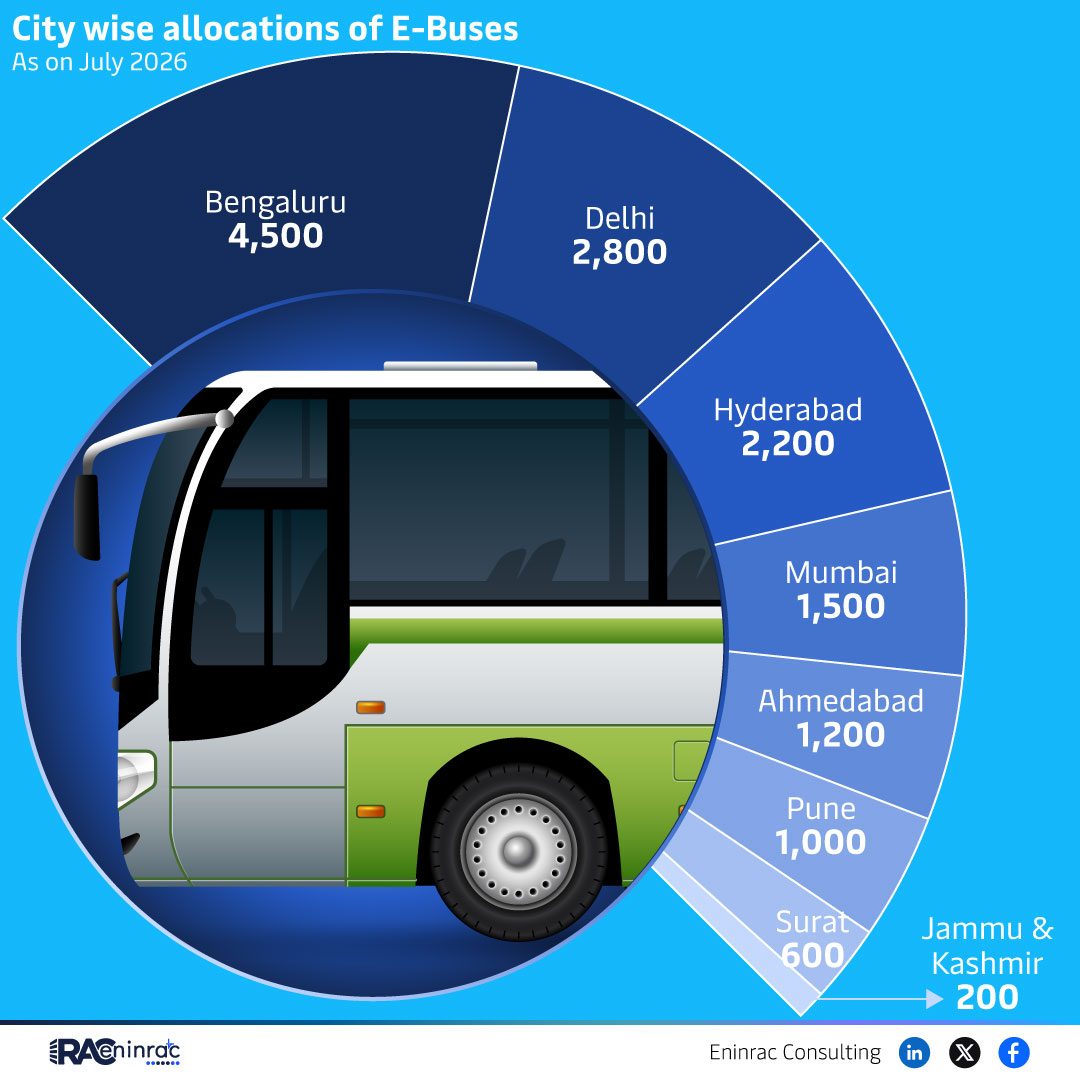
The latest city‑wise E‑Bus allocations data for July 2026 reveals how India’s major urban centres are adopting electric public transport. With Bangalore receiving 4,500 buses, Hyderabad 2,200, Mumbai 1,500 and Ahmedabad 1,200, the figures illustrate a clear shift toward greener mobility solutions. This article unpacks the numbers, highlights regional disparities, and discusses what the data means for policymakers, investors and commuters seeking cleaner, more efficient transport options.
What Does the Data Reveal About This Topic?
Why are certain cities allocated significantly more E‑Bus units than others? The answer lies in a combination of population density, state‑level funding, infrastructure readiness and strategic priorities for reducing emissions. Bangalore’s leading position reflects its aggressive clean‑energy roadmap, while the pending figures for Jammu & Kashmir suggest logistical or budgetary challenges that are yet to be resolved.
City Wise Allocation of E‑Buses in India 2026
A comparative look at the raw numbers shows Bangalore commanding the highest allocation at 4,500 E‑Buses, nearly double the next city on the list. Hyderabad follows with 2,200 units, positioning it as a strong secondary hub for electric transit. Mumbai, despite its massive population, receives 1,500 buses, indicating a more measured rollout possibly constrained by existing diesel fleet conversion timelines. Ahmedabad’s 1,200 units demonstrate progressive adoption in Gujarat’s capital, while the data for Jammu & Kashmir remains incomplete, hinting at future policy updates or funding allocations. The distribution underscores a prioritisation of metropolitan corridors where the impact on traffic congestion and air quality can be most pronounced.
Impact on Sectors and Industries
The surge in E‑Bus allocations influences several sectors. Automotive manufacturers are ramping up production of electric chassis, battery suppliers see heightened demand, and charging infrastructure firms are expanding networks across city limits. Financial markets respond with increased green bond issuances and investment funds targeting sustainable transport assets. For policymakers, the data provides a benchmark for evaluating the effectiveness of subsidy schemes and emission reduction targets. Commuters benefit from quieter, zero‑emission rides, while local air quality indices are expected to improve as diesel buses are phased out.
Key Takeaways
- Bangalore leads India’s E‑Bus rollout with 4,500 units, reflecting strong state support.
- Hyderabad and Mumbai receive 2,200 and 1,500 buses respectively, indicating steady growth.
- Ahmedabad’s allocation of 1,200 buses showcases Gujarat’s commitment to clean mobility.
- Pending data for Jammu & Kashmir points to potential future expansion challenges.
- Higher allocations correlate with urban density, existing infrastructure and policy incentives.
- The trend drives growth in electric vehicle manufacturing, battery production and charging infrastructure.
FAQs
What is the total number of E‑Buses allocated across the listed cities?
The combined allocation for Bangalore, Hyderabad, Mumbai and Ahmedabad totals 9,300 E‑Buses.
Why is Jammu & Kashmir’s allocation still pending?
Funding approvals, terrain challenges and the need for specialized charging infrastructure have delayed final numbers.
How do these allocations affect air quality?
Replacing diesel buses with electric units reduces particulate matter and nitrogen oxides, leading to cleaner urban air.
Which industry will benefit most from increased E‑Bus numbers?
Battery manufacturers and charging‑station providers are expected to see the greatest demand growth.
Are there plans to increase allocations beyond 2026?
State governments have outlined additional targets through 2030, aiming for broader electric fleet integration nationwide.