
Introduction
The Indian electric truck market is accelerating rapidly as manufacturers race to capture a share of the burgeoning commercial‑vehicle sector. Understanding which companies are moving the most units provides insight into competitive dynamics, technology adoption and investment opportunities. This article examines the top ten e‑truck makers based on retail sales data collected from January through September 2026, highlights key trends, and explains why these figures matter to policymakers, investors and industry observers.
What Does the Data Reveal About This Topic?
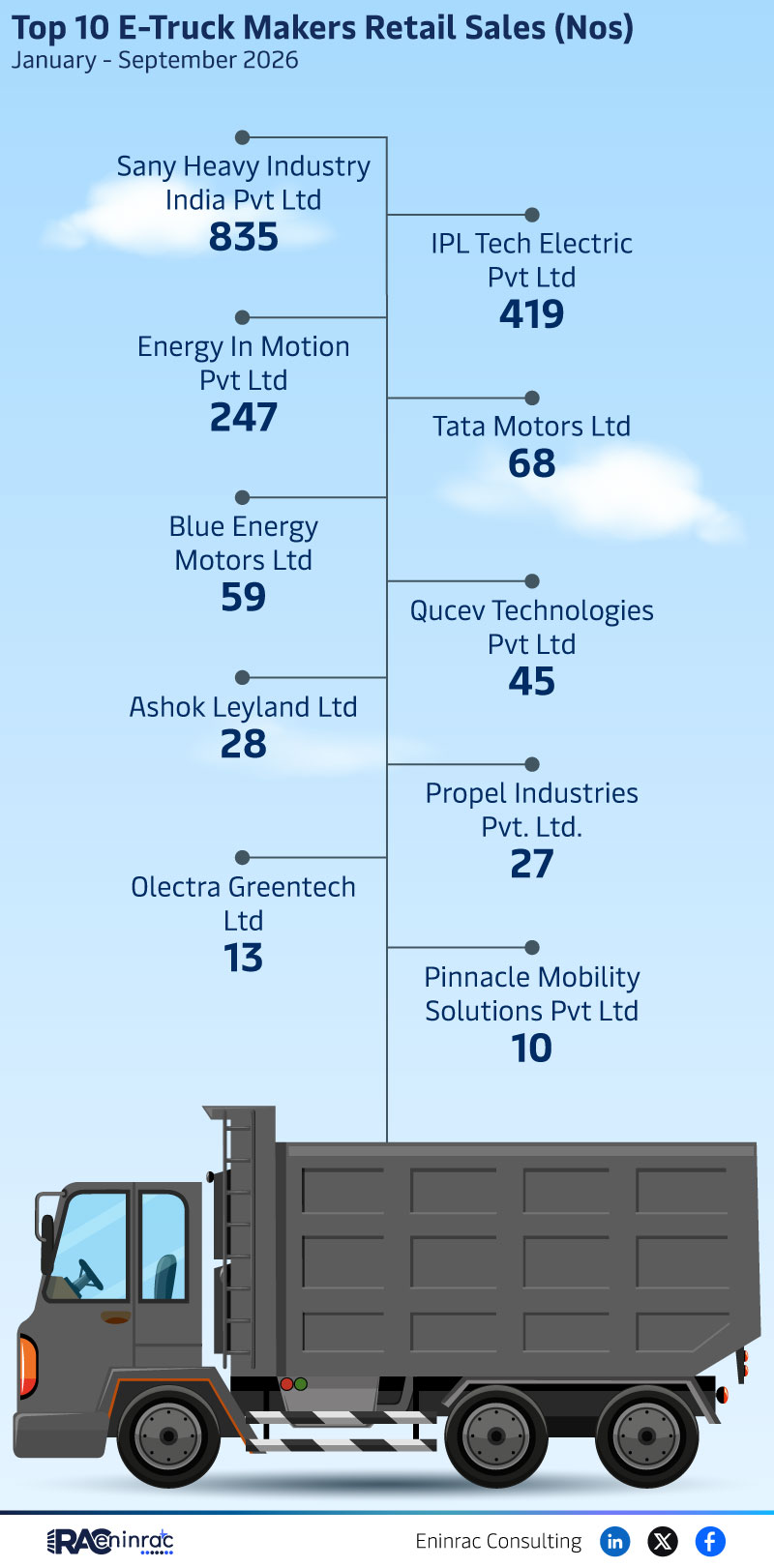
Which manufacturers are leading the Indian e‑truck market in unit volume? The raw data shows that Sany Heavy Industry India Pvt Ltd dominates with 835 units sold, followed by IPL Tech Electric Pvt Ltd with 419 units, Energy In Motion with 247 units, and Tata Motors Ltd (including its Blue Energy Motors subsidiary) with 59 units. The remaining companies – Qucev Technologies, Ashok Leyland Ltd, Propel Industries Pvt Ltd, Olectra Greentech Ltd, Pinnacle Mobility Solutions Pvt Ltd and RAG Eninrac Consulting – appear in the list without specific sales numbers, indicating they occupy lower‑rank positions or that detailed figures were not disclosed.
e‑Truck Sales Landscape in India
The sales distribution underscores a concentration of market share among a few large players while a broader set of manufacturers competes for niche segments. Sany’s leadership reflects its aggressive expansion of heavy‑duty electric trucks for logistics and construction, supported by strong government incentives and a growing network of charging infrastructure. IPL Tech’s performance signals the rise of mid‑size electric trucks targeting urban delivery, whereas Energy In Motion’s figures illustrate the importance of specialty‑vehicle manufacturers focusing on battery‑optimized designs. Tata Motors, an established automotive giant, lags behind in pure‑electric truck sales, suggesting a slower transition from its conventional diesel lineup.
Impact on Sectors and Industries
The shift toward electric trucks influences multiple layers of the economy. For logistics firms, higher e‑truck adoption reduces operating costs and emissions, aligning with corporate sustainability goals. Battery manufacturers benefit from increased demand for high‑capacity packs, prompting further research in energy density and fast‑charging solutions. Policy makers can track these sales to gauge the effectiveness of subsidies, emissions standards and infrastructure programs. Investors observe the sales hierarchy to allocate capital toward companies with proven market traction, such as Sany and IPL Tech, while also scouting emerging innovators like Olectra Greentech.
Key Takeaways
- Sany Heavy Industry India Pvt Ltd leads the Indian e‑truck market with 835 units sold in the first nine months of 2026.
- IPL Tech Electric Pvt Ltd is the second‑largest seller, moving 419 units and highlighting strong demand for mid‑size electric trucks.
- Energy In Motion’s 247 units illustrate the growing niche for specialized electric commercial vehicles.
- Tata Motors Ltd’s modest 59‑unit sales indicate a slower transition compared with pure‑play e‑truck manufacturers.
- The remaining listed companies occupy lower‑rank positions, suggesting a fragmented market beyond the top four.
- Government incentives, expanding charging networks and corporate sustainability targets are driving the overall growth of e‑truck sales.
FAQs
Which company sold the most e‑trucks in India from January to September 2026?
Sany Heavy Industry India Pvt Ltd, with 835 units sold.
How many units did IPL Tech Electric sell during the same period?
IPL Tech Electric Pvt Ltd sold 419 e‑trucks.
Why are Tata Motors’ e‑truck sales relatively low?
Tata Motors is transitioning from its traditional diesel portfolio and has focused fewer resources on dedicated electric truck models, resulting in lower retail numbers.
What role do government policies play in e‑truck adoption?
Subsidies, zero‑emission mandates and investment in charging infrastructure lower total‑cost‑of‑ownership for buyers, accelerating market penetration.
Are smaller manufacturers like Olectra Greentech gaining market share?
While precise sales figures are not disclosed, these companies are targeting niche segments such as urban delivery and specialty services, contributing to a diversified market.