
Introduction
The period from April 26 to June 26 2026 shows a focused snapshot of how much Coca‑Cola (referred to as Coke) is imported into India from key overseas suppliers. Understanding these import volumes is essential for analysts, investors, and policy makers because it reflects trade balance, supply chain dependencies, and regional market dynamics. This article breaks down the limited data available, explains what it tells us about the flow of Coke into India, and highlights the implications for related industries.
What Does the Data Reveal About This Topic?
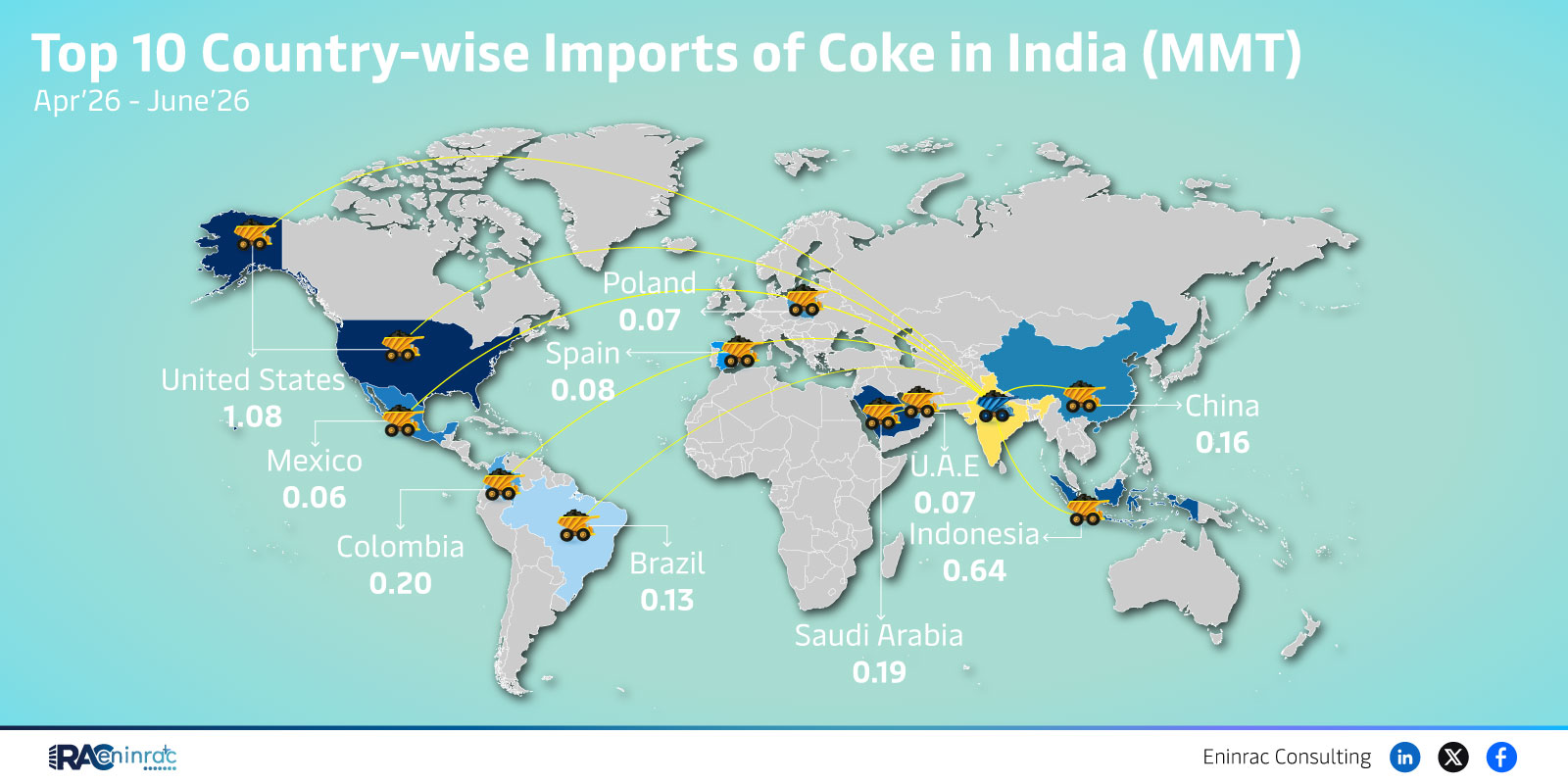
The data lists three source countries—Mexico, Colombia and Saudi Arabia—with import volumes of 0.06 MMT, 0.20 MMT and approximately 0.19 MMT respectively. Colombia emerges as the largest contributor, delivering more than three times the amount supplied by Mexico and marginally ahead of Saudi Arabia. The small volume from Mexico indicates a limited but present trade link, while Saudi Arabia’s near‑equal share to Colombia suggests a growing interest from the Middle East in the Indian Coke market.
Country Comparison of Coke Import Volumes
When we compare the three nations, the stark contrast between Mexico’s modest 0.06 MMT and Colombia’s 0.20 MMT underscores differing market strategies. Colombia’s higher shipments may reflect stronger logistical corridors or preferential trade agreements with India, whereas Mexico’s lower figure could be due to higher domestic consumption or alternative supply routes. Saudi Arabia’s figure, recorded as 0.19 MMT, sits just below Colombia, indicating that the Gulf region is rapidly scaling its export capacity to meet India’s rising demand for Coca‑Cola products.
Impact on Sectors and Industries
Coke imports influence several downstream sectors. The beverage bottling industry depends on consistent raw material inflow to maintain production schedules, while logistics firms experience volume spikes that affect freight rates and container availability. Financial investors watch these trade patterns for signals about consumer demand stability, and policymakers assess import levels to calibrate tariffs or trade incentives. Moreover, domestic manufacturers may adjust pricing strategies in response to the competitive pressure created by foreign Coke supplies, affecting overall market pricing and consumer choice.
Key Takeaways
- Colombia is the leading exporter of Coke to India in the observed period.
- Mexico contributes the smallest volume, indicating limited trade activity.
- Saudi Arabia’s imports are nearly on par with Colombia, showing rapid growth.
- Overall import volumes remain low, suggesting a niche market segment.
- Trade patterns highlight potential for expanding logistical links with Latin America.
- Policymakers may consider tariff adjustments to balance domestic and foreign supply.
FAQs
Which country supplied the most Coke to India between April and June 2026?
Colombia supplied the highest volume at 0.20 MMT.
How much Coke did Mexico export to India in this period?
Mexico exported 0.06 MMT of Coke.
Is Saudi Arabia becoming a major Coke supplier to India?
With 0.19 MMT, Saudi Arabia is close to Colombia’s share, indicating growing significance.
Why are import volumes relatively low?
The low figures suggest limited demand or strong domestic production of Coke in India.
What could increase Coke imports into India?
Improved trade agreements, better logistics, and rising consumer demand could boost future imports.