
Introduction
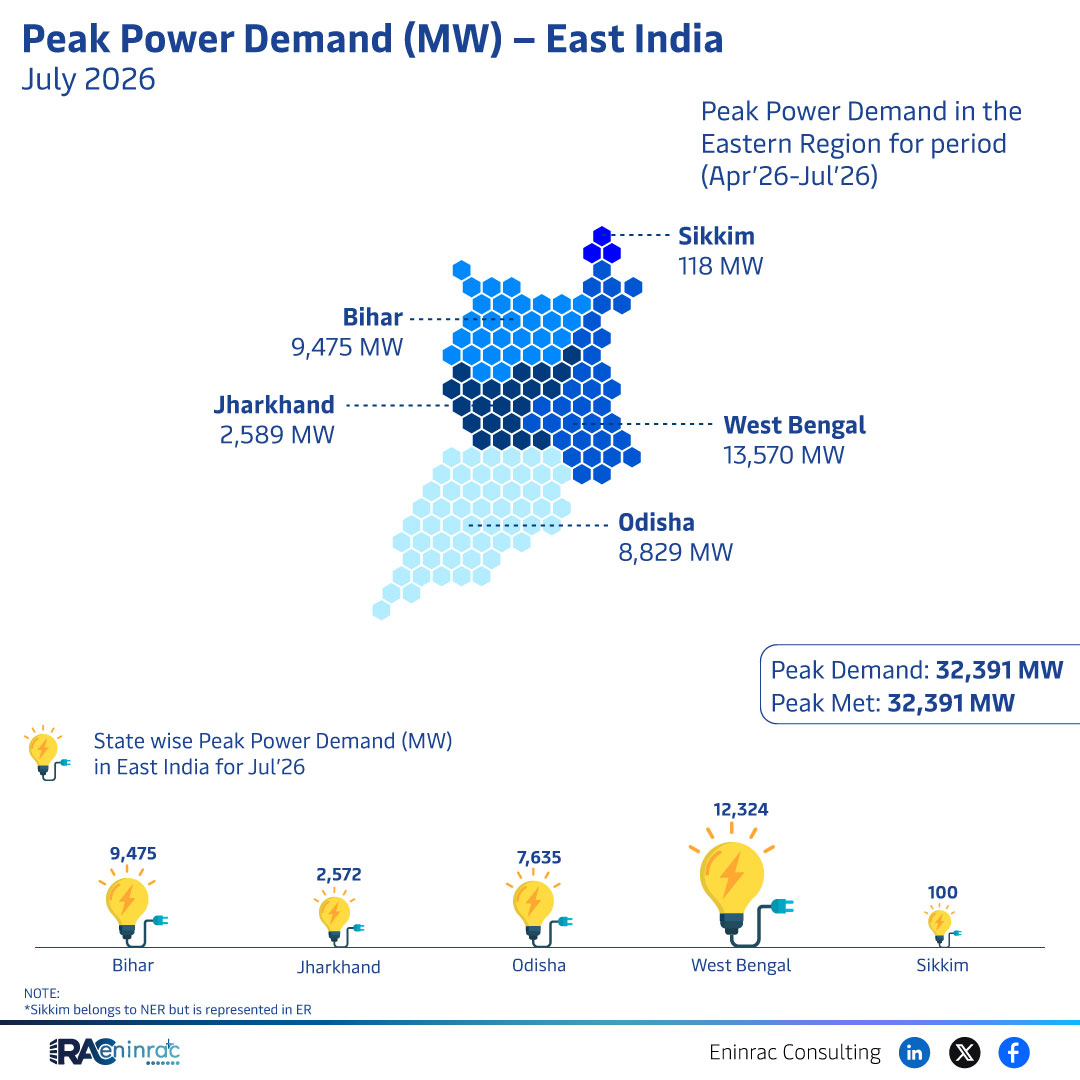
The July 2026 East India peak power demand data provides a snapshot of electricity consumption across five key states in the region. Understanding where demand spikes helps utilities, investors, and policymakers plan capacity, manage grid stability, and allocate resources efficiently. This article breaks down the statewise figures, highlights the leading contributors, and discusses the broader implications for the energy sector. We also explore how the total demand of 32,391 MW aligns with national trends and what it signals for future infrastructure development.
What Does the Data Reveal About This Topic?
The data shows that West Bengal recorded the highest peak demand at 13,570 MW, followed by Bihar with 9,475 MW and Odisha around 8,829 MW. Smaller states such as Jharkhand and Sikkim contributed 2,589 MW and 18 MW respectively, resulting in a combined East India peak demand of 32,391 MW for July 2026. This distribution underscores the uneven load across the region and points to where grid reinforcement may be most needed.
Statewise Power Demand Comparison in East India
When examined side‑by‑side, the contrast between the densely populated states and the less‑populated ones becomes evident. West Bengal’s demand of 13,570 MW represents roughly 42 % of the regional total, driven by its industrial hubs, large urban centers, and intensive commercial activity. Bihar, with 9,475 MW, accounts for about 29 % and reflects rapid economic growth and increasing electrification in both rural and urban areas. Odisha’s 8,829 MW (27 % of the total) is powered largely by its heavy industries and mining operations. In contrast, Jharkhand’s 2,589 MW and Sikkim’s modest 18 MW together contribute less than 10 % of the overall demand, highlighting lower industrial density and smaller population bases. These figures illustrate how economic structure and population density drive peak load patterns across East India.
Impact on Sectors and Industries
Utility companies must prioritize capacity upgrades in West Bengal and Bihar to avoid congestion during peak periods, while investment in transmission infrastructure can ease the burden on the regional grid. Renewable energy developers see the high demand as an opportunity to integrate solar and wind projects that can offset conventional generation, especially in states with large industrial loads. Policymakers can use the statewise breakdown to tailor incentives, demand‑side management programs, and regional resource planning. Investors in conventional power assets will note the robust demand in West Bengal and Bihar as indicators of stable cash‑flow potential, whereas smaller markets like Jharkhand and Sikkim may attract niche off‑grid or micro‑grid solutions.
Key Takeaways
- West Bengal leads with 13,570 MW, about 42 % of East India’s total demand.
- Bihar contributes 9,475 MW, making it the second‑largest consumer in the region.
- Odisha’s 8,829 MW reflects strong industrial activity.
- Jharkhand and Sikkim together account for less than 10 % of the regional peak.
- The combined peak demand for July 2026 reaches 32,391 MW.
- These patterns guide infrastructure investment, renewable integration, and policy focus.
FAQs
Which East Indian state had the highest peak power demand in July 2026?
West Bengal recorded the highest peak power demand at 13,570 MW.
How does Bihar’s demand compare to West Bengal’s?
Bihar’s demand of 9,475 MW is about 70 % of West Bengal’s 13,570 MW.
What is the total peak demand for East India in July 2026?
The total peak demand across the region was 32,391 MW.
Why is Sikkim's contribution so low?
Sikkim’s small population and limited industrial base result in a modest 18 MW peak demand.
How can investors use this data?
Investors can target high‑demand states like West Bengal and Bihar for conventional generation projects and consider renewable opportunities in regions with growing industrial loads.