
Introduction
India’s reliance on imported coal has grown sharply as domestic production struggles to meet the power sector’s demand. Understanding which countries supply the majority of coal during the April‑June 2026 window helps analysts gauge supply risk, price pressure, and strategic partnerships. This article breaks down the top ten coal‑exporting nations to India, highlights the volumes recorded in million metric tonnes (MMT), and explains what these figures mean for energy planners, investors, and policymakers.
What Does the Data Reveal About This Topic?
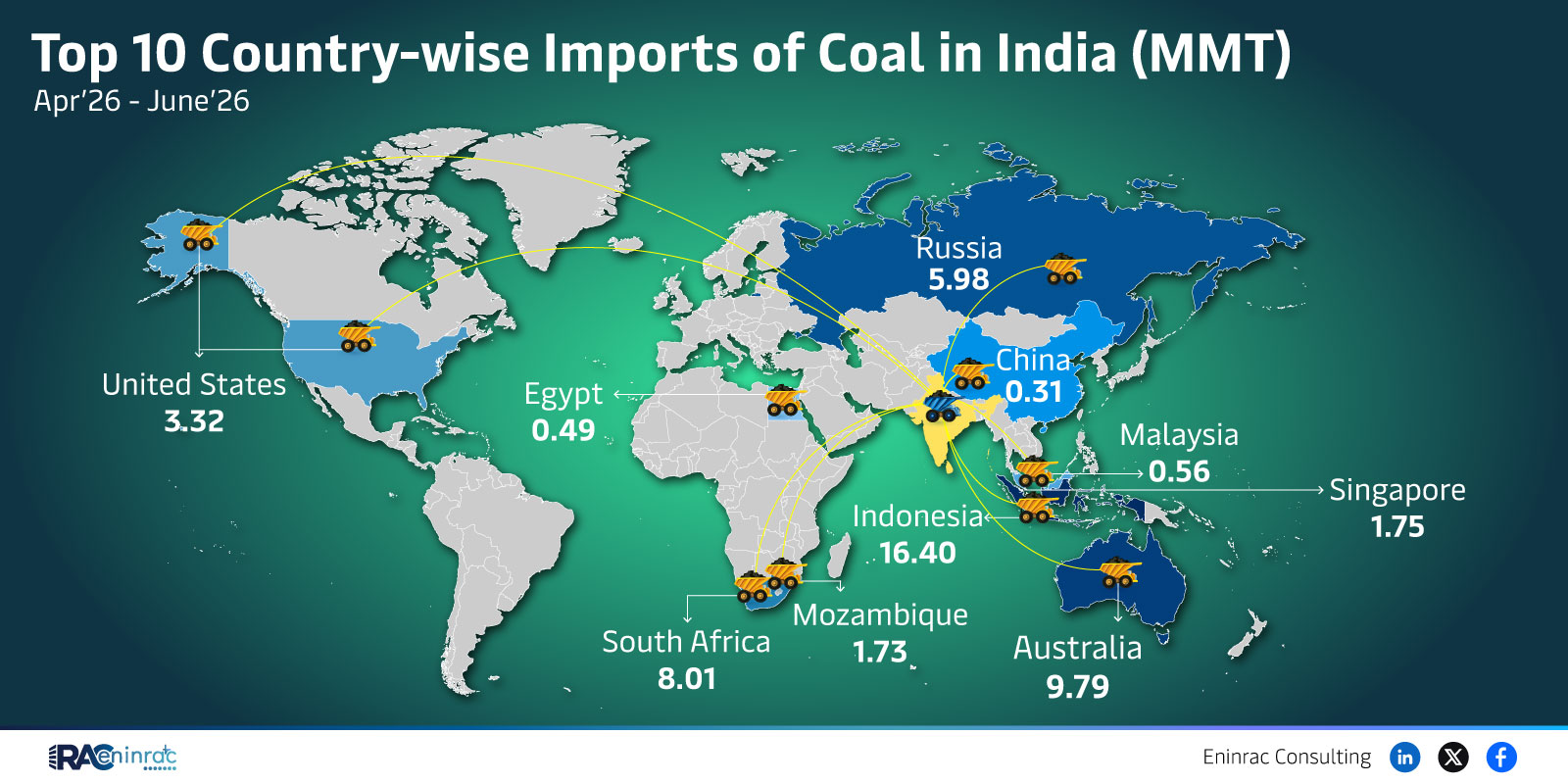
The data shows a surprising concentration of imports from a handful of nations. South Africa leads with roughly 173 MMT, dwarfing the United States contribution of about 4 MMT and Australia’s combined 8–10 MMT range. Smaller shipments appear from Malaysia, Singapore, and Mozambique, each contributing less than two MMT. These numbers answer the key question: which suppliers dominate India’s coal basket and how uneven the distribution is across continents.
Country‑wise Comparison of Coal Imports to India
South Africa’s 173 MMT share represents more than two‑thirds of the total recorded for the quarter, indicating a strong logistical corridor through southern ports and competitive pricing. By contrast, the United States supplies just over four MMT, reflecting limited contractual volumes and higher freight costs. Australia contributes between eight and ten MMT, positioning it as the second‑largest distant supplier after South Africa. The combined output of Malaysia, Singapore, and Mozambique totals roughly three MMT, underscoring their niche role in meeting specific quality or regional demand. Overall, the data signals a heavy reliance on a few large exporters while smaller sources fill specialized gaps.
Impact on Sectors and Industries
The dominance of South African coal shapes power‑generation planning, as utilities must align fuel contracts with the country’s export policies and rail‑to‑port infrastructure. Shipping firms benefit from frequent voyages, while domestic coal miners face heightened competition that could delay investment in new mines. Financial markets monitor these import patterns to adjust commodity pricing models, and policymakers use the data to negotiate trade terms that safeguard energy security. Moreover, the modest presence of Australia, the United States, and Asian exporters diversifies risk but also introduces currency and regulatory complexities for Indian importers.
Future Outlook and Policy Implications
Looking ahead, India may seek to diversify its coal sources to reduce dependence on South Africa, especially as global emissions standards tighten and trade tariffs evolve. Potential new partners include Canada and Indonesia, which have expressed interest in expanding their market share. Domestic policy shifts toward renewable energy could also curb overall coal demand, but short‑term power shortages may keep imports high. Monitoring quarterly import data will remain essential for investors and regulators to anticipate price volatility, supply chain bottlenecks, and geopolitical risk factors influencing the conventional energy landscape.
Key Takeaways
- South Africa supplies the majority of coal imports, accounting for over 170 MMT.
- United States provides a modest volume of roughly 4 MMT, reflecting limited contracts.
- Australia contributes between 8 and 10 MMT, positioning it as a key distant supplier.
- Malaysia, Singapore and Mozambique together add about 3 MMT, serving niche quality needs.
- High concentration on a few exporters raises supply‑risk concerns for Indian power generators.
- Diversification strategies may target Canada, Indonesia, and other emerging coal exporters.
FAQs
Which country is the largest supplier of coal to India in Apr‑Jun 2026?
South Africa, delivering roughly 173 MMT, dominates India’s coal imports for the quarter.
Why does South Africa dominate India’s coal imports?
Competitive pricing, reliable shipping routes, and favorable trade terms make South African coal attractive to Indian buyers.
How do coal import volumes affect Indian energy prices?
Large import volumes from a single source can tighten supply, influencing wholesale electricity rates and fuel cost indices.
What risks arise from heavy reliance on a single coal exporter?
Geopolitical tensions, supply disruptions, or price spikes in the dominant country can jeopardize energy security.
Can renewable energy reduce India’s need for coal imports?
Increasing renewable capacity can lower overall coal demand, but short‑term gaps may keep import levels significant.