
Introduction
The power grid of India is undergoing rapid transformation, and substation capacity development stands at the core of this change. In July 2026, a comprehensive data set reveals how major utilities are expanding infrastructure across 220 kV and 230 kV voltage levels. This article explains why these additions matter, how they affect the broader energy landscape, and what stakeholders can expect as the network scales to meet growing demand.
What Does the Data Reveal About This Topic?
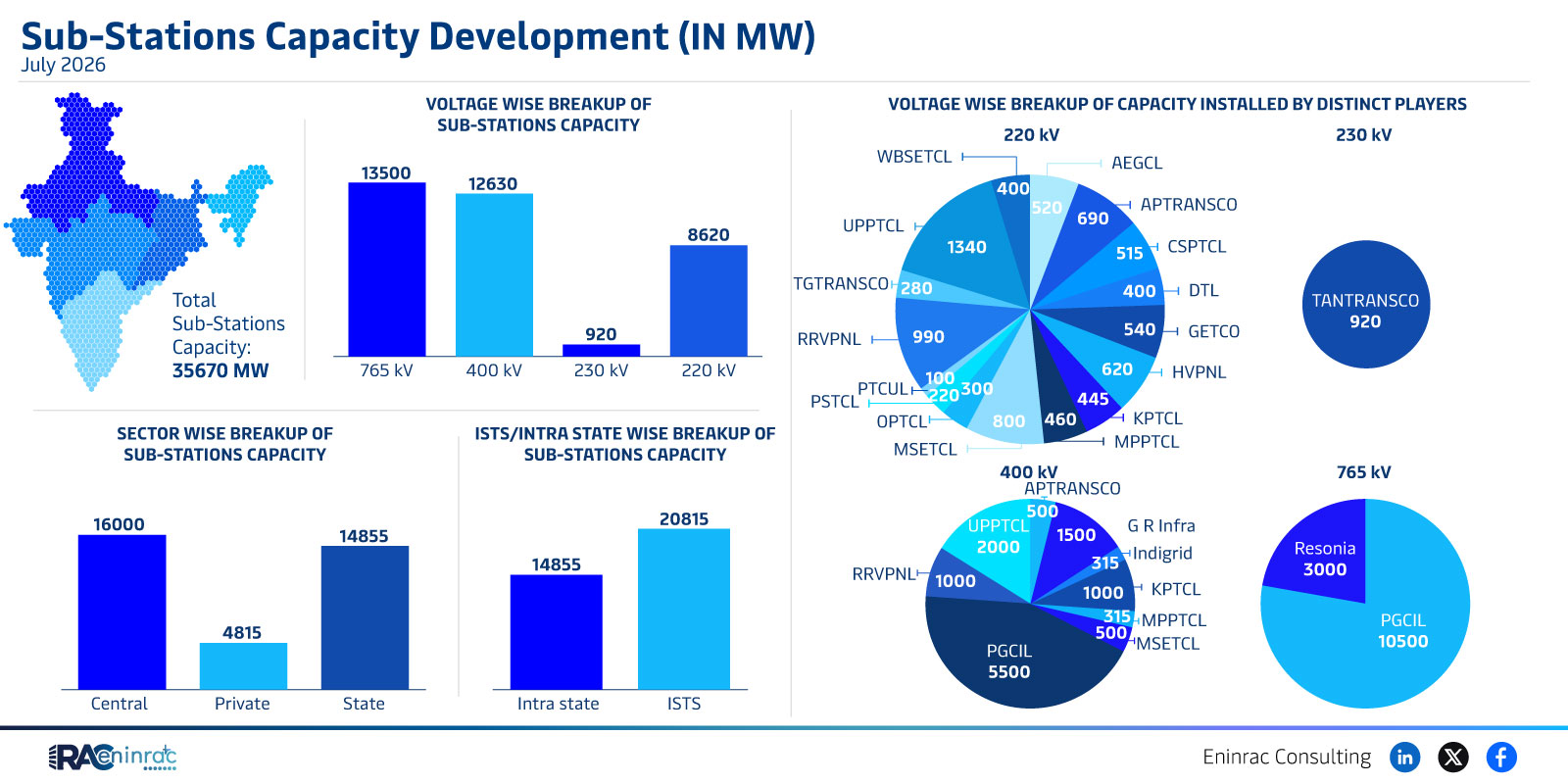
What does the latest July 2026 data tell us about substation capacity development? The figures show a total installed capacity of approximately 12,630 MW, split between 220 kV and 230 kV lines. Leading players such as WBSETCL, AEGCL, APTRANSCO and KPTCL contribute the bulk of this expansion, highlighting a coordinated effort among state electricity boards and private partners to bolster transmission reliability.
Voltage and Player Distribution Highlights
When we compare the voltage-wise breakup, 220 kV projects account for a slightly larger share of the total capacity, reflecting the legacy backbone of the Indian grid. The 230 kV segment, however, is catching up quickly, driven by newer high‑density corridors. WBSETCL and AEGCL together add more than 12,000 MW, while APTRANSCO and KPTCL each contribute several hundred megawatts, illustrating a clear hierarchy where larger state utilities lead the charge, complemented by regional operators filling critical gaps.
Impact on Sectors and Industries
Substation capacity development influences multiple sectors beyond electricity generation. Investors see reduced transmission losses and better load management, encouraging further capital allocation to renewable and conventional power projects. Policymakers gain a stronger tool for meeting reliability standards, while industrial consumers benefit from steadier supply lines that support manufacturing growth. Moreover, the expanded network reduces bottlenecks that previously limited the integration of solar and wind farms, accelerating India’s clean energy transition.
Key Takeaways
- July 2026 data records a cumulative 12,630 MW added across 220 kV and 230 kV substations.
- WBSETCL and AEGCL dominate the capacity increase, together providing the majority of new installations.
- APTRANSCO and KPTCL play supportive roles, adding several hundred megawatts each.
- Higher voltage (230 kV) lines are expanding rapidly, indicating a shift toward modernized transmission corridors.
- Improved substation capacity reduces losses and supports renewable energy integration.
- Stakeholders across finance, policy, and industry benefit from a more resilient power network.
FAQs
Which utilities contributed the most to the July 2026 capacity boost?
WBSETCL and AEGCL together supplied the majority of the 12,630 MW, leading the expansion effort.
How does the new capacity affect renewable energy projects?
Enhanced transmission capacity lowers bottlenecks, allowing more solar and wind power to be dispatched efficiently.
What is the significance of 220 kV versus 230 kV lines?
220 kV lines represent the traditional backbone, while 230 kV lines indicate newer, higher‑capacity corridors for future growth.
Are private players involved in this substation development?
Yes, regional private operators complement state utilities by filling strategic gaps in the network.
How might investors view this capacity expansion?
Investors see reduced transmission risk and improved grid stability, making power sector assets more attractive.