
Introduction
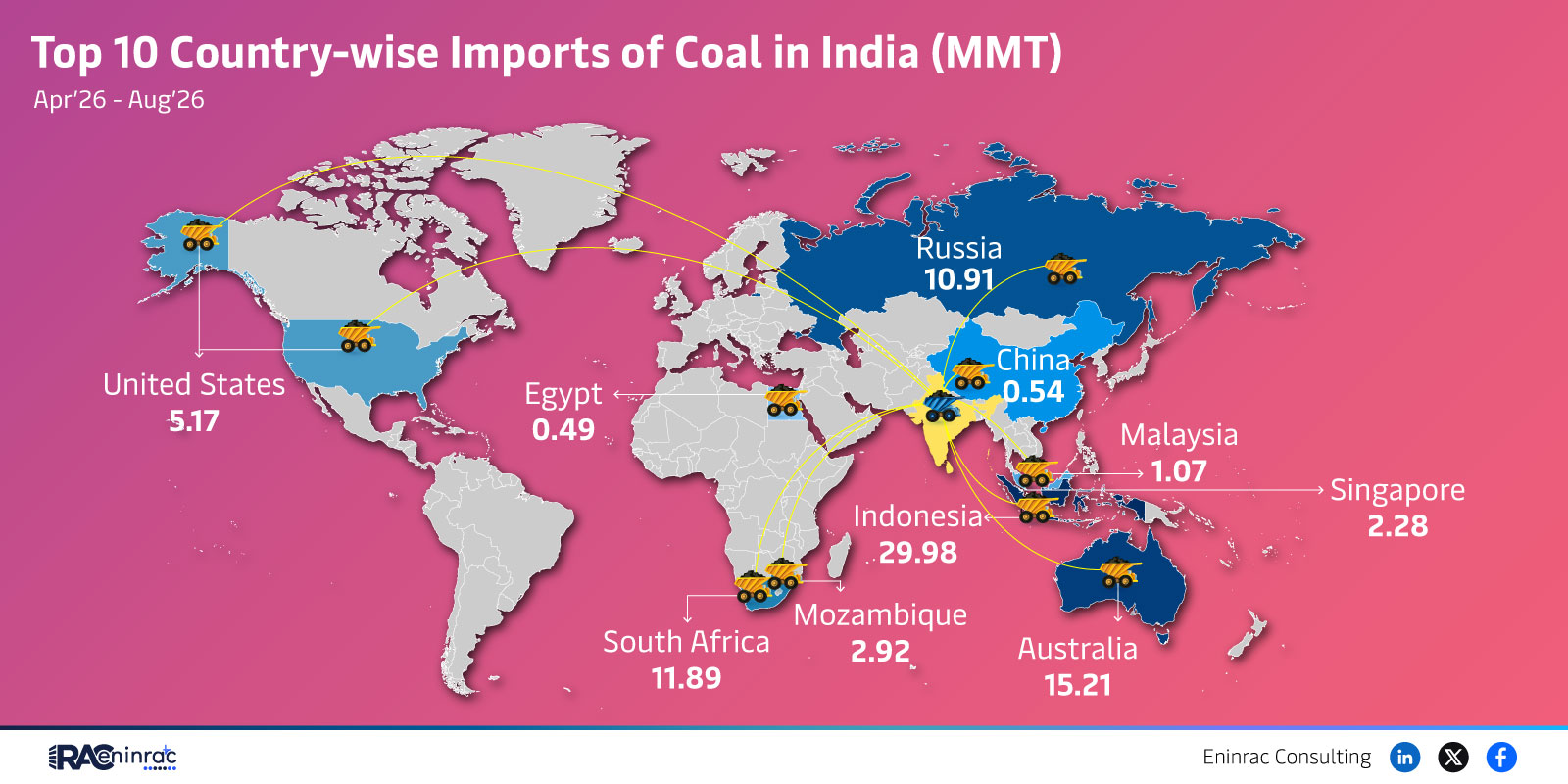
India’s coal demand continues to rise, making the country one of the world’s largest coal importers. Between April 26 and August 26, 2026, data released by customs authorities highlighted the top ten source countries supplying coal to Indian power plants and industries. Understanding which nations dominate India’s coal supply chain helps analysts, investors, and policymakers gauge market dependencies, price stability, and geopolitical risks. This article breaks down the latest country‑wise import figures, explains the trends, and outlines the implications for the energy sector.
What Does the Data Reveal About This Topic?
The raw numbers show that Australia remains the leading supplier, delivering roughly 12 to 15 million metric tonnes (MMT) of coal, while the United States contributed about 5.17 MMT. Smaller yet significant volumes came from Singapore (2.28 MMT), South Africa (2.92 MMT), and Malaysia (1.07 MMT). Mozambique appears in the list but without a clear figure, indicating a possible emerging role. Overall, the data confirms that Asia‑Pacific and North‑American sources dominate India’s coal imports, with a notable concentration in a few key partners.
Country‑wise Coal Import Volumes (MMT) – Comparative View
A side‑by‑side comparison reveals a stark gap between Australia’s contribution and that of other nations. Even the combined imports from Singapore, South Africa, and Malaysia total less than 6 MMT, far below Australia’s 12‑15 MMT range. The United States, at 5.17 MMT, stands as the second‑largest supplier, highlighting the strategic importance of trans‑Pacific trade routes. The presence of Singapore, a major coal trading hub, reflects the role of re‑exports and logistics. South Africa’s 2.92 MMT underscores Africa’s growing participation, while Malaysia’s modest 1.07 MMT suggests niche supply contracts.
Impact on Sectors and Industries
Coal imports directly affect India’s power generation capacity, steel production, and cement manufacturing. Heavy reliance on Australian coal can expose the market to supply disruptions from maritime chokepoints or policy shifts in the exporting country. Diversifying imports across the United States, Singapore, and South Africa can mitigate risk but may introduce price differentials due to varying mining costs and freight rates. Investors monitor these patterns to anticipate changes in coal pricing, while policymakers consider import‑mix strategies to enhance energy security and align with emission reduction targets.
Key Takeaways
- Australia supplies the largest share of coal to India, around 12‑15 MMT.
- The United States is the second‑largest source with 5.17 MMT.
- Singapore, South Africa and Malaysia each contribute between 1 MMT and 3 MMT.
- Mozambique appears without a clear volume, indicating a potential emerging supplier.
- Concentration on a few key nations creates supply‑chain vulnerability.
- Diversification can improve price stability and reduce geopolitical risk.
FAQs
Which country exported the most coal to India in Apr‑Aug 2026?
Australia, with an estimated 12‑15 MMT, topped the list.
How much coal did the United States export to India?
The United States supplied about 5.17 MMT during the period.
Why is Singapore listed among coal import sources?
Singapore acts as a major trading hub, often re‑exporting bulk coal to India.
What risks arise from heavy reliance on Australian coal?
Supply disruptions, freight bottlenecks, and policy changes in Australia can affect Indian coal security.
Can India reduce its coal import dependency?
Increasing domestic mining, renewable integration, and diversifying import sources are key strategies.