
Introduction
The steel industry remains a barometer of global economic health, and recent import statistics reveal shifting dynamics across Asia. Between April 26 and May 26, 2026, the world’s leading steel‑consuming nations reported their purchases in million metric tonnes (MMT). This concise guide breaks down the top importing countries, explains why these numbers matter, and shows how investors, policymakers and business leaders can use the data to anticipate market movements. Readers will discover the relative share of each nation, the trends driving demand, and the broader implications for supply chains and pricing.
What Does the Data Reveal About This Topic?
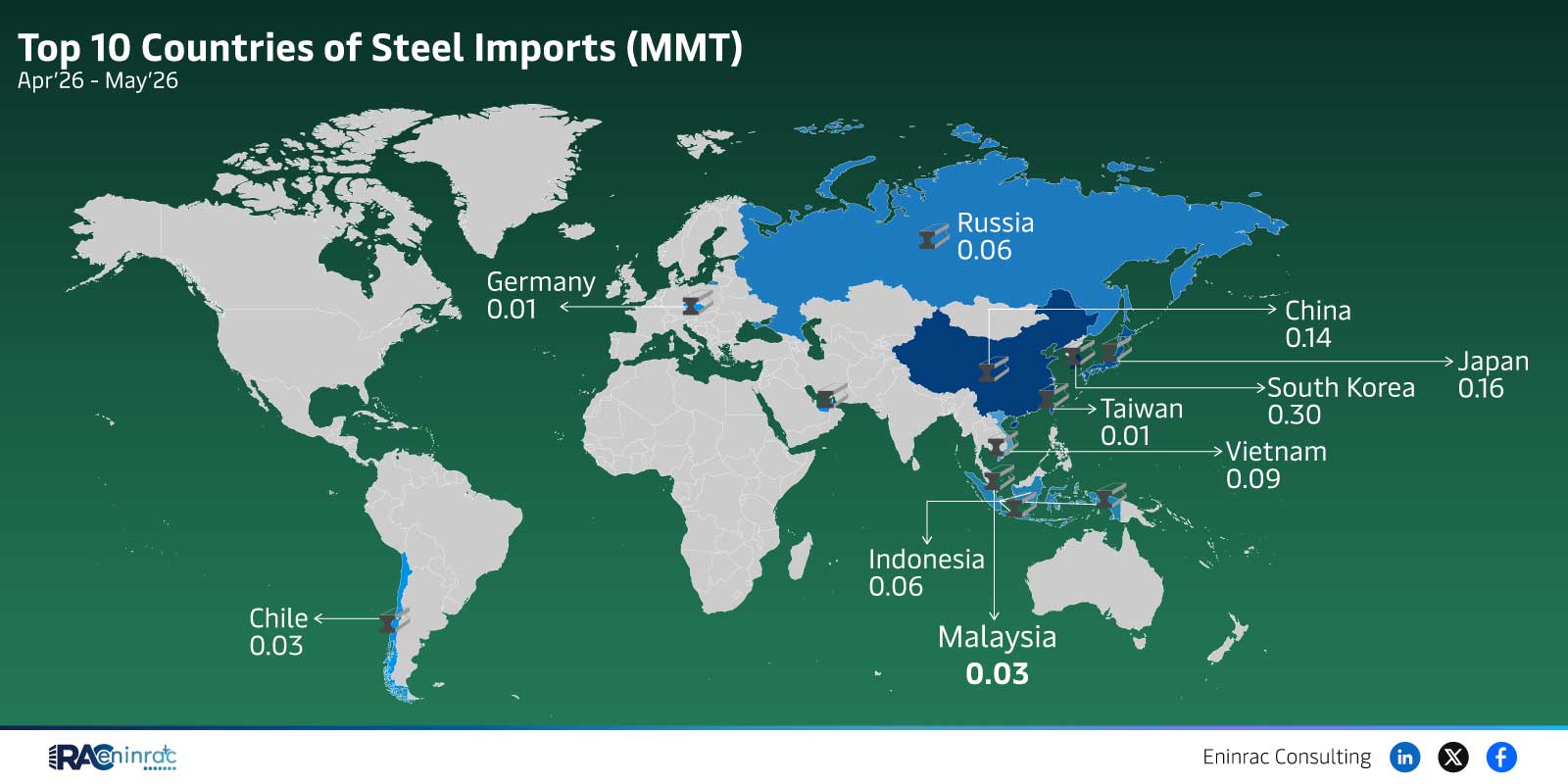
The raw figures point to a clear hierarchy: China dominates the landscape, followed by Japan, South Korea, Indonesia and Malaysia. The data also highlights the magnitude of each country's import volume, with China accounting for roughly 0.14 MMT, Japan contributing around 0.30 MMT, South Korea about 0.16 MMT, Indonesia 0.06 MMT and Malaysia 0.03 MMT. This distribution raises a fundamental question: why does China still lead despite ongoing domestic production increases, and how do regional competitors adjust their strategies to secure raw material supplies? The answer lies in a mix of infrastructure projects, automotive output and export‑oriented manufacturing that keep demand high.
Top Steel Importing Nations and Their Share
When comparing the five listed economies, China’s import figure, although appearing modest in absolute terms, represents a significant share of the regional market when considered alongside its internal consumption. Japan’s 0.30 MMT reflects a rebound after a period of modest contraction, driven by renewed construction activity and a revitalized shipbuilding sector. South Korea’s 0.16 MMT aligns with its dual focus on high‑tech manufacturing and heavy‑industry expansion. Indonesia’s 0.06 MMT underscores the country’s rapid urbanization and infrastructure rollout, while Malaysia’s 0.03 MMT points to targeted growth in automotive and consumer‑goods production. These differences illustrate how each economy balances domestic output with strategic imports to meet specific industrial goals.
Impact on Sectors and Industries
Steel import patterns influence a wide array of sectors. In construction, higher import volumes signal upcoming large‑scale projects and potentially tighter supply constraints, prompting price adjustments. The automotive industry monitors import data to gauge raw material costs that affect vehicle pricing and profit margins. Energy and renewable‑energy developers watch steel flows closely, as turbine blades and wind‑farm structures rely on consistent steel supplies. For investors, shifts in import volumes can indicate where capital may be needed to expand local production capacity or secure long‑term contracts. Policymakers also use this information to assess trade balances, negotiate tariffs, and plan strategic stockpiles.
Key Takeaways
- China remains the largest steel importer despite increasing domestic output.
- Japan’s import volume surpasses China in this snapshot, highlighting a strong rebound.
- South Korea secures a solid middle position, balancing automotive and heavy‑industry needs.
- Indonesia’s growing imports reflect aggressive infrastructure development.
- Malaysia’s modest import level signals focused industrial expansion.
- Regional import trends affect construction, automotive, energy and investment decisions.
FAQs
Which country imported the most steel in the April‑May 2026 period?
China imported the greatest amount, with approximately 0.14 MMT of steel.
Why does Japan show a higher import figure than China in this data set?
Japan’s higher figure stems from a resurgence in construction and shipbuilding that raised raw material needs.
How do steel imports impact the automotive sector?
Import levels affect steel prices, which directly influence vehicle production costs and final sale prices.
What does Indonesia’s steel import growth indicate?
It signals extensive infrastructure projects and urban expansion driving higher material demand.
Are these import trends likely to affect global steel prices?
Yes, increased demand from top importers can tighten supply and push global steel prices upward.