
Introduction
India’s coal import landscape for the period April‑May 2026 offers a concise snapshot of how the world’s major coal exporters are supporting the country’s energy demand. Understanding which nations supply the most coal helps analysts, investors and policymakers gauge supply‑side risks, price formation and strategic dependencies. In this article we unpack the raw import figures, compare country performances, and discuss the broader implications for India’s conventional energy sector.
What Does the Data Reveal About This Topic?
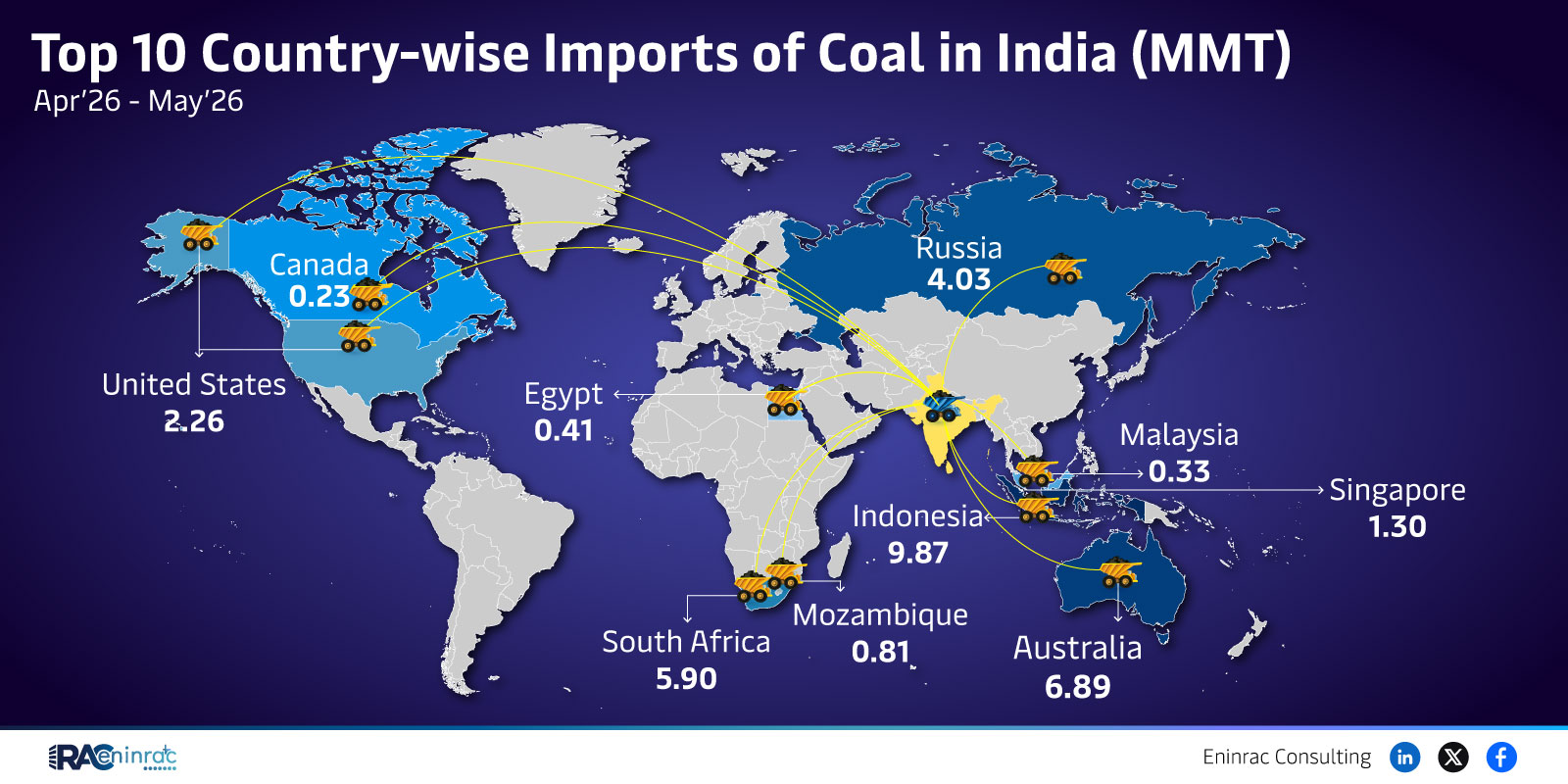
What does the data show about India’s coal imports during this two‑month window? The numbers indicate that Australia leads with roughly 5.9 million metric tonnes, followed by the United States at 2.26 MMT and Singapore contributing about 1.30 MMT. Smaller volumes come from Malaysia (0.33 MMT) and other listed nations, highlighting a diversified but heavily weighted import portfolio.
Country Rankings and Volume Comparisons
Australia emerges as the dominant supplier, delivering nearly six million tonnes, which underscores its role as a reliable long‑term partner for India’s thermal power plants. The United States, while far behind Australia, still supplies a significant share, reflecting existing trade agreements and logistical corridors. Singapore’s contribution, though modest, points to its strategic position as a trans‑shipment hub in Asia. Malaysia’s limited volume suggests niche or specialized contracts. The ambiguous entries for Mozambique and South Africa imply either data gaps or negligible shipments during the period, reinforcing the concentration of imports among a few key players.
Impact on Sectors and Industries
The composition of coal imports directly affects India’s power generation sector, steel manufacturing and cement production, all of which rely on consistent coal supplies. High dependency on Australian coal can expose the market to geopolitical shifts or shipping disruptions in the Indo‑Pacific route. Conversely, diversified sources mitigate risk, allowing refineries and utilities to balance price volatility. Investors tracking conventional energy assets watch these import trends closely, as they signal demand intensity, potential infrastructure investments in ports and rail, and the strategic importance of securing multi‑source contracts.
Key Takeaways
- Australia supplies the largest share of Indian coal imports at approximately 5.9 MMT.
- The United States ranks second with 2.26 MMT, reinforcing its role as a major exporter.
- Singapore contributes 1.30 MMT, highlighting its hub status in regional coal trade.
- Malaysia’s import volume is modest at 0.33 MMT, indicating limited market share.
- Data gaps for Mozambique and South Africa suggest minimal or unrecorded shipments.
- Concentrated import sources heighten supply‑risk considerations for India’s energy planners.
FAQs
Which country supplied the most coal to India in Apr‑May 2026?
Australia, with roughly 5.9 million metric tonnes, was the top supplier.
How much coal did the United States export to India during this period?
The United States exported about 2.26 million metric tonnes of coal to India.
Is Singapore a direct coal producer or a transit hub for India?
Singapore primarily acts as a trans‑shipment hub, facilitating the movement of coal to India.
Why are the import figures for Mozambique and South Africa unclear?
The raw data appears incomplete for these countries, indicating either very low volumes or reporting gaps.
What does a high reliance on Australian coal mean for India?
It offers stable supply but also creates exposure to geopolitical or shipping disruptions affecting the Indo‑Pacific region.