
Introduction
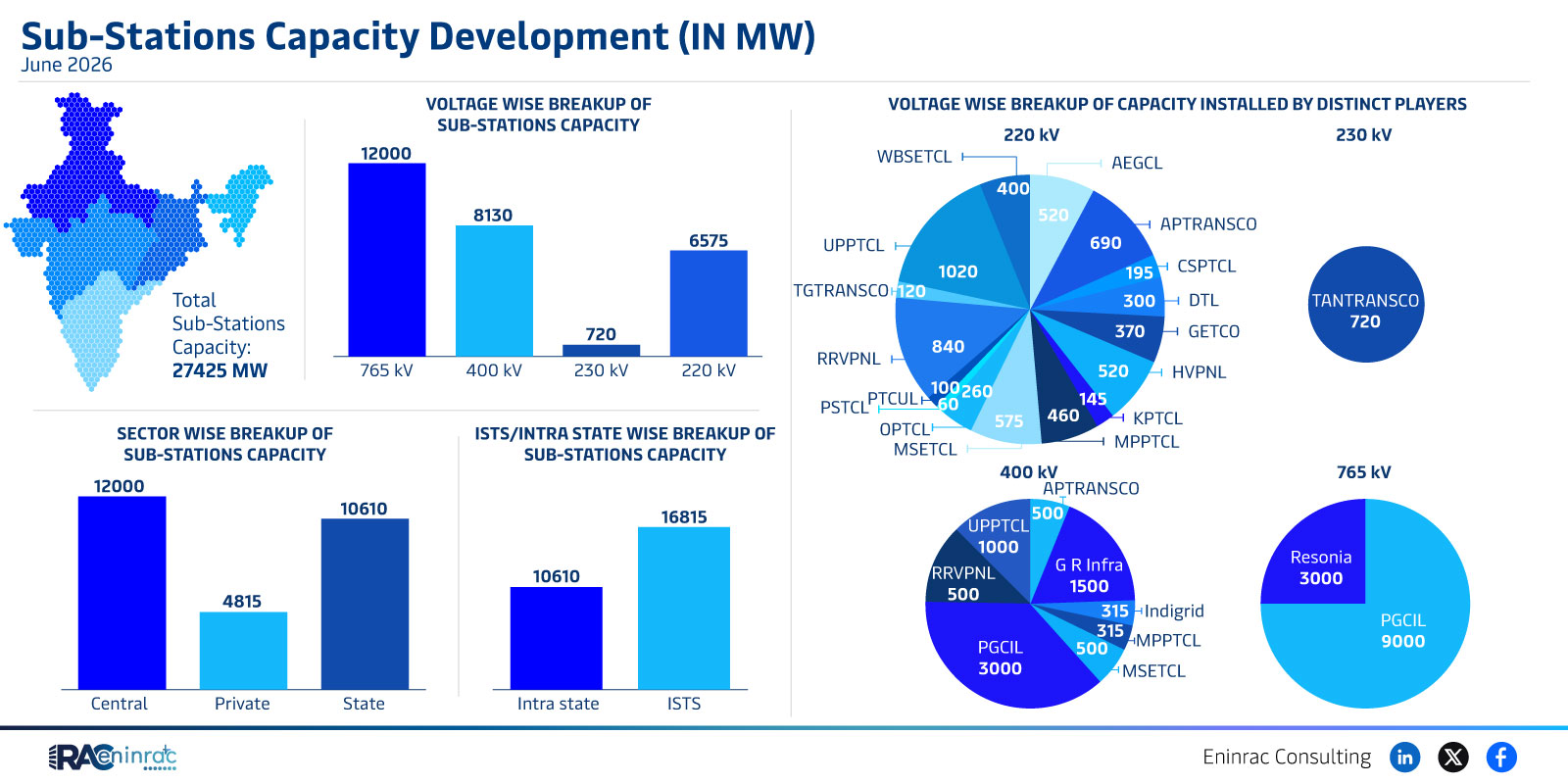
The June 2026 sub‑station capacity development report provides a snapshot of the power transmission infrastructure that Indian utilities have added across different voltage levels. Understanding where capacity is being built helps investors, policymakers, and industry analysts evaluate the health of the grid and anticipate future demand. This article explains the key figures, breaks down the contributions of major players such as WBSETCL, AEGCL, CSPTCL, DTL and TANTRANSCO, and highlights the implications for the broader energy sector.
What Does the Data Reveal About This Topic?
The data shows a clear concentration of new capacity at the 765 kV level, with a total of 12,000 MW reported for that voltage tier. Players like WBSETCL and GETCO dominate the intra‑state segment, each reporting 720 MW of installed capacity. The intra‑state and inter‑state breakdown indicates that private and central entities are jointly driving the expansion, while the overall capacity addition reaches 16,815 MW across all listed utilities.
Voltage‑Wise Capacity Distribution by Player
When the numbers are examined by voltage, the 765 kV line accounts for the bulk of the development, followed by lower voltage tiers that together contribute a smaller share. WBSETCL leads the high‑voltage segment, whereas AEGCL and CSPTCL provide notable contributions at both 765 kV and lower levels. DTL and TANTRANSCO add incremental capacity that supports regional reliability and helps balance load across the transmission network.
Impact on Sectors and Industries
Enhanced sub‑station capacity directly influences the reliability of electricity supply to industrial parks, commercial hubs, and residential areas. For investors, the data signals continued opportunities in conventional energy projects and grid‑related financing. Policymakers can use these figures to prioritize regulatory reforms that streamline approvals for new substations. Moreover, the increased capacity supports renewable integration by providing the backbone needed to transport clean energy from generation sites to demand centers.
Key Takeaways
- June 2026 saw a total addition of 16,815 MW in sub‑station capacity across major Indian utilities.
- The 765 kV voltage tier captured the largest share, reflecting a focus on high‑voltage transmission.
- WBSETCL and GETCO each contributed 720 MW, highlighting their leading roles in intra‑state development.
- Private and central entities are jointly expanding the grid, indicating balanced investment across sectors.
- Increased capacity improves grid resilience and facilitates greater renewable energy integration.
- Stakeholders can expect continued investment opportunities in conventional power infrastructure.
FAQs
What is the total sub‑station capacity added in June 2026?
The report records a cumulative addition of 16,815 MW across all listed utilities.
Which voltage level has the highest capacity increase?
The 765 kV tier leads with 12,000 MW of newly installed capacity.
Who are the top contributors to the capacity growth?
WBSETCL and GETCO each added 720 MW, making them the top contributors.
How does this capacity growth affect renewable energy integration?
Higher transmission capacity enables more efficient delivery of renewable power from generation sites to consumers.
What investment opportunities arise from this data?
Investors can target conventional power projects, grid financing, and ancillary services linked to the expanded infrastructure.