
Introduction
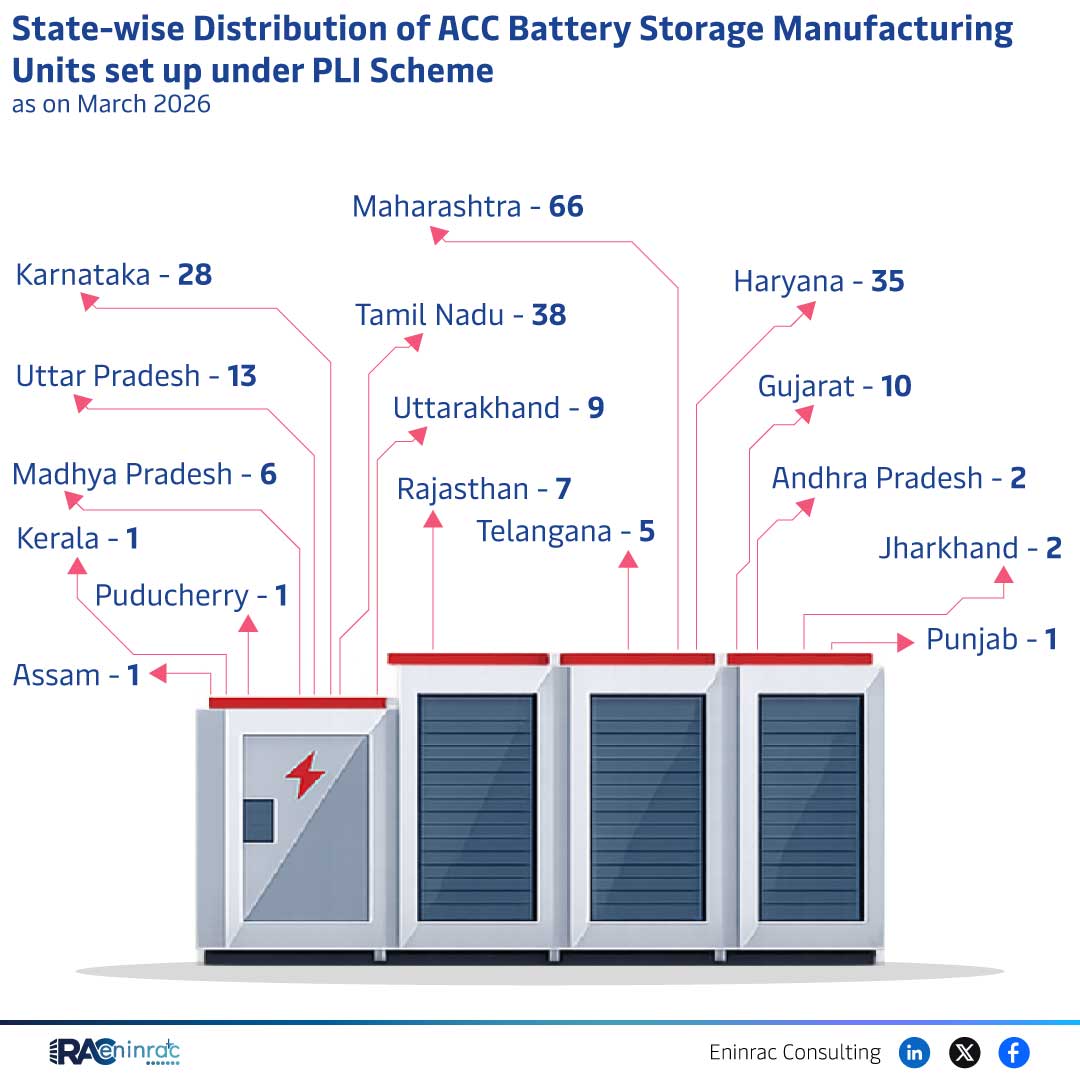
The 2026 state‑wise distribution of ACC battery storage manufacturing units under India’s Production Linked Incentive (PLI) scheme provides a clear snapshot of how the country is scaling its energy storage capabilities. Understanding which regions host the most units helps investors, policymakers, and industry players gauge market concentration, identify growth hotspots, and anticipate future policy directions. This article breaks down the data, highlights leading states, examines trends, and discusses the broader impact on the clean‑energy ecosystem.
What Does the Data Reveal About This Topic?
The data shows a pronounced concentration of ACC battery storage manufacturing in a few key states, with Maharashtra leading at 66 units, followed by Karnataka, Haryana, and Tamil Nadu. Smaller states such as Kerala, Puducherry, and Punjab each have only one unit, underscoring a disparity in manufacturing capacity across the country. These figures suggest that policy incentives, infrastructure availability, and skilled labor pools are driving regional clustering, while lesser‑served areas may require targeted support to attract investment.
Top Performing States in ACC Battery Storage Manufacturing
Maharashtra dominates the landscape with 66 units, reflecting its strong industrial base, logistics networks, and proximity to major auto and electronics hubs. Karnataka follows with 28 units, leveraging its vibrant technology ecosystem and supportive state policies. Haryana (35) and Tamil Nadu (38) also rank highly, benefitting from established manufacturing corridors and access to skilled engineers. On the lower end, states like Kerala, Jharkhand, and Puducherry register only one or two units, indicating potential gaps in supply chain readiness and incentive awareness.
Impact on Sectors and Industries
The concentration of ACC battery storage units reshapes several sectors. Renewable energy developers gain reliable storage partners, enhancing grid stability and enabling higher renewable penetration. Automotive manufacturers see a domestic supply of battery components, reducing reliance on imports and supporting the EV transition. Financial institutions view the clustering as a lower‑risk investment opportunity, prompting increased funding for ancillary services such as logistics, testing, and recycling. Policymakers can use this geographic insight to fine‑tune regional incentives, workforce training programs, and infrastructure upgrades.
Key Takeaways
- Maharashtra leads with 66 ACC battery storage manufacturing units, highlighting its industrial advantage.
- Karnataka, Haryana, and Tamil Nadu together account for over half of all units, showing strong regional clustering.
- Smaller states host fewer than five units, signaling uneven distribution of manufacturing capacity.
- The PLI scheme effectively stimulates manufacturing but may need tailored incentives for lagging regions.
- Growing domestic capacity supports renewable integration and reduces dependence on imported battery components.
- Investors can target leading states for lower‑risk opportunities while monitoring emerging hubs for future growth.
FAQs
Which state has the highest number of ACC battery storage units?
Maharashtra tops the list with 66 units, reflecting its robust industrial ecosystem and logistics advantages.
How does the PLI scheme influence battery storage manufacturing?
The scheme provides financial incentives that encourage manufacturers to set up or expand facilities, accelerating domestic capacity.
Why are some states lagging behind in unit establishment?
Factors include limited infrastructure, lower skilled labor availability, and less awareness of incentive programs.
What impact does this distribution have on renewable energy growth?
Higher concentration of storage units enables better grid balancing, facilitating greater renewable energy integration across the country.
Can investors expect stable returns from these manufacturing hubs?
Leading states with multiple units offer diversified supply chains and lower risk, making them attractive for stable, long‑term investments.