
Introduction
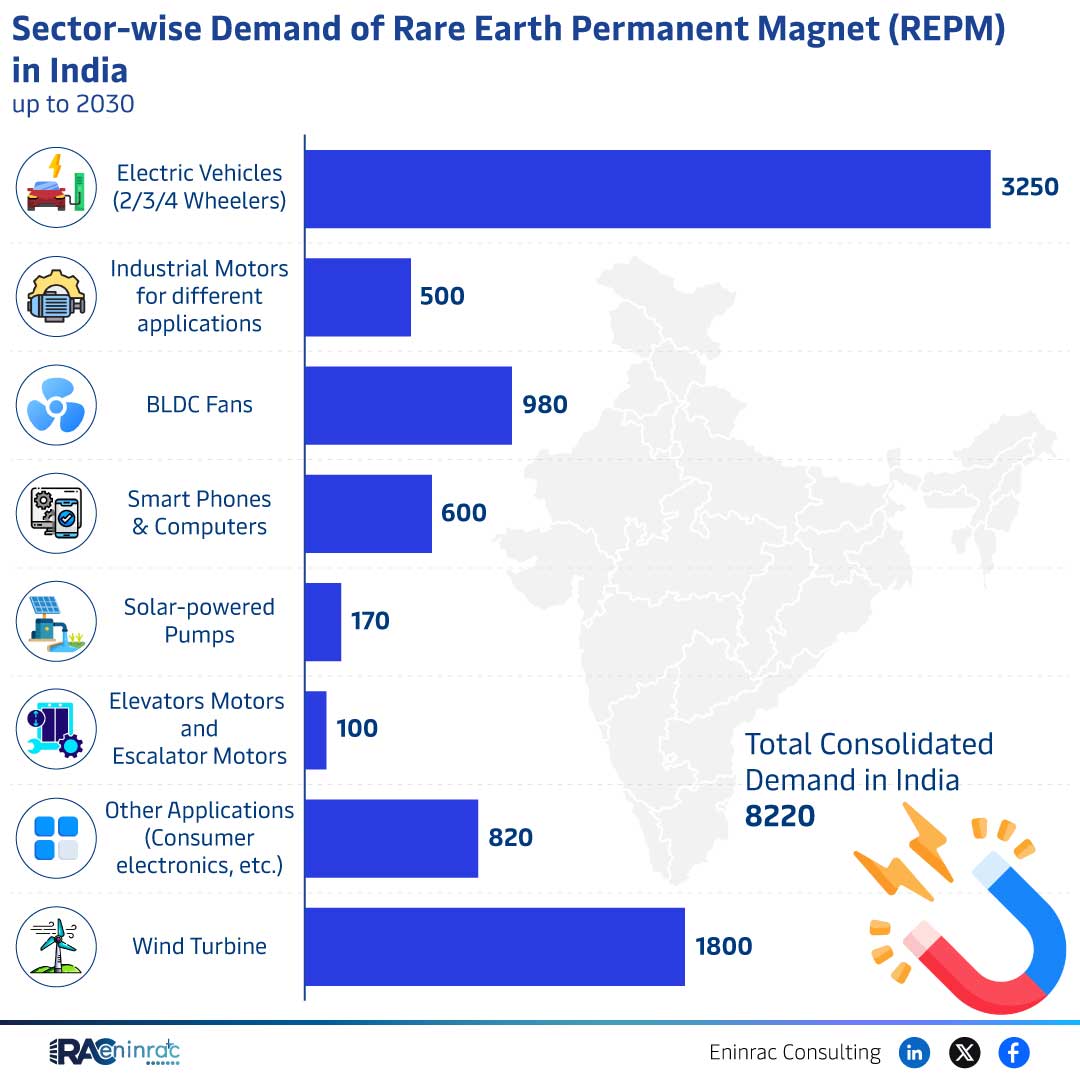
India’s rapid shift toward electric mobility, renewable power generation and advanced industrial automation is driving a steep rise in the need for rare earth permanent magnets (REPM). These high‑performance magnetic materials enable compact, efficient motors for electric cars, BLDC fans, wind turbines, solar‑powered pumps and a wide range of consumer electronics. The raw data from Eninrac Consulting projects sector‑wise demand for REPM in India up to 2030, revealing which applications will dominate the market and how total consolidated demand will grow to approximately 3,250 kilotonnes. Understanding this demand trajectory helps manufacturers, investors, policymakers and supply‑chain planners anticipate material requirements, pricing pressure and potential opportunities in the Indian magnet ecosystem. This analysis underscores the rare earth permanent magnet demand India will face as the nation electrifies its fleet and expands renewable infrastructure.
What Does the Data Reveal About This Topic?
The data answers a key question: which sectors will consume the most rare earth permanent magnets in India by 2030? The answer shows electric vehicles (including 2‑, 3‑ and 4‑wheelers) lead with an estimated 1,800 kilotonnes, followed by industrial motors for various applications at 980 kilotonnes, and wind turbines at 500 kilotonnes. Smaller but growing segments such as BLDC fans, solar‑driven pumps, elevators, escalators and consumer electronics together account for the remaining demand. Overall, the consolidated forecast reaches 3,250 kilotonnes, indicating a more than double increase compared with current consumption levels.
Sector‑wise Breakdown of REPM Demand in India
When we compare the five major categories, electric vehicles clearly dominate, contributing more than half of the total projected demand. Industrial motors, which power machinery, elevators, escalators and other heavy equipment, represent roughly 30 percent of the market. Wind turbine installations, driven by India’s renewable energy targets, account for about 15 percent. The remaining 5 percent is split among BLDC fans, solar‑driven pumps, smartphones, computers and other consumer electronics. This distribution highlights that while EVs are the primary growth engine, diversified industrial and renewable applications collectively shape a robust demand base for REPM, reducing reliance on any single sector.
Impact on Sectors and Industries
The expanding REPM demand influences multiple layers of the economy. Motor manufacturers must secure stable rare‑earth supply chains, prompting new partnerships with mining firms and recycling initiatives. Investors see heightened interest in domestic magnet production facilities and downstream component makers. Policymakers are urged to formulate incentives for rare‑earth beneficiation and promote research into alternative magnet technologies to mitigate import dependence. For consumers, increased REPM availability can lower the cost of electric vehicles and improve the efficiency of appliances such as fans and pumps, supporting India’s climate‑friendly goals.
Key Takeaways
- Electric vehicles will consume over half of India’s REPM demand by 2030.
- Industrial motors and equipment together account for roughly 30 percent of the market.
- Wind turbine installations contribute about 15 percent of total demand.
- Combined niche applications (fans, pumps, electronics) represent the remaining 5 percent.
- Total consolidated REPM demand is projected to reach 3,250 kilotonnes, more than double current levels.
- Supply‑chain resilience, domestic production and recycling will be critical for meeting future demand.
FAQs
Why are rare earth permanent magnets essential for electric vehicles?
They provide high magnetic flux density, enabling compact, high‑efficiency drivetrains that improve range and performance while reducing vehicle weight.
How does REPM demand affect India’s renewable energy targets?
Increased magnet supply supports larger wind turbine installations and more efficient solar‑powered pumps, helping the country meet its clean‑energy capacity goals.
What challenges does the Indian magnet supply chain face?
Dependence on imported rare‑earth ores, limited domestic processing capacity, price volatility and geopolitical risks create supply‑chain uncertainty.
Can recycling reduce the need for new rare earth extraction?
Yes, advanced recycling of end‑of‑life magnets can recover up to 95 percent of rare‑earth content, lessening the pressure on primary mining.
What opportunities exist for investors in the REPM market?
Investors can target upstream mining projects, midstream processing plants, and downstream motor manufacturers that are scaling to meet rising demand.