
Introduction
Smart metering is transforming electricity distribution across India, and the North Eastern Region (NER) is no exception. In April 2026 the latest deployment figures show a rapid rollout of smart meters in eight states, highlighting the region's commitment to modernising the grid, improving billing accuracy and enabling demand‑side management. This article analyses the April 2026 data, explains what the numbers mean for each state, and outlines the broader implications for utilities, investors and policymakers.
What Does the Data Reveal About This Topic?
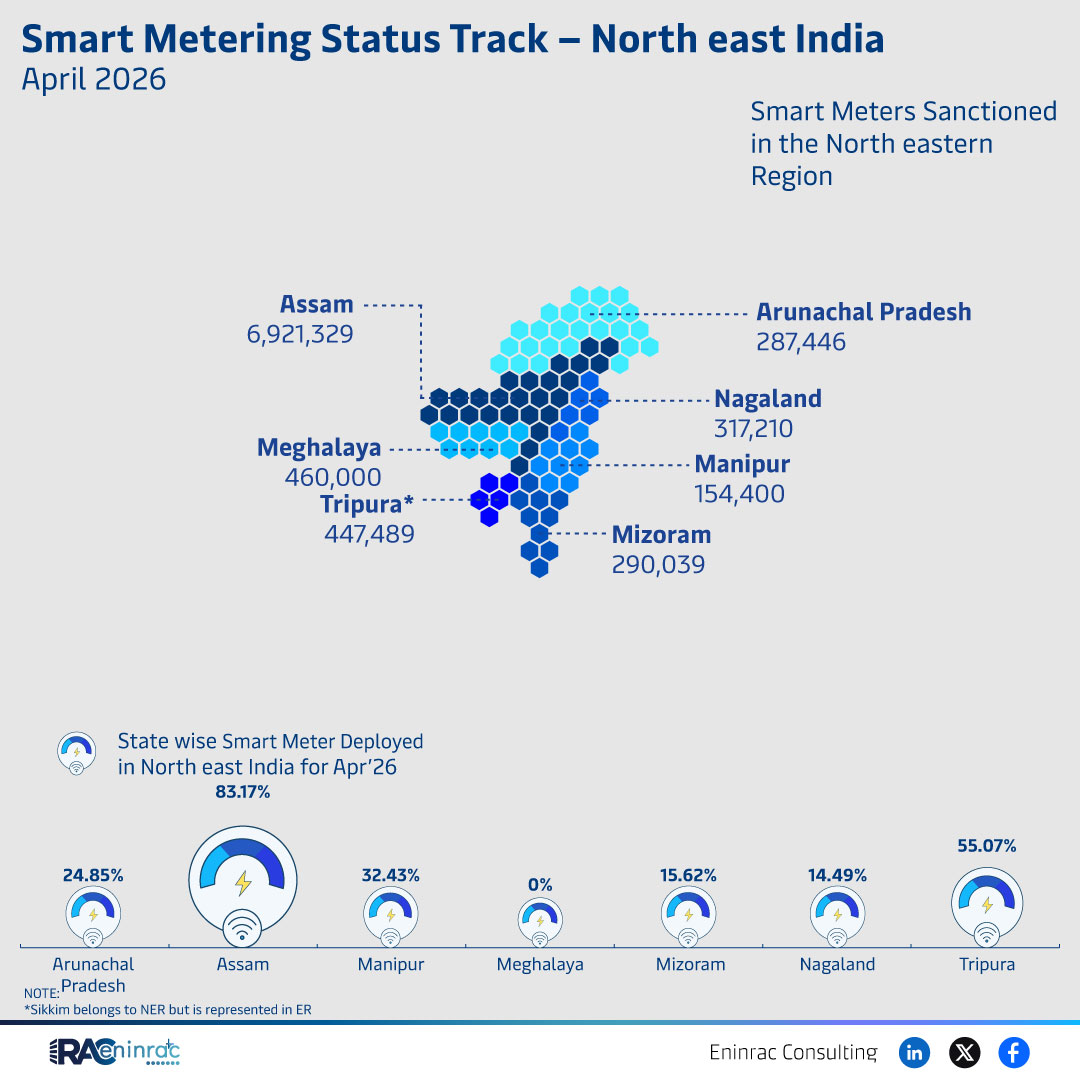
The data answers a key question: which North Eastern states have achieved the highest smart meter penetration and how does the overall deployment compare to national targets? Assam leads with 6,921,329 meters, followed by Arunachal Pradesh with 287,446. Smaller states such as Mizoram (200,039) and Tripura (154,400) show modest but growing installations. The aggregate figure for the region indicates that smart meter coverage is expanding, yet the percentage of total connections varies widely, suggesting uneven progress that warrants targeted policy support.
State‑wise Smart Meter Deployment Highlights
When the numbers are examined side by side, clear trends emerge. Assam dominates the deployment count, reflecting its larger population and more extensive distribution network. Arunachal Pradesh, despite its challenging terrain, has made notable strides with over a quarter‑million meters. Meghalaya and Manipur each report around 460,000 meters, indicating steady growth. In contrast, Nagaland (317,210) and Mizoram (200,039) lag behind, pointing to potential infrastructure bottlenecks or funding gaps. The data also shows that Sikkim, while geographically part of NER, is reported under the Eastern Region, underscoring the need for consistent regional classification in future reports.
Impact on Sectors and Industries
Smart meter rollout influences several key sectors. Utilities gain real‑time consumption data, enabling more accurate load forecasting and reducing non‑technical losses. Renewable energy developers benefit from better grid visibility, facilitating integration of solar and wind projects. Investors see reduced operational risk and a clearer pathway for financing smart‑grid initiatives. Policymakers can use the granular data to design incentive schemes, prioritize underserved states, and monitor progress toward national smart‑metering targets. Consumers ultimately receive transparent billing and the ability to manage energy use more efficiently.
Key Takeaways
- Assam leads NER with nearly 7 million smart meters installed.
- Arunachal Pradesh shows strong performance despite difficult geography.
- Smaller states such as Mizoram and Nagaland require additional support to accelerate deployment.
- Overall smart meter coverage in NER is expanding but remains uneven across states.
- Improved data visibility benefits utilities, renewable developers, investors and consumers.
- Consistent regional reporting is essential for accurate tracking and policy formulation.
FAQs
Which state has the highest number of smart meters in North East India?
Assam, with 6,921,329 smart meters installed as of April 2026.
Why does Arunachal Pradesh have a high deployment despite its terrain?
Targeted government incentives and focused utility programs have accelerated installation even in remote areas.
How do smart meters help renewable energy integration?
They provide real‑time load data, allowing grid operators to balance intermittent solar and wind generation more effectively.
What challenges remain for states like Mizoram?
Limited grid infrastructure, funding constraints and logistical difficulties slow the rollout.
How can investors use this smart meter data?
Investors can assess grid modernization progress, gauge regulatory risk and identify opportunities in smart‑grid services.