
Introduction
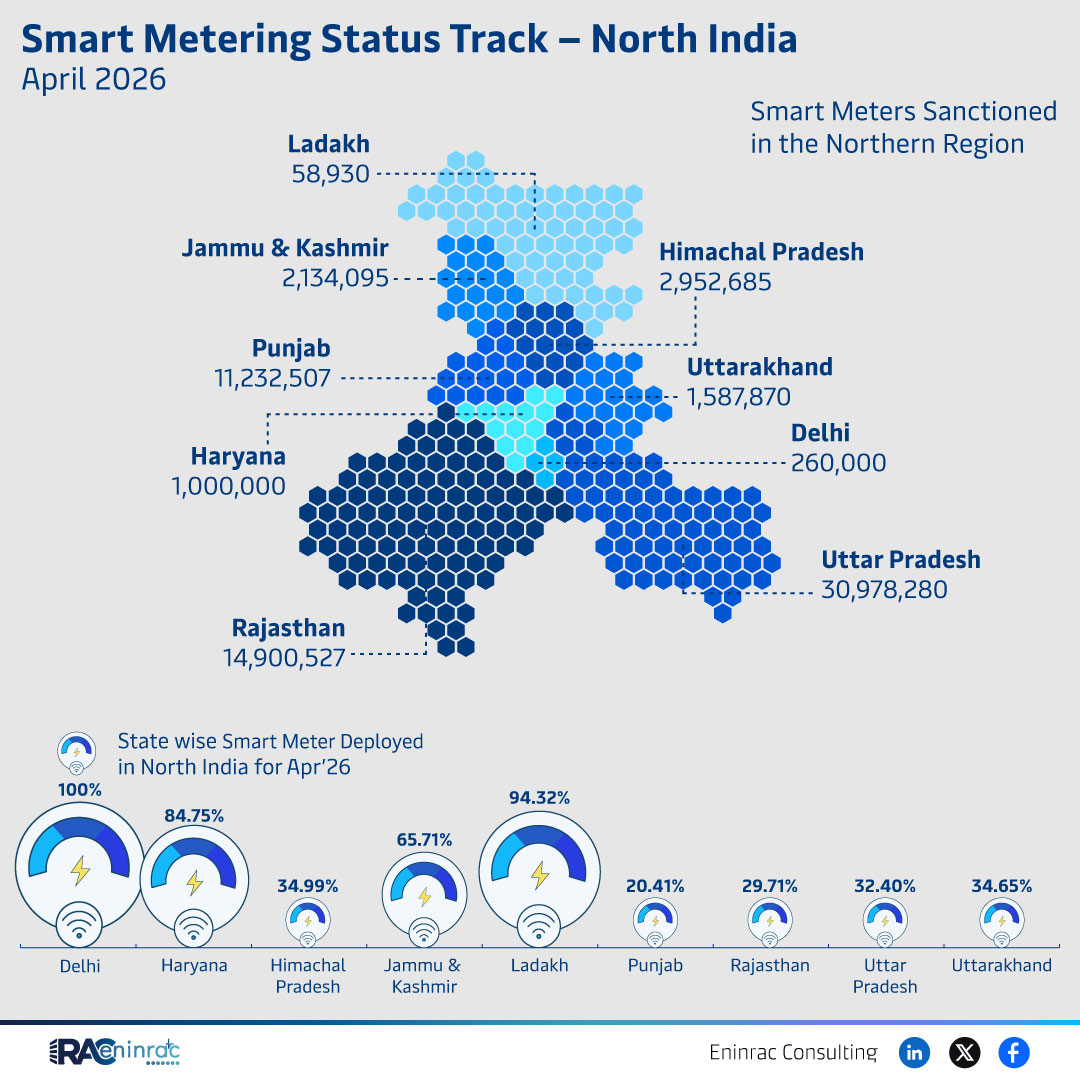
The April 2026 smart metering status report for North India provides a detailed snapshot of meter installations across key states. Understanding these figures is essential for policymakers, investors, and utilities seeking to gauge progress toward energy efficiency and grid modernization goals.
What Does the Data Reveal About This Topic?
The data shows a stark variation in smart meter deployment, with Uttar Pradesh leading at over 30 million meters while smaller states like Ladakh report fewer than 60,000. This contrast highlights differing adoption rates and infrastructure readiness across the region.
State‑wise Deployment Highlights
Uttar Pradesh tops the list with 30,978,280 meters, followed by Punjab and Haryana with roughly 1.6 million and 1.0 million respectively. Himachal Pradesh records 2,134,095 meters, whereas Ladakh lags with just 58,930. Rajasthan and Uttarakhand show mid‑range figures of 14,900,527 and 1,232,507 meters. These numbers illustrate that high‑population states are driving the bulk of installations, while mountainous and less‑populated regions progress more slowly.
Impact on Sectors and Industries
Accelerated smart meter roll‑out supports the renewable energy transition by enabling precise demand response and reducing losses. Utilities benefit from real‑time data, improving billing accuracy and operational efficiency. Investors see reduced risk in projects that rely on accurate consumption metrics, while policymakers can better design incentives for energy‑saving programs.
Key Takeaways
- Uttar Pradesh accounts for the majority of smart meters in North India.
- Punjab and Haryana are the next largest contributors, each surpassing one million meters.
- Ladakh’s deployment remains under 60,000, indicating infrastructure challenges.
- Overall, North India shows a combined deployment of over 50 million smart meters.
- Higher deployment correlates with states that have larger industrial and residential demand.
- Smart meter growth supports grid reliability, renewable integration, and investment confidence.
FAQs
Which North Indian state has the highest number of smart meters?
Uttar Pradesh leads with approximately 30.98 million smart meters installed.
Why does Ladakh have fewer smart meters?
Ladakh’s rugged terrain, lower population density, and limited grid infrastructure slow deployment.
How do smart meters benefit renewable energy integration?
They provide real‑time consumption data, enabling better demand response, reducing peak loads, and facilitating smoother integration of variable renewable sources.
What is the total smart meter count for North India as of April 2026?
The combined total exceeds 50 million meters across all listed states.
Are there any states with deployment below one million meters?
Yes, Ladakh, Himachal Pradesh, and Uttarakhand each have deployments below one million meters.