
Introduction
India’s large hydro power generation landscape in June 2026 offers a clear snapshot of how the country’s renewable energy mix is evolving. Hydro remains a cornerstone of clean electricity, providing baseload power while complementing solar and wind growth. This article unpacks the latest capacity numbers, highlights the states that dominate the sector, and explains why the trends matter to investors, policymakers and energy planners across the nation.
What Does the Data Reveal About This Topic?
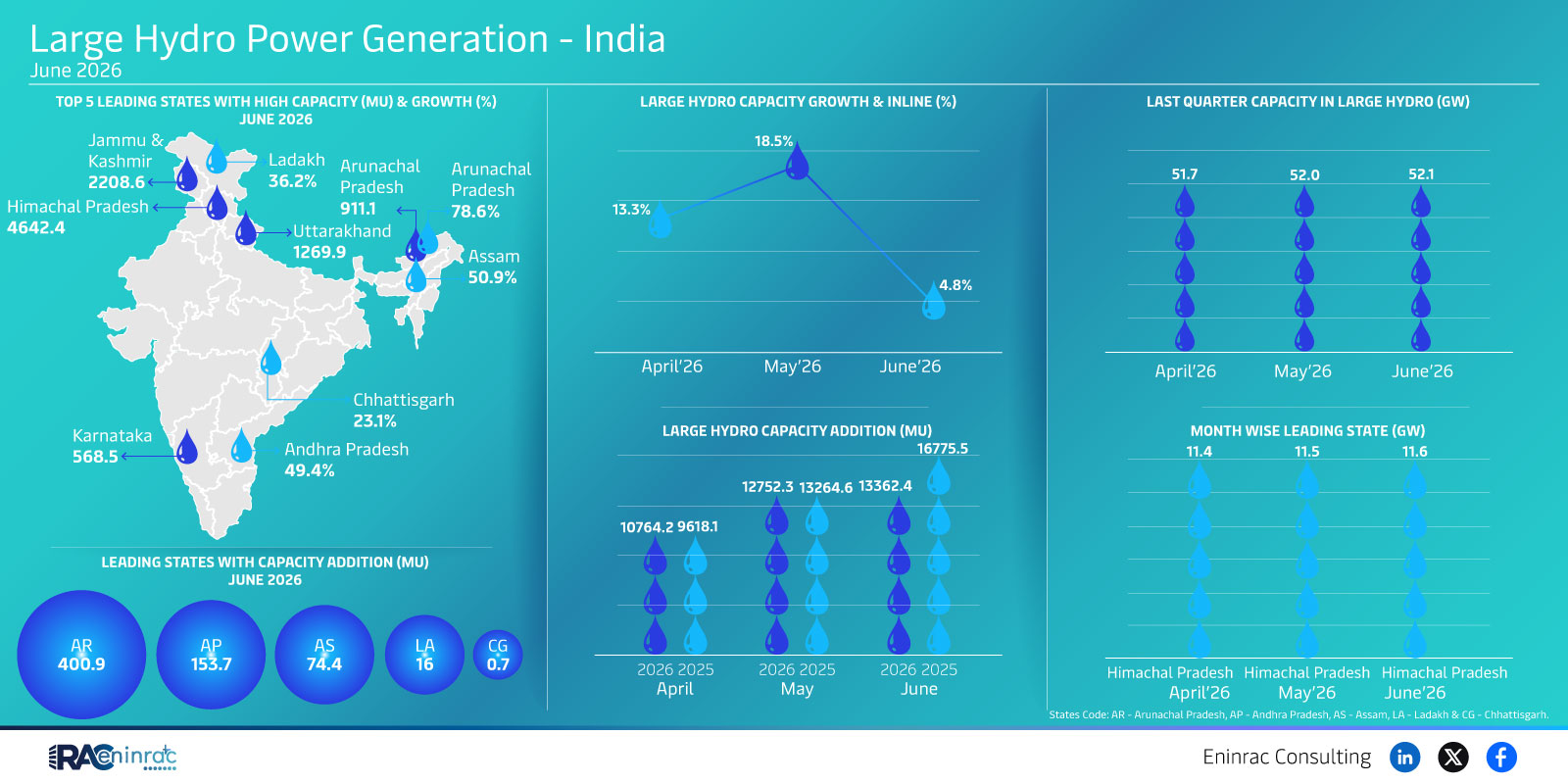
The data shows that a handful of states continue to lead in installed large hydro capacity and recent growth. Himachal Pradesh, Uttarakhand, Karnataka, Andhra Pradesh and the newly‑included Ladakh region together account for the majority of megawatt additions reported for the quarter ending June 2026. The figures also indicate a modest but steady increase in overall national large hydro capacity, signalling continued commitment to this renewable source.
State‑wise Capacity Trends in June 2026
When the numbers are broken down by state, Himachal Pradesh stands out with a reported capacity of 4,642.4 MW, followed by Uttarakhand’s 1,269.9 MW and Karnataka’s 568.5 MW. Ladakh (including Kashmir) contributed 2,208.6 MW, while Arunachal Pradesh added a modest 78.6 MW. The quarter‑over‑quarter capacity addition for the sector rose from 12,752.3 MW in April to 13,362.4 MW in June, reflecting a cumulative addition of 16,775.5 MW for the year‑to‑date. These trends illustrate both the geographic concentration of hydro resources in the northern and northeastern hill states and the incremental growth driven by new project commissioning, with each state showing unique development patterns.
Impact on Sectors and Industries
Large hydro development influences several downstream sectors. Power utilities benefit from a reliable, low‑cost source that reduces dependence on fossil‑fuel peaking plants. Construction and engineering firms see continued demand for dam upgrades, turbine installations and grid integration works. Financial investors gain exposure to long‑term cash‑flow assets, while policymakers can use the data to balance water resource management with renewable‑energy targets. Additionally, the sector’s growth supports rural electrification, industrial expansion in remote hill regions, and strengthens grid stability across the country.
Key Takeaways
- Himachal Pradesh leads in installed large hydro capacity with over 4,600 MW.
- Quarterly capacity additions increased steadily from April to June 2026.
- Ladakh and Uttarakhand together contribute more than 3,400 MW of capacity.
- Overall national large hydro capacity grew by roughly 1,600 MW year‑to‑date.
- Growth is concentrated in northern hill states with abundant water resources.
- Sector expansion supports grid stability, rural development and renewable‑energy goals.
FAQs
Which Indian states have the highest large hydro capacity?
Himachal Pradesh, Uttarakhand, Karnataka, Ladakh (including Kashmir) and Andhra Pradesh hold the largest installed capacities as of June 2026.
How much capacity was added to large hydro projects in the June 2026 quarter?
The sector added approximately 610 MW between April and June 2026, bringing the year‑to‑date total addition to 16,775.5 MW.
Why is large hydro important for India’s energy mix?
Large hydro provides baseload power, storage flexibility and low‑carbon electricity, helping balance intermittent solar and wind generation.
What trends are expected for large hydro after 2026?
Analysts anticipate continued modest growth, with emphasis on upgrading existing plants, adding pumped‑storage capacity and improving water‑resource efficiency.
How does large hydro growth affect investors?
Stable, long‑term revenue streams from hydro projects attract debt and equity investors seeking low‑risk renewable assets.