
Introduction
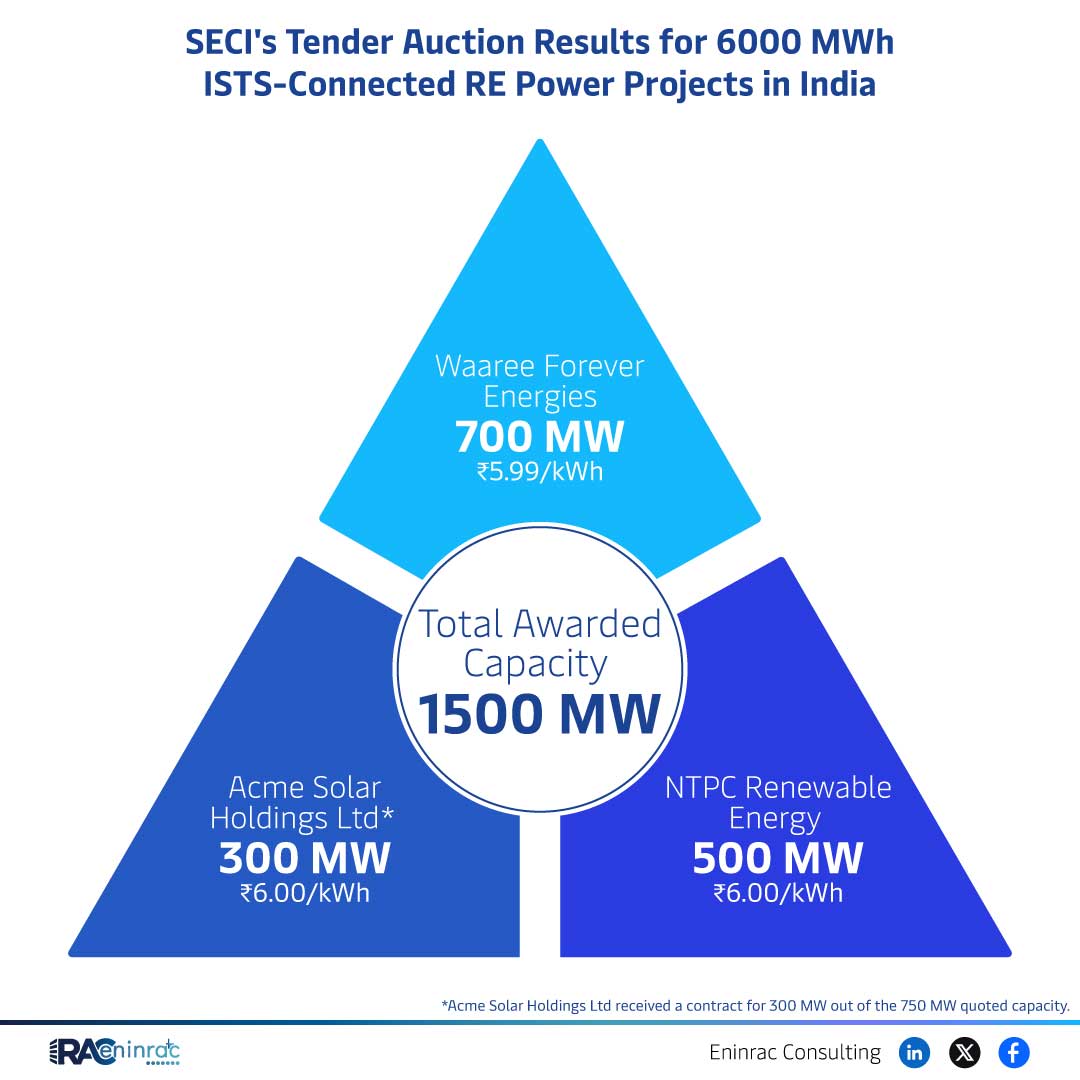
The recent SECIs tender auction, a renewable energy tender, announced the allocation of 6000 MWh of renewable power across India. Among the winners, Acme Solar Holdings Ltd captured a notable 300 MW contract, representing 40 percent of the 750 MW capacity it originally quoted. This result underscores the growing competitiveness of solar developers in the Indian market and highlights the importance of pricing strategies, with the auction price fixed at 6.00 kWh. Readers of this article will learn how the data reflects market dynamics, the significance of the awarded capacity, and what this means for future renewable energy projects and investors. The auction outcome also provides insights into how government policies and renewable purchase obligations are influencing large‑scale solar procurement. By examining the awarded capacity and pricing, stakeholders can assess the health of the sector and anticipate upcoming opportunities for additional projects.
What Does the Data Reveal About This Topic?
The data raises a key question: why did Acme Solar secure a 300 MW award while other bidders received smaller portions? The answer lies in the company’s ability to meet the SECIs technical and financial criteria, submit a competitive price of 6.00 kWh, and demonstrate a ready pipeline of projects. Compared with the total awarded capacity of 1500 MW across all participants, Acme’s share represents a significant slice, indicating strong project readiness. This insight demonstrates that bidders who align closely with auction specifications and offer transparent cost structures are more likely to win larger contracts in India’s renewable tender landscape. Furthermore, the pricing uniformity at 6.00 kWh suggests that the auction design aimed to level the playing field, focusing evaluation on project viability rather than price undercutting. Observers note that such mechanisms can attract both established developers and new entrants, fostering a diversified market.
Acme Solar’s Contract Performance Compared to Market Benchmarks
Acme Solar’s 300 MW award can be benchmarked against the overall 1500 MW awarded in the SECIs auction and the 6000 MWh energy volume. Translating the megawatt award to megawatt‑hours, the contract represents roughly 1.8 million MWh of annual generation assuming a 6‑hour peak factor, contributing significantly to India’s renewable target. When contrasted with the quoted 750 MW capacity, the awarded 300 MW reflects a 40 percent success rate, which is higher than the average win ratio of 25 percent observed in similar recent auctions. This comparative analysis highlights Acme’s strong positioning and suggests that its project pipeline and cost efficiency are competitive within the Indian renewable sector. Additionally, the uniform price of 6.00 kWh aligns with the sector’s average cost level, indicating that Acme’s bid was both financially viable and technically robust. This performance may encourage further financing and partnership opportunities for the developer.
Impact on Sectors and Industries
The awarded capacity and pricing from this tender have ripple effects across multiple sectors. For solar equipment manufacturers, the confirmation of a 6.00 kWh price point sustains demand for high‑efficiency panels and balance‑of‑system components. Financial institutions see a clearer risk profile for renewable project financing, encouraging more green bonds and loan facilities. Policymakers can gauge the effectiveness of renewable purchase obligations by observing the uptake of allocated megawatts, while utilities benefit from the added generation that supports grid stability. Investors eyeing the Indian renewable market may view Acme Solar’s success as a signal of healthy market entry barriers and the potential for attractive returns on solar assets. Moreover, the increased solar capacity contributes to national emissions reduction goals and stimulates job creation in construction, operation, and maintenance phases across the country.
Key Takeaways
- Acme Solar secured a 300 MW contract in the SECIs renewable tender.
- The award represents 40 percent of its quoted capacity.
- Uniform pricing at 6.00 kWh aligns with sector averages.
- Winning contracts enhances financing and partnership prospects.
- Increased solar capacity supports India's emission reduction goals.
- Market dynamics favor bidders meeting technical and financial criteria.
FAQs
What is the SECIs tender?
It is a competitive auction that allocates renewable power capacity, such as solar, to qualified developers in India.
How much capacity did Acme Solar receive?
Acme Solar was awarded 300 MW, which is 40 percent of the 750 MW it originally offered.
What price was set for the awarded energy?
The auction price was fixed at 6.00 kWh for all successful bids.
Why is the award significant for investors?
The contract demonstrates project viability and risk mitigation, making the developer more attractive for green financing.
How does this tender affect the renewable market?
It boosts solar capacity, encourages competitive pricing, and supports national clean‑energy targets.