
Introduction
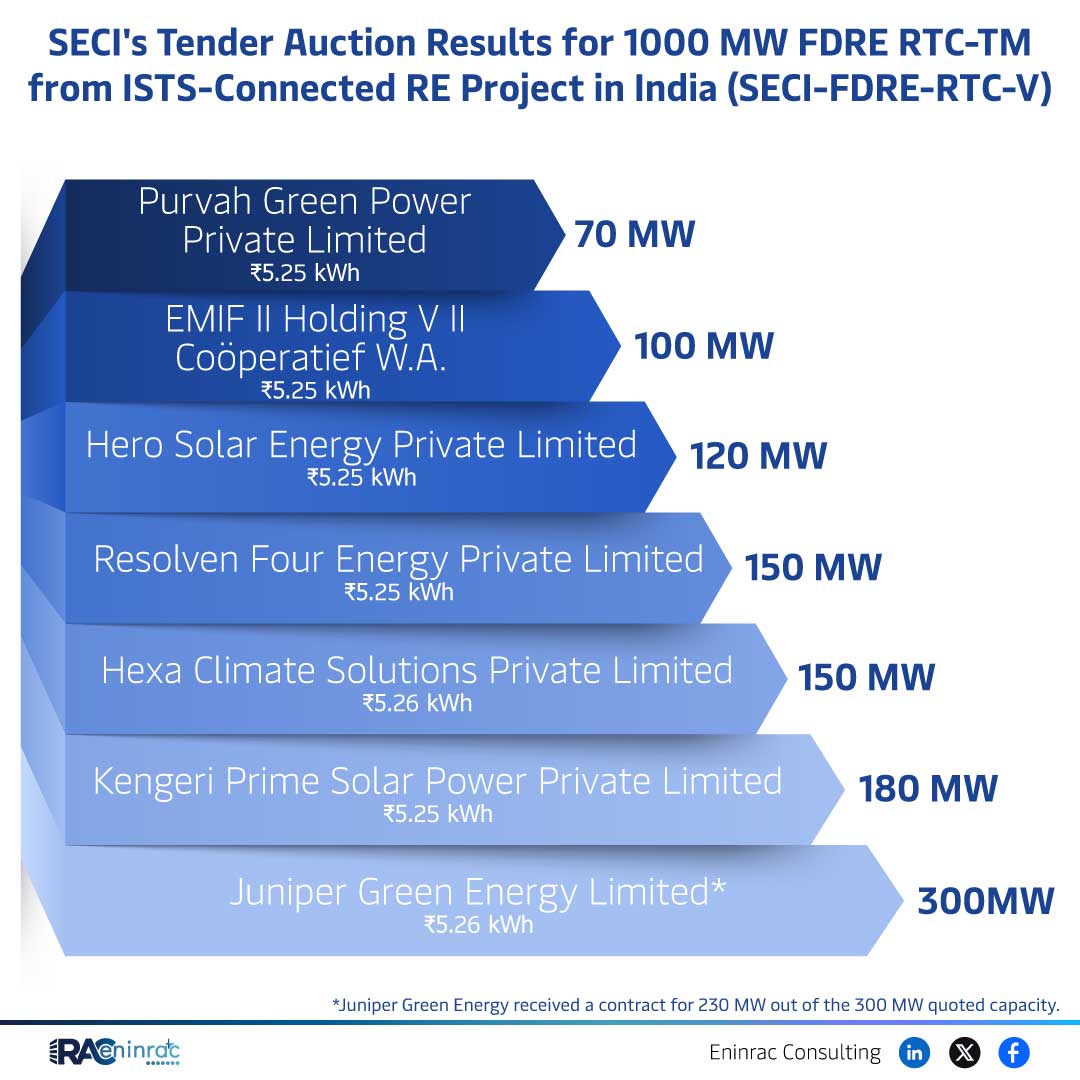
The recent SECIs Tender Auction Results for the 1000 MW FDRE RTC‑TM project in India have captured the attention of renewable energy stakeholders. This auction, part of the ISTS‑Connected RE Project, showcased competitive bidding among several companies, including Juniper Green Energy, Purvah Green Power Private Limited, EMIF II Holding V II, and Cooperatief W.A. Understanding the outcomes provides insight into market dynamics, capacity allocation, and the strategic positioning of emerging green power players in the Indian renewable sector.
What Does the Data Reveal About This Topic?
What key insight does the tender data provide? It reveals that Juniper Green Energy secured a substantial 230 MW contract out of the 300 MW quoted capacity, indicating strong financial and technical capability. Meanwhile, Purvah Green Power and EMIF II recorded lower capacity figures of 5.25 kWh and 35.25 kWh respectively, suggesting a focus on niche or ancillary services within the larger auction framework. The distribution highlights a tiered participation model where large developers capture major blocks while smaller entities contribute specialized assets.
Detailed Tender Allocation Overview
The auction results demonstrate a clear hierarchy in capacity awards. Juniper Green Energy’s 230 MW win represents 23 % of the total 1000 MW target, positioning the firm as a leading bidder. The remaining 770 MW is expected to be allocated among other qualified participants, though specific figures for Purvah Green Power and EMIF II remain modest. This pattern reflects the Indian government’s strategy to blend large‑scale renewable projects with smaller, distributed generation sources, fostering a diversified energy mix and encouraging broader market entry.
Impact on Sectors and Industries
These tender outcomes influence multiple sectors. For investors, the clear win by Juniper Green Energy signals a low‑risk entry point for capital allocation in Indian renewables. Policymakers can assess the effectiveness of auction mechanisms in attracting both heavyweight developers and smaller firms. Equipment manufacturers, especially those supplying solar PV and wind components, stand to benefit from the upcoming construction phases. Additionally, local job markets will experience growth as project development, installation, and operation activities expand across the regions involved.
Key Takeaways
- Juniper Green Energy secured 230 MW, the largest single award in the auction.
- The 1000 MW FDRE RTC‑TM project combines large and small capacity participants.
- Purvah Green Power and EMIF II recorded modest capacity commitments, indicating niche roles.
- India’s auction framework promotes diversified renewable portfolios.
- Successful bids enhance investor confidence in the Indian green energy market.
- Upcoming project phases will drive demand for renewable equipment and skilled labor.
FAQs
What is the total capacity targeted by the FDRE RTC‑TM auction?
The auction aims to allocate 1000 MW of renewable capacity across qualified bidders.
Which company received the largest contract in this auction?
Juniper Green Energy was awarded the largest contract, securing 230 MW.
How do smaller bidders like Purvah Green Power contribute to the project?
They provide specialized or supplemental capacity, such as low‑scale generation or ancillary services.
What does this auction indicate for future renewable investments in India?
It signals a robust and attractive environment for both large developers and smaller innovators.
Will the awarded capacities be fully realized within a single year?
Implementation timelines vary, but large projects typically span multiple years for development and commissioning.