
Introduction
The Pugal Solar Park tender in Rajasthan has drawn significant attention from the renewable energy sector. A total of 2,450 MW of solar capacity together with a 1,600 MW / 6,400 MWh energy storage system (ESS) were offered to developers. This auction reflects India's accelerating push toward large‑scale solar generation and grid‑stabilising storage solutions. In this article we unpack the auction results, examine the pricing dynamics, and discuss what the outcomes mean for investors, policymakers and the broader clean‑energy market.
What Does the Data Reveal About This Topic?
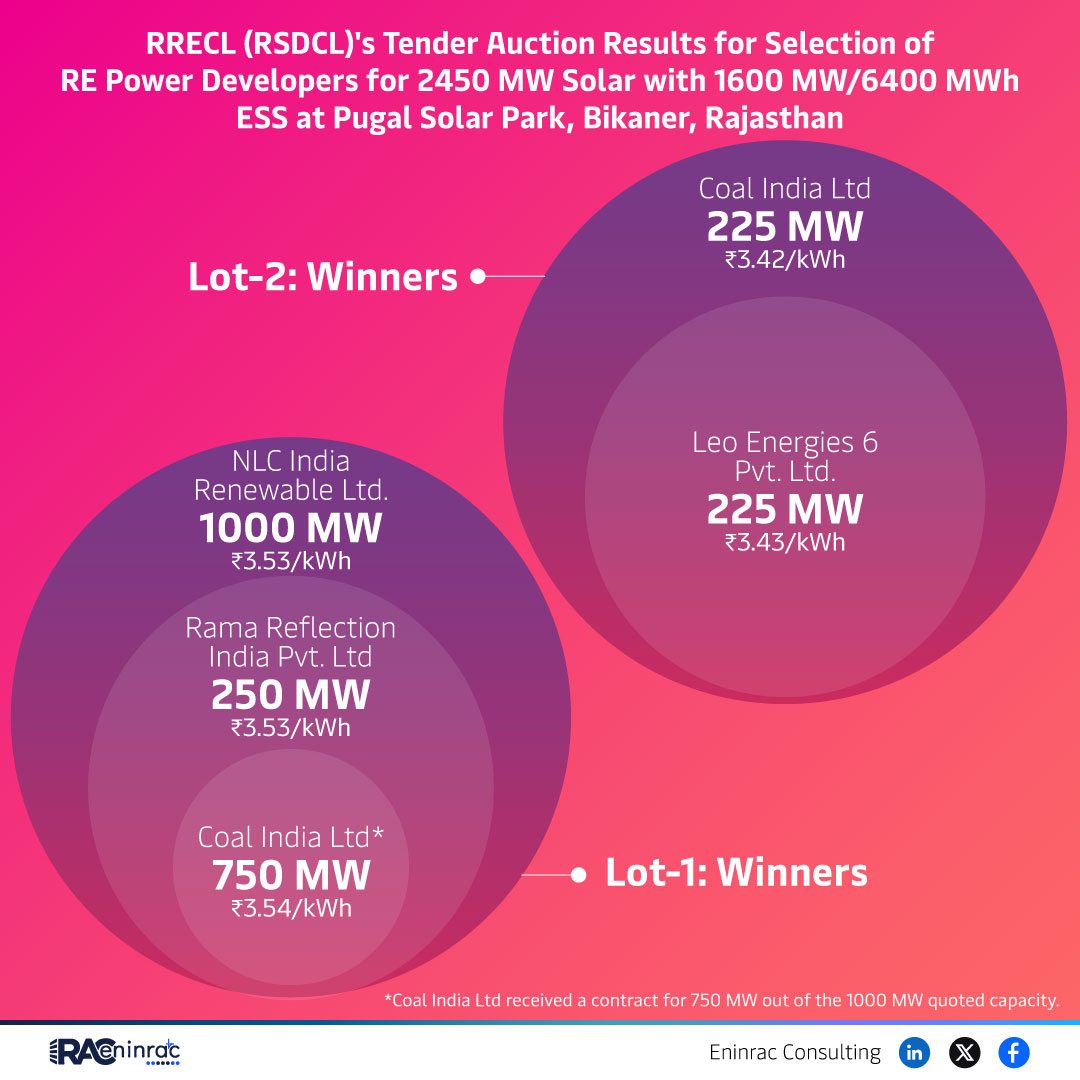
Did the auction favour established power generators, new renewable firms, or a mix of both? The data shows a combination of traditional coal‑heavy players such as Coal India Ltd and dedicated renewable companies like NLC India Ltd and Rama Reflection India Pvt Ltd securing contracts. Pricing varied from 3.42 ₹/kWh to 3.54 ₹/kWh, indicating competitive bids across different lot sizes and storage components.
Comparative Analysis of Winning Bids and Pricing
Lot‑1 awarded a 250 MW solar package to Rama Reflection India Pvt Ltd at 3.54 ₹/kWh, while Coal India Ltd secured a 750 MW portion of the 1,000 MW quoted capacity at 3.42 ₹/kWh. In Lot‑2, NLC India Ltd captured the 1,000 MW solar block with a price of 3.53 ₹/kWh. The modest price spread suggests a healthy level of competition and a willingness among bidders to accept marginally lower tariffs in exchange for long‑term power purchase agreements. The inclusion of a 1,600 MW ESS component further differentiates the Pugal auction from conventional solar‑only tenders, highlighting the growing importance of storage in India’s renewable roadmap.
Impact on Sectors and Industries
The tender outcomes influence several key stakeholders. For solar developers, the allocation confirms that large‑scale projects remain viable despite rising capital costs. Energy storage manufacturers see a clear market signal, as the 6,400 MWh ESS requirement will drive demand for lithium‑ion and flow‑battery technologies. Financial institutions can now assess risk‑adjusted returns for projects that combine generation with storage, potentially unlocking new financing structures. Policymakers gain evidence that mixed‑technology auctions can attract both legacy utilities and pure‑play renewables, supporting India's commitments under the Paris Agreement.
Key Takeaways
- Rajasthan awarded 2,450 MW of solar plus 1,600 MW of storage at Pugal Solar Park.
- Coal India Ltd secured a 750 MW solar contract at 3.42 ₹/kWh.
- NLC India Ltd won a 1,000 MW solar block at 3.53 ₹/kWh.
- Rama Reflection India Pvt Ltd received a 250 MW allocation at 3.54 ₹/kWh.
- The tender introduced a 6,400 MWh ESS component, underscoring storage importance.
- Competitive pricing indicates strong market interest and a maturing renewable sector.
FAQs
What total capacity was offered in the Pugal Solar Park tender?
The auction covered 2,450 MW of solar capacity and a 1,600 MW / 6,400 MWh energy storage system.
Which companies won solar contracts in the auction?
Coal India Ltd, NLC India Ltd, and Rama Reflection India Pvt Ltd were the primary winners across the two lots.
What were the awarded tariff rates?
Tariffs ranged from 3.42 ₹/kWh (Coal India Ltd) to 3.54 ₹/kWh (Rama Reflection India Pvt Ltd), with NLC India Ltd at 3.53 ₹/kWh.
How does the ESS component affect the overall project?
The 1,600 MW/6,400 MWh storage component enhances grid reliability, enables better renewable integration, and creates a market for battery manufacturers.
Why is this tender significant for renewable investors?
It demonstrates that large‑scale solar‑plus‑storage projects can attract both traditional power producers and dedicated renewable firms, offering diversified investment opportunities.