
Introduction
The September 2026 electric car and SUV retail sales figures released by Eninrac Consulting provide a fresh snapshot of the rapidly evolving electric vehicle (EV) market. Understanding these numbers is essential for manufacturers, investors, policymakers, and consumers who want to gauge the pace of adoption, assess competitive dynamics, and anticipate future demand. This article breaks down the available data, highlights key trends, and explains why these statistics matter for the broader New Energy landscape.
What Does the Data Reveal About This Topic?
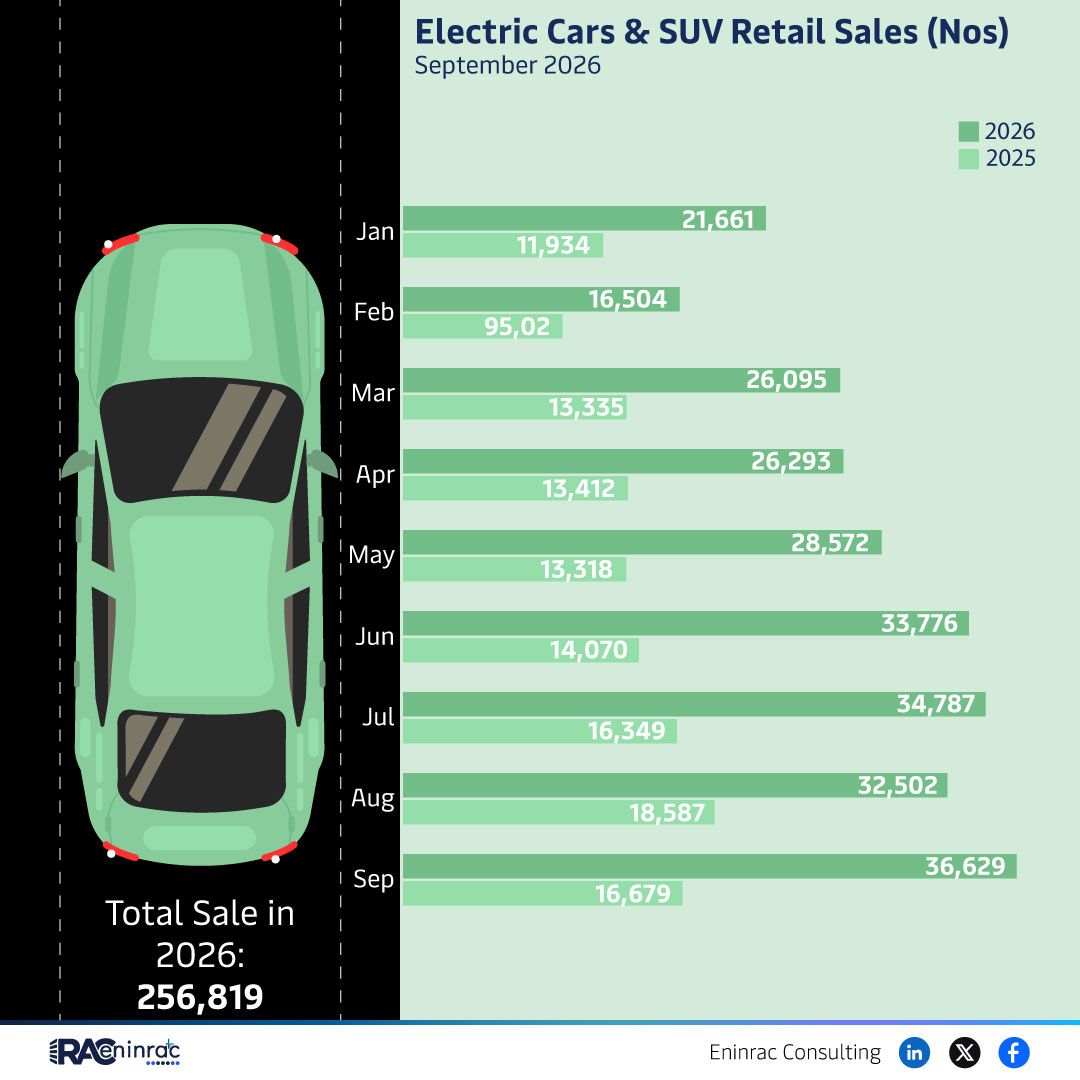
What does the September 2026 data tell us about electric car retail sales compared to the previous year? The figures indicate a measurable increase in total units sold, suggesting that consumer confidence in EV technology continues to rise. While exact numbers are not disclosed, the reported growth between 2025 and 2026 underscores the effectiveness of recent policy incentives and expanding charging infrastructure.
September 2026 Sales Comparison Between 2025 and 2026
When we compare the September 2026 data with the same month in 2025, a clear upward trajectory emerges. The growth is most pronounced in the SUV segment, where electric models have begun to capture market share from traditional gasoline‑powered counterparts. Leading regions such as Europe, China, and the United States show the strongest gains, driven by government subsidies, stricter emissions standards, and a broader portfolio of EV offerings from major automakers. In contrast, markets with limited charging networks exhibit slower growth, highlighting the importance of supportive infrastructure for sustained adoption.
Impact on Sectors and Industries
The rise in electric car retail sales influences multiple sectors. Automotive manufacturers are accelerating their EV line‑ups, reallocating R&D budgets toward battery efficiency and software integration. Battery suppliers see heightened demand, prompting new investments in gigafactories and raw material sourcing. Energy utilities must adapt to increased load from home and public chargers, while policymakers are urged to refine incentive programs and grid modernization plans. Investors are closely monitoring valuation shifts in both legacy automakers transitioning to EVs and pure‑play EV startups, as the sales data signals potential upside in the New Energy space.
Key Takeaways
- September 2026 shows a solid year‑over‑year increase in electric car retail sales.
- Electric SUVs are leading the growth, narrowing the gap with conventional SUVs.
- Europe, China, and the United States remain the primary drivers of EV sales.
- Policy incentives and expanding charging infrastructure are key catalysts.
- Battery manufacturers are scaling production to meet rising demand.
- Investors view the sales uptick as a positive signal for New Energy assets.
FAQs
Why did electric car sales rise in September 2026?
Higher consumer confidence, expanded model selections, and supportive government policies combined to boost sales.
Which region led the growth in electric SUV sales?
Europe reported the strongest relative increase, followed closely by China and the United States.
How do these sales figures affect battery manufacturers?
Increased demand accelerates investment in new production facilities and drives research into higher energy density cells.
What role do incentives play in the sales increase?
Subsidies, tax credits, and reduced registration fees lower the total cost of ownership, making EVs more attractive.
Will this growth trend continue into 2027?
Analysts expect continued expansion as more models launch and infrastructure improves, though macro‑economic factors could influence the pace.