
Introduction
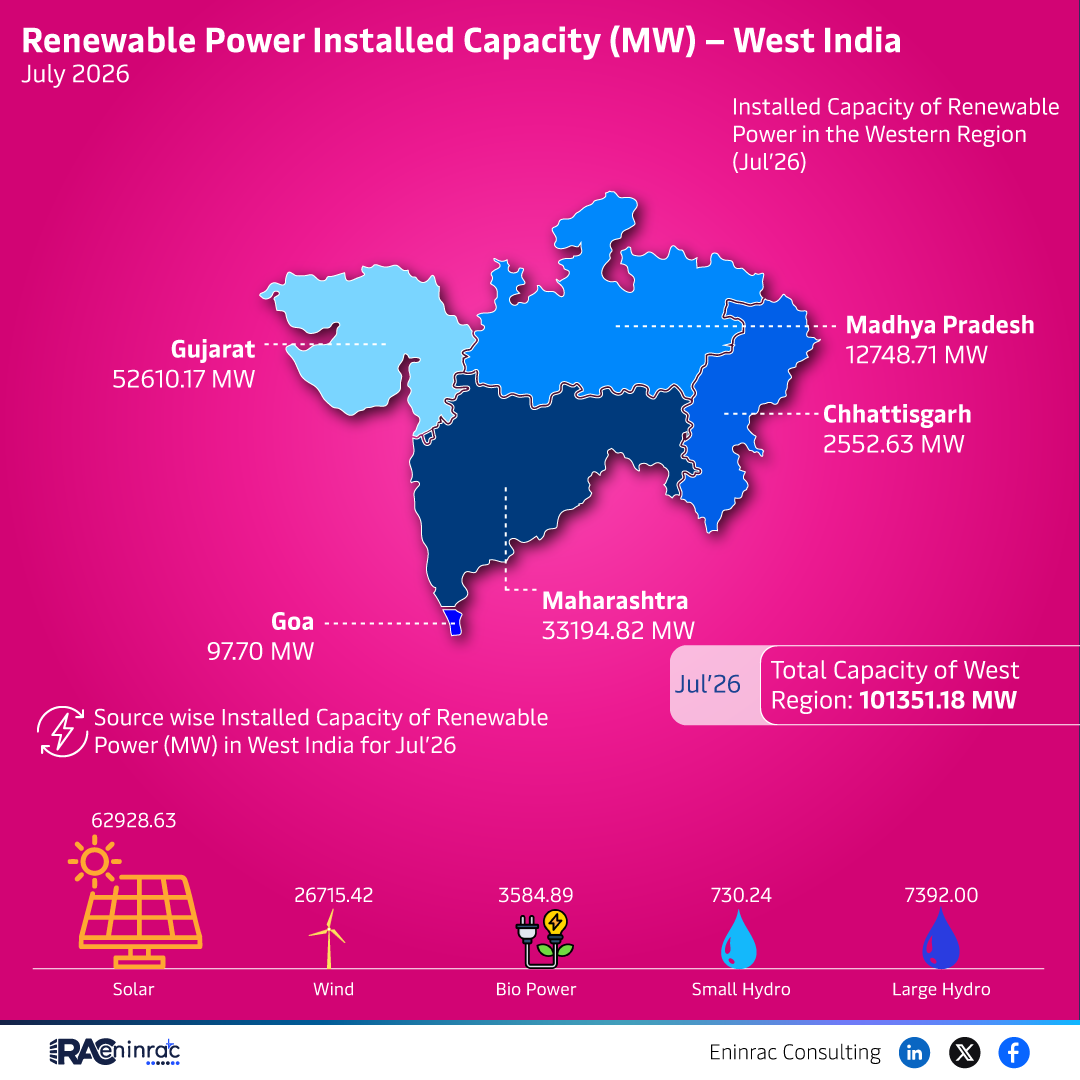
Renewable power installed capacity West India August 2026 provides a snapshot of how the western states are scaling clean energy. The data compiled for August 2026 records a combined 101,351.18 MW of renewable generation across Gujarat, Maharashtra, Goa, Madhya Pradesh and Chhattisgarh. Understanding this distribution helps investors, policymakers and industry analysts gauge regional progress, identify growth hotspots and plan future projects. This article breaks down the numbers, compares state contributions, examines the mix of solar, bio‑power, small hydro and large hydro, and highlights the broader implications for the energy market in western India.
What Does the Data Reveal About This Topic?
What does the August 2026 capacity figure tell us about renewable energy trends in West India? The total of 101,351 MW indicates a robust expansion, with Gujarat alone contributing roughly 12,749 MW and Maharashtra adding 52,610 MW. Smaller states such as Chhattisgarh (2,553 MW) and Goa (33,195 MW) also play notable roles. The source‑wise breakdown shows solar accounting for about 3,585 MW, bio‑power 730 MW, and small hydro 7,392 MW, underscoring a diversified renewable portfolio that reduces reliance on any single technology.
State‑wise Capacity Overview and Technology Mix
Gujarat leads with 12,748.71 MW, reflecting aggressive solar farm deployments and supportive state policies. Maharashtra’s 52,610.17 MW makes it the largest contributor, driven by a blend of large‑scale solar parks, wind projects and bio‑power initiatives. Goa’s 33,194.82 MW, while smaller in population, benefits from abundant coastal wind resources and small hydro installations. Madhya Pradesh adds 2,552.63 MW, and Chhattisgarh contributes a modest 2,553 MW, primarily from bio‑power and small hydro. The technology mix shows solar as the fastest‑growing segment, while bio‑power and small hydro provide steady baseload support.
Impact on Sectors and Industries
The surge in renewable power installed capacity influences multiple sectors. Energy utilities can diversify supply, reducing carbon intensity and meeting renewable purchase obligations. Manufacturing firms gain access to cleaner electricity, lowering operational emissions and potentially qualifying for green incentives. Investors see a widened pipeline of projects, especially in solar and hydro, prompting increased capital inflow. Policymakers can leverage the data to refine subsidy schemes, grid integration plans and land‑use regulations. Consumers ultimately benefit from more stable, locally generated power and the long‑term cost advantages of renewable sources.
Key Takeaways
- The western region reached a cumulative 101,351 MW renewable capacity in August 2026.
- Maharashtra contributed the largest share, followed by Gujarat and Goa.
- Solar power accounts for roughly 3,585 MW, highlighting its rapid expansion.
- Bio‑power and small hydro together provide over 8,000 MW, supporting base load.
- State policies and geographic advantages drive divergent growth patterns.
- Increasing capacity creates opportunities for investors, utilities and green tech manufacturers.
FAQs
Which western state has the highest renewable capacity in August 2026?
Maharashtra leads with approximately 52,610 MW of installed renewable capacity.
How much solar capacity is reported for West India?
Solar accounts for about 3,585 MW of the total renewable capacity.
What role does small hydro play in the region’s energy mix?
Small hydro contributes roughly 7,392 MW, offering reliable baseload electricity.
Are bio‑power installations significant in West India?
Bio‑power adds around 730 MW, serving niche markets and supporting rural electrification.
What implications does this capacity growth have for investors?
The expanding portfolio signals strong demand for renewable projects, encouraging capital allocation toward solar, hydro and bio‑energy assets.