
Introduction
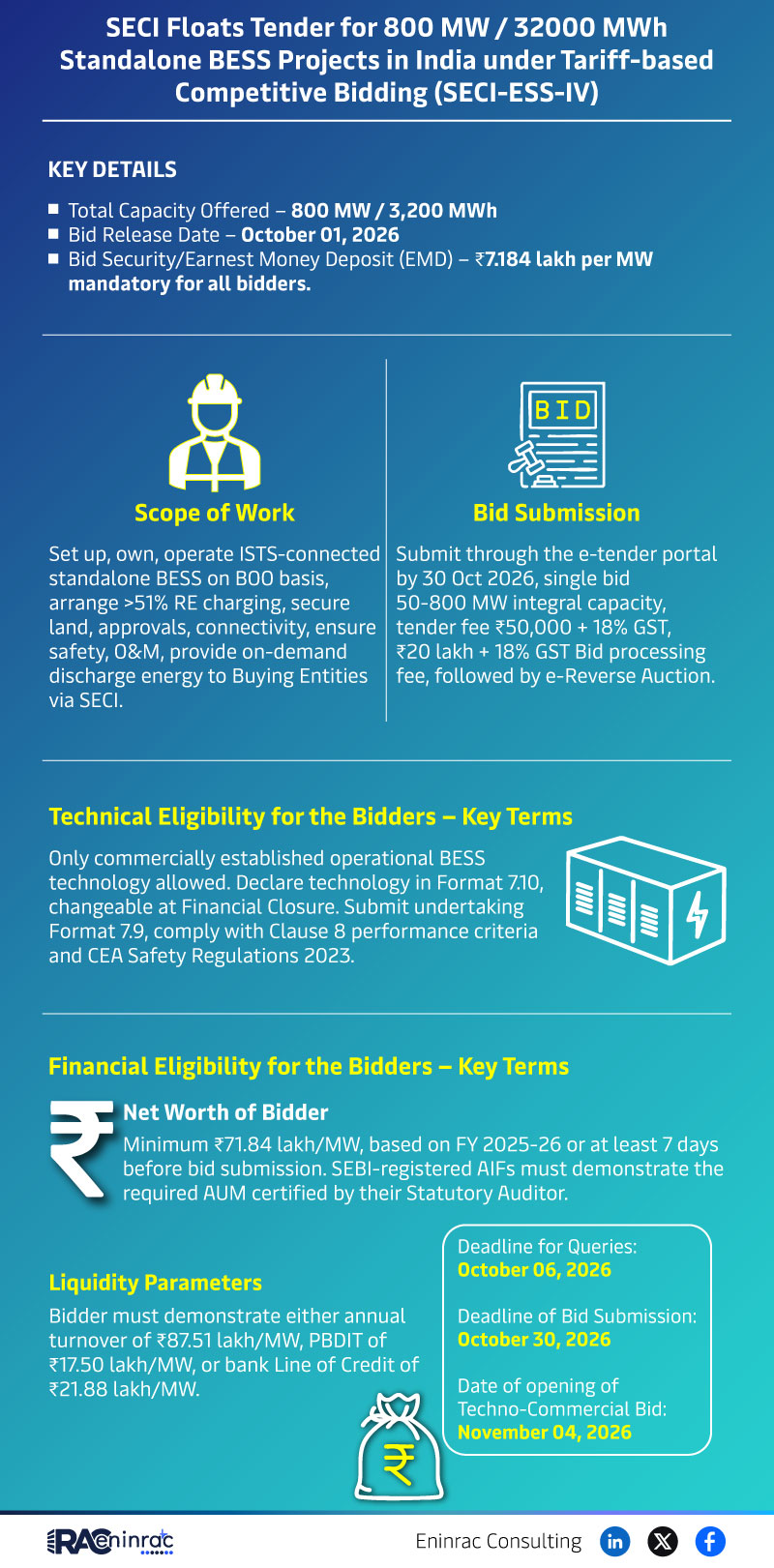
The Solar Energy Corporation of India (SECI) has launched a competitive tender for standalone battery energy storage system (BESS) projects totaling 800 MW or 3,200 MWh of storage capacity. This tender, announced on 1 October 2026, is part of SECI‑ESS‑IV and follows a tariff‑based bidding framework designed to attract private investors to develop grid‑connected storage assets across India. Understanding the tender’s structure, financial eligibility, and submission timeline is essential for developers, investors, and policy analysts who track the rapid expansion of renewable energy storage in the country.
What Does the Data Reveal About This Topic?
The raw data shows that SECI is seeking a single integrated bid ranging from 50 MW to the full 800 MW capacity. Bidders must provide a bid security of 27.184 lakh per MW, comply with strict net‑worth and liquidity thresholds, and participate in an e‑tender reverse‑auction that closes on 30 October 2026. The tender explicitly requires commercially established BESS technology and outlines the scope of work, which includes land acquisition, regulatory approvals, grid connectivity, and on‑demand energy discharge to buying entities.
Bid Structure and Financial Requirements
The tender defines a total capacity offer of 800 MW and a storage volume of 3,200 MWh. Financial eligibility demands a minimum net worth of 271.84 lakh per MW, based on FY 2025‑26 figures, and liquidity parameters such as an annual turnover of 87.51 lakh per MW, PBDIT of 217.50 lakh per MW, or a bank line of credit of 221.88 lakh per MW. SEBI‑registered ALFs must also demonstrate the required assets under management (AUM) certified by a statutory auditor. The bid fee structure includes a tender fee of ₹50,000 plus 18 % GST and a processing fee of ₹20 lakh plus GST. All submissions must be made through the e‑tender portal by 30 October 2026, after which a reverse‑auction determines the final award.
Impact on Sectors and Industries
This SECI BESS tender is poised to influence several key sectors. For the renewable energy industry, large‑scale storage will enhance grid reliability, enable higher penetration of intermittent solar and wind power, and reduce curtailment. Investors will find new opportunities in financing, construction, and operation of battery assets, while technology providers can showcase commercially established solutions. Policymakers gain a structured mechanism to incentivize storage deployment, aligning with India’s target of 450 GW renewable capacity by 2030. Moreover, the demand for land, approvals, and connectivity will stimulate ancillary services such as engineering, procurement, and construction (EPC) and O&M contracts.
Key Takeaways
- The SECI tender offers a total of 800 MW/3,200 MWh of standalone BESS capacity.
- Bid security is set at 27.184 lakh per MW, and financial eligibility requires high net‑worth and liquidity metrics.
- Submission must occur via the e‑tender portal by 30 October 2026, followed by a reverse‑auction.
- Only commercially established BESS technologies are accepted, with mandatory format declarations.
- Winning bidders will operate on a BOO (build‑own‑operate) model and provide on‑demand discharge to SECI buying entities.
- The tender supports India’s renewable integration goals and creates significant market opportunities for investors and technology firms.
FAQs
What is the total storage capacity offered in the SECI BESS tender?
The tender offers 800 MW of power capacity and 3,200 MWh of energy storage.
When is the deadline for bid submission?
Bids must be submitted through the e‑tender portal by 30 October 2026.
What financial thresholds must bidders meet?
Bidders need a minimum net‑worth of 271.84 lakh per MW and must satisfy either turnover, PBDIT, or bank line of credit requirements as specified.
Is any specific BESS technology required?
Only commercially established and operational BESS technologies are allowed, and bidders must declare the technology in Format 7.10.
How does the reverse‑auction process work?
After the bid submission deadline, SECI conducts an e‑tender reverse‑auction where participants compete on price, with the lowest qualified offer winning the contract.