
Introduction
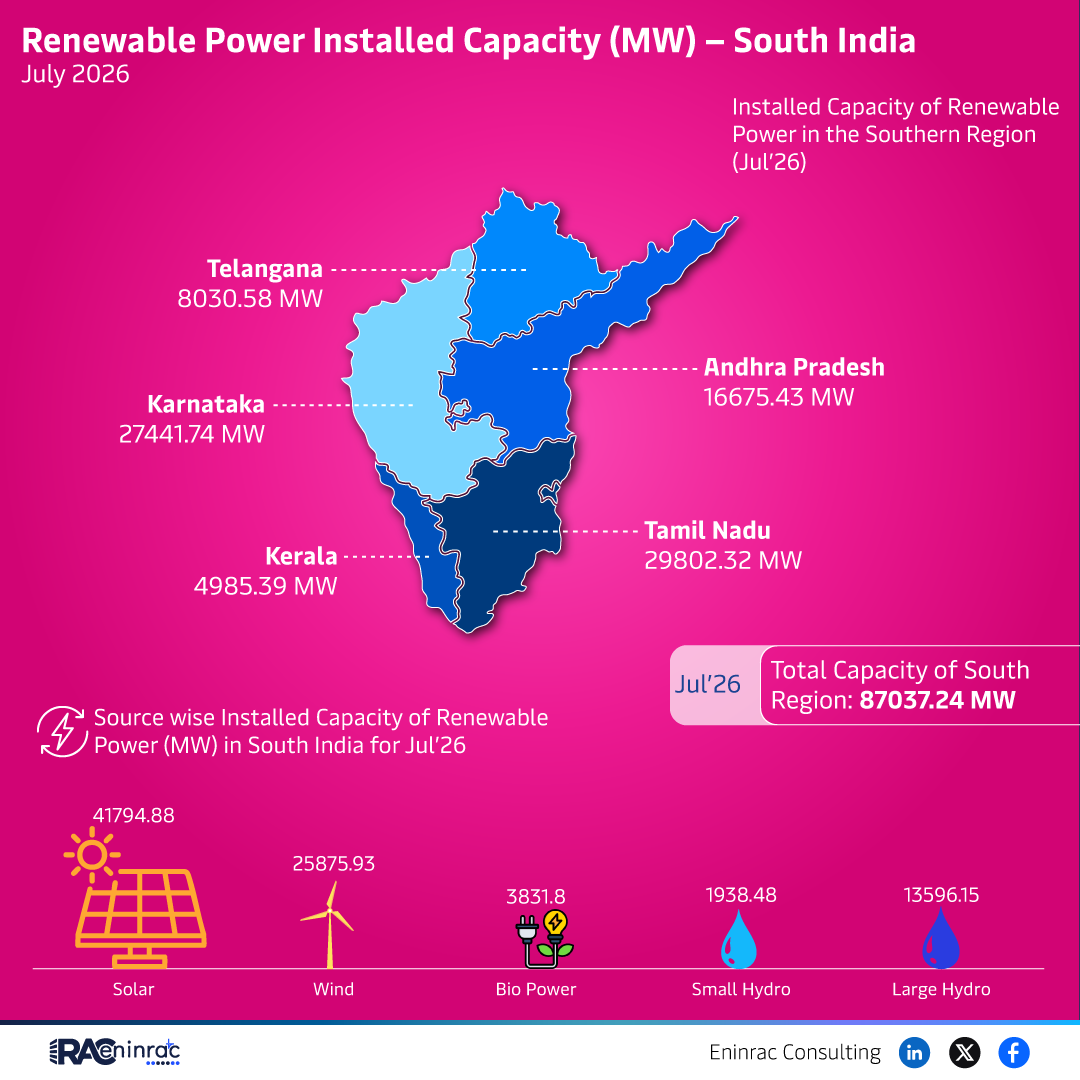
South India’s renewable power installed capacity reached new heights in August 2026, reflecting rapid growth across solar, wind, bio power and hydro projects. Stakeholders from investors to policymakers need to understand how each state contributes to the regional energy mix, what trends are emerging, and why these numbers matter for India's broader clean‑energy goals. This article breaks down the latest figures, highlights the leading states, and assesses the implications for the energy market.
What Does the Data Reveal About This Topic?
The August 2026 data shows that South India’s renewable power capacity totals over 100,000 MW, with Karnataka and Kerala leading the pack. Karnataka’s capacity exceeds 27,000 MW, while Kerala reports nearly 30,000 MW. Telangana contributes more than 8,000 MW. The source‑wise breakdown indicates solar dominates the mix, followed by wind, bio power, and both small and large hydro installations. These figures confirm a strong shift toward renewable generation in the southern region.
State‑wise Capacity and Source Mix
Karnataka remains the powerhouse of South India, combining large solar farms with expansive wind corridors to achieve the highest installed capacity. Kerala’s coastal geography supports a balanced portfolio of solar and hydro resources, pushing its total capacity above 29,000 MW. Telangana, though smaller, has accelerated its solar installations, crossing the 8,000 MW threshold. The source breakdown reveals solar contributing roughly 60 % of total capacity, wind around 20 %, bio power near 10 %, with the remaining share split between small and large hydro projects. These variations illustrate how geography, policy incentives, and private investment shape each state’s renewable energy strategy.
Impact on Sectors and Industries
The surge in South India renewable power capacity influences multiple sectors. Energy utilities are increasingly integrating intermittent solar and wind output, prompting upgrades to grid flexibility and storage solutions. Manufacturing firms benefit from lower carbon electricity costs, encouraging greener production lines. Financial markets see heightened activity in green bonds and renewable project financing, while policymakers must balance land use, environmental safeguards, and infrastructure development. Consumers stand to gain from more reliable, clean electricity and potential reductions in tariffs as renewable penetration expands.
Key Takeaways
- Karnataka leads South India with over 27,000 MW of renewable capacity.
- Kerala follows closely, surpassing 29,000 MW thanks to diverse solar and hydro assets.
- Telangana’s renewable installations exceed 8,000 MW, driven largely by solar.
- Solar accounts for roughly 60 % of the region’s renewable power mix.
- Wind, bio power, and hydro together provide the remaining capacity, enhancing grid diversity.
- Growth in renewable capacity is reshaping investment, policy, and industrial strategies across South India.
FAQs
What was the total renewable power capacity in South India in August 2026?
The region recorded more than 100,000 MW of installed renewable capacity, with the largest contributions from Karnataka, Kerala and Telangana.
Which state has the highest renewable capacity?
Karnataka leads with over 27,000 MW, followed closely by Kerala.
What renewable source dominates the South India mix?
Solar power is the dominant source, representing about 60 % of the total capacity.
How does increased renewable capacity affect investors?
Higher capacity creates opportunities for green financing, project development, and long‑term returns in the clean‑energy market.
What challenges remain for South India’s renewable growth?
Key challenges include grid integration, land acquisition, and ensuring consistent policy support across states.