
Introduction
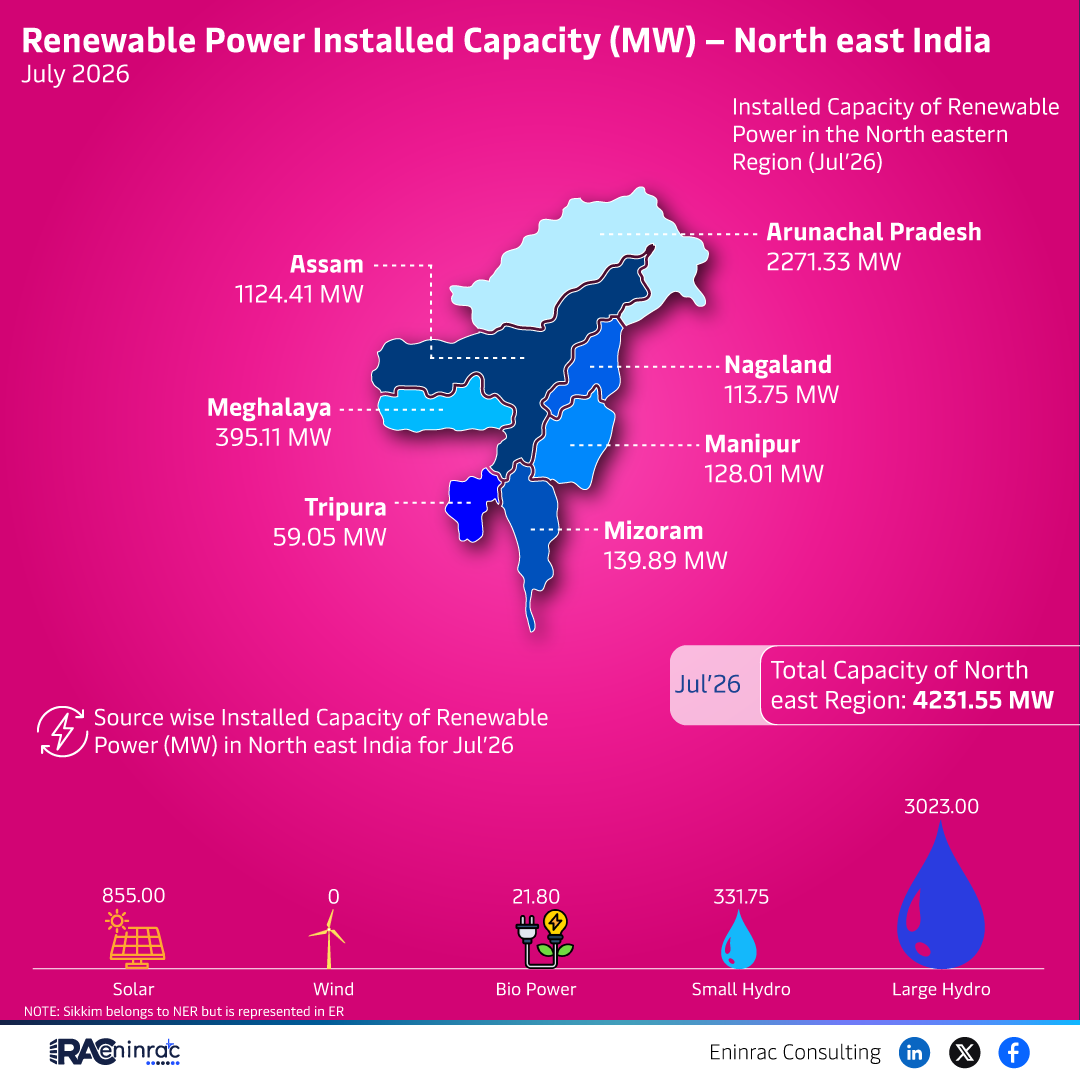
In August 2026 the Northeast region of India reported a comprehensive snapshot of renewable power installed capacity. This data is crucial for policymakers, investors, and energy analysts because it highlights how each state contributes to the nation’s clean energy goals. Readers will learn the total capacity per state, the breakdown by energy source, and the broader implications for the region’s energy transition.
What Does the Data Reveal About This Topic?
The raw figures answer a clear question: which Northeastern states lead in renewable power capacity and how is that capacity distributed across solar, wind, bio‑power, and hydro? Assam tops the list with over 2,200 MW, while smaller states like Tripura contribute less than 60 MW. Source‑wise, solar and bio‑power dominate the mix, reflecting regional resource availability.
State‑wise Renewable Capacity in Northeast India
Analyzing the numbers shows stark contrasts. Assam records the highest installed capacity at 2,271.33 MW, followed by Arunachal Pradesh with roughly 1,124 MW. Nagaland, Meghalaya, Manipur, Tripura, and Mizoram each hold modest shares ranging from 59 MW to 396 MW. These differences stem from varying topographies, grid connectivity, and state‑level renewable policies. Understanding each state’s contribution helps target future investments where potential remains untapped.
Impact on Sectors and Industries
The surge in renewable capacity influences multiple sectors. Energy utilities can diversify supply, reducing reliance on coal and enhancing grid stability. Investors gain insight into high‑growth markets, especially in solar and bio‑power projects. Policymakers can tailor incentives to bolster lagging states, while local businesses benefit from new supply chains for equipment, construction, and operation of renewable assets. Ultimately, the data underscores the region’s role in India’s climate commitments.
Key Takeaways
- Assam leads the Northeast with over 2,200 MW of renewable capacity.
- Arunachal Pradesh contributes more than 1,100 MW, showing strong growth potential.
- Solar and bio‑power together account for the bulk of installed capacity.
- Smaller states like Tripura and Mizoram still have room for development.
- Source‑wise, hydro remains limited, highlighting untapped water resource opportunities.
- Investors and policymakers can use this data to focus on under‑served states and diversify energy mixes.
FAQs
Which Northeastern state has the highest renewable capacity?
Assam, with approximately 2,271 MW installed in August 2026.
What are the main renewable sources in the region?
Solar, wind, bio‑power, and large hydro, with solar and bio‑power leading the installed capacity.
How does bio‑power capacity compare to solar?
Bio‑power (around 5,540 MW) exceeds solar capacity (about 3,023 MW) in the reported data.
Why is hydro capacity relatively low?
Geographical and infrastructural challenges limit hydro development, especially small‑hydro projects.
What opportunities exist for investors?
Key opportunities lie in expanding solar and bio‑power projects in under‑served states like Nagaland, Meghalaya, and Mizoram.