
Introduction
The August 2026 snapshot of renewable power installed capacity across South India offers a clear view of how the region’s clean‑energy landscape is evolving. With states such as Karnataka, Tamil Nadu, Kerala and Telangana reporting significant megawatt figures, policymakers, investors and industry analysts can track growth patterns that influence grid planning, financing decisions and climate‑action goals. This article breaks down the latest numbers, highlights state‑level differences, and discusses what the data means for the broader energy market.
What Does the Data Reveal About This Topic?
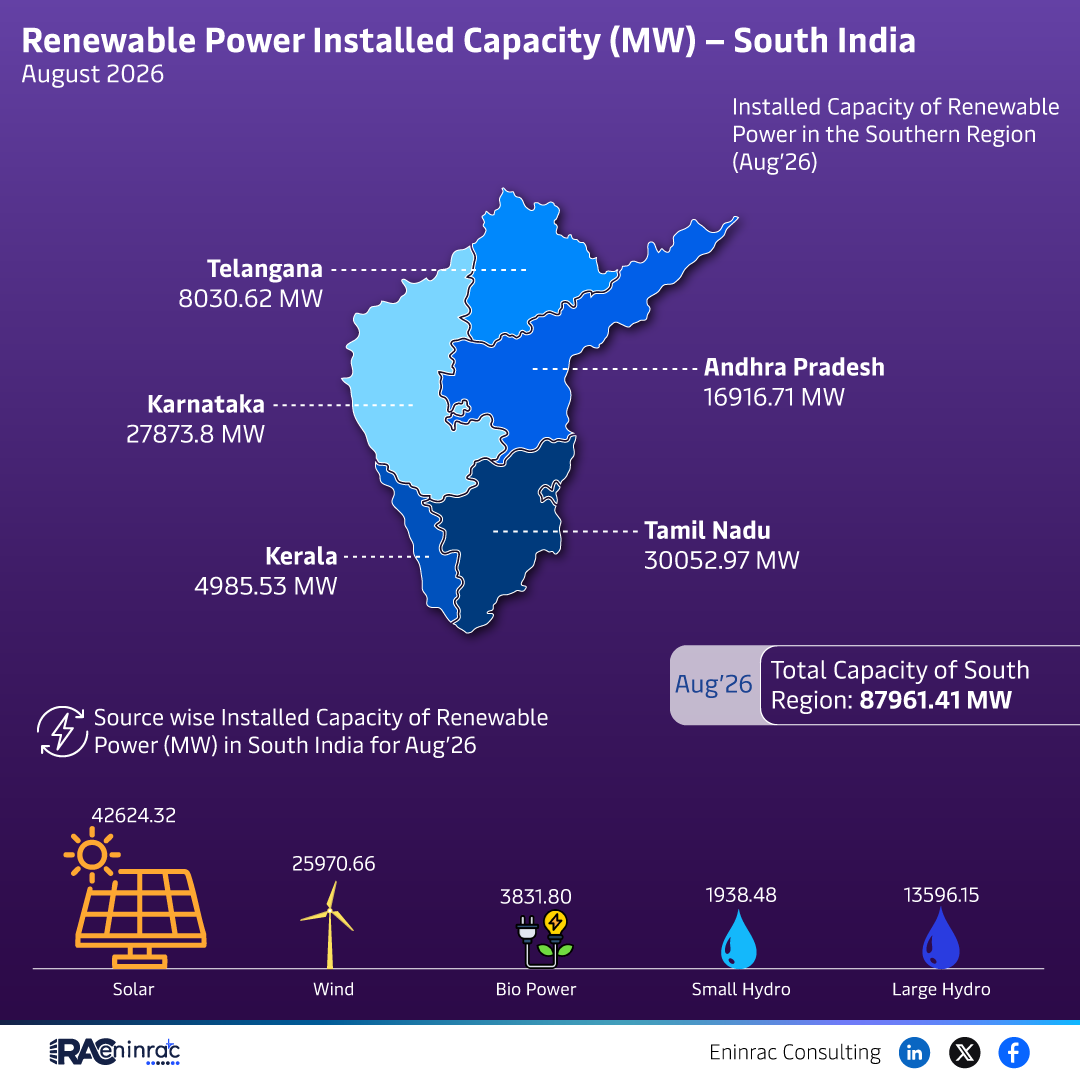
What does the data actually reveal? In August 2026 the combined renewable capacity of the five southern states reached approximately 26,970 MW, driven primarily by solar installations that alone contributed close to 26,000 MW. Wind power added roughly 3,800 MW, while bio‑energy and small hydro together supplied just under 2,000 MW. The figures show a clear tilt toward solar, reflecting falling panel costs and aggressive state‑level targets, while wind and other sources grow at a steadier pace.
State‑wise Capacity Comparison in South India
When the numbers are broken down by state, Kerala emerges as the clear leader with roughly 30,053 MW of installed renewable capacity, followed by Karnataka at about 16,917 MW and Tamil Nadu contributing close to 27,874 MW. Telangana trails with just over 8,030 MW. The disparity reflects differing policy incentives, resource availability and private‑sector participation. Kerala’s coastline supports extensive small‑hydro projects, while Karnataka’s strong solar parks and wind corridors drive its growth. Tamil Nadu’s mixed portfolio of large solar farms and emerging wind sites explains its middle‑range figure, and Telangana’s newer initiatives are still scaling up.
Impact on Sectors and Industries
The surge in renewable capacity reshapes multiple sectors. Power generators must integrate higher shares of intermittent solar and wind, prompting investments in grid‑balancing tools such as battery storage and demand‑response platforms. Equipment manufacturers benefit from rising orders for PV modules, inverters and wind turbines, while construction firms see new project pipelines. Financial institutions adjust risk models, offering green bonds and concessional loans to support state‑led targets, and policymakers gain data to refine subsidy structures and land‑allocation policies, while consumers experience longer‑term price stability as renewable generation reduces reliance on fossil fuel imports.
Key Takeaways
- Kerala leads South India with over 30 GW renewable capacity.
- Karnataka and Tamil Nadu together account for more than half of regional capacity.
- Solar power dominates, providing roughly 96 % of total installed renewable megawatts.
- Wind, bio‑energy and small hydro together contribute less than 4 %.
- State policy incentives and resource endowment drive the observed disparities.
- Growing capacity creates opportunities for storage, financing and grid‑modernisation.
FAQs
What was the total renewable installed capacity in South India in August 2026?
Approximately 26,970 MW, with solar accounting for about 26,000 MW and the remaining share split among wind, bio‑energy and small hydro.
Which state has the highest renewable capacity?
Kerala, with roughly 30,053 MW, is the leading state in the southern region.
How much does solar contribute to the total capacity?
Solar provides nearly 96 % of the total renewable installed capacity, making it the dominant source.
What are the growth trends for wind and bio‑energy?
Wind adds about 3,800 MW and bio‑energy around 1,938 MW, showing steady but slower growth compared with solar.
Why is there a large gap between states?
Differences in state policies, resource availability such as sunlight and water flow, and levels of private investment create the capacity gaps.